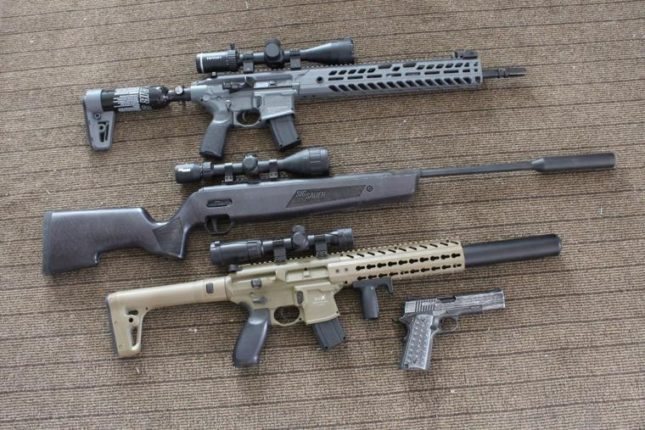
What’s the fuss about airguns? Part 1

You may have noticed a lot of articles written about airguns by grown men recently. And if you’re like me, your first thought was that you had outgrown airguns when you were 9 or 10 years old and had graduated to the real gun club.

That’s the boat that I was in. When my brother-in-law proudly whipped out a break-action pellet gun, I thought that he’d lost it. Why would a grown man digress back to his early grade school days?

Then I got into them. Let me cover that process. I was at a Professional Outdoor Media Association Convention in Columbia, South Carolina, years ago and met Susan, the marketing guru for Winchester airguns. I’d been hearing a lot about airguns and thought that it’d be a good topic to cover. I publish about 325 articles a year, so I’m always scrambling for new topics.

But I had a rocky start with airguns. With my first one, I could only get a 1 ½-inch group at 15 yards. Since we hunt small game with airguns that have a small kill zone, it’s imperative that they be accurate. So it’s a miracle that I even stuck with them. But for some reason I did.

Then in 2014, I got invited to the first GAMO Squirrel Master Classic. I didn’t have much better results there or in their 2015 event. Then I started testing other airguns. Walthers, Ruger, Springfield, Umarex, Benjamin, Crosman and a plethora of other manufacturers.

Because of their inaccuracies I about gave up on airguns numerous times. Then I went on Prostaff with Crosman. I got introduced to some decent break actions and some super accurate PCPs. By now I was all in.

Since then I’ve tested most of the new Sig Sauer airguns. More to come on Sigs later. For this first airgun article I want to cover the basics. So let’s start at the beginning. There are various models available but here are the top three designs.

CO2 AIRGUNS

Sig Sauer makes the coolest CO2 airguns. I think they were smart in that they made airguns that mimic their real guns. They have the same features and are the same weight as their real guns so they’re great training tools. I think this was ingenious.

The Sig airguns are also super cool looking. They have pistols and ARs that your kids would love. I had two “Hunting Small Game with Airguns” seminars in Reno the other day and the young people loved the AR replicas that Sig makes.

If you’re wanting to get your kids into hunting, airguns are a great avenue. I say that they’re great because there is no recoil and they aren’t loud. They are especially great for introducing little girls into hunting. The downside of CO2s is that they aren’t very powerful so they are not really good for hunting small game.

But Sig makes some super cool targets — spinners, box flippers, etc. — which further enhance a kid’s enjoyment in shooting airguns. Or it is fun to shoot the old tried and true tin cans. And CO2s are semi-automatic, so that’s fun. The CO2 pistols are great if you want to run off pest and not kill them.

BREAK ACTIONS

These are the most popular models. Some of the manufacturers boast speeds of up to 1,450 feet per second. Remember, your trusty ole .22 only spits out bullets at 1,250 feet per second, so they’re powerful enough to hunt small game with.

Break actions get their power by compressing a spring or a gas chamber, usually nitrogen. While these may spit out pellets fast, some of the cheaper ones aren’t very accurate. And to me, accuracy trumps all. We’re hunting small game with pellet guns with small kill zones so it is super important to be accurate.

Break actions have a unique recoil system. They kick forward and backwards. Because of their unique recoil, they will destroy a normal rifle scope so you only want to use scopes that are airgun compatible.

Because of their unique recoil, you need to use the artillery hold. Here’s how that works. Hold your right hand tight but with your left hand, cup the forestock loosely and let it slide back/forwards. It’s important to hold the forestock in the exact same spot or it will change the point of impact. Trust me, shoot it in this manner and your groups will tighten.

PRECHARGE PNEUMATICS (PCP)

These are my most favorite because they are the most accurate. These operate by using a charge of air. The rifle will have a tank that will hold 3,000 PSI — that’s right, 3,000 PSI, not 30 PSI like your car tires. The bad deal is, you’ll need an air tank to re-charge your rifle.

So where can you fill your air tanks? You’ll have to go to a skin-diving shop. Or Air Venturi came out with two compressors. One is a plug-in model or recently they came out with a portable model that hooks onto your truck battery so you can fill your tank while out in the field.

Ugh, I can’t believe it but we’re out of room and have hardly gotten started. Standby; there’ll be more upcoming articles on airguns.

Tom Claycomb lives in Idaho and has outdoors columns in newspapers in Alaska, Idaho, Utah, Nevada, Colorado and Louisiana. He also writes for various outdoors magazines and teaches outdoors seminars at stores like Cabela’s, Sportsman’s Warehouse and Bass Pro Shop.
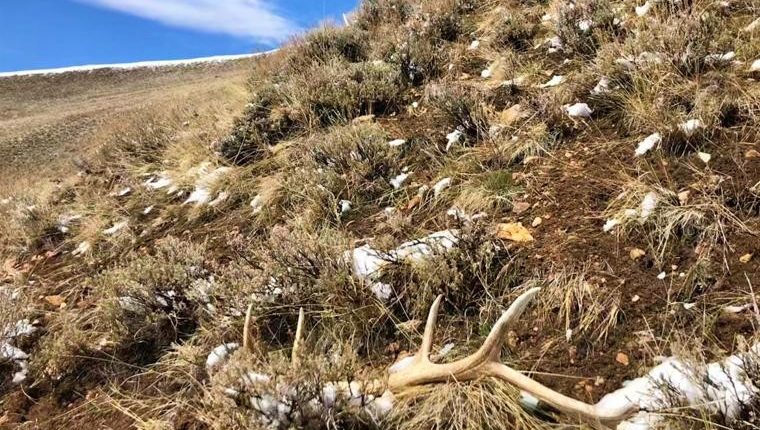
As winter lingers, responsible shed hunting is critical for big game

As anxious shed antler hunters prepare to take to Idaho’s hills in search of fresh bounty, the Idaho Department of Fish and Game urges them to avoid stressing wildlife trying to survive the late winter storms.

Shed antlers from deer, elk and moose are commonly found in areas where they spend the winter months. Typically, mule deer and moose shed in late December through January, and elk shed from mid-winter through April.

While there are no seasons directly related to shed hunting in Idaho, unfortunately, many take to the field to gather antlers during the worst time of the year for the animals.

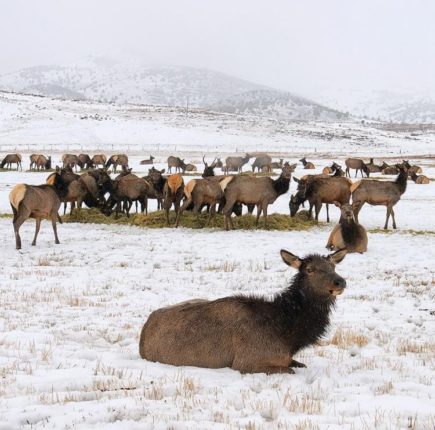
Wintering big game animals are very susceptible to any kind of disturbance whether it is from passing motorists, domestic dogs, predators or shed hunters in late winter and early spring. There is growing concern over shed hunters putting additional stress on wintering big game in many areas of the state, especially in areas that have seen more severe winter weather this year.

“Above average snow depth and crusting due to freezing and thawing is already starting to show its effects on deer fawn survival, and any added stress will only multiply the loss,” said Dennis Newman, Salmon Region wildlife manager.

At this time of year, deer and elk rely on their body reserves and what little nutrition they can get from surrounding vegetation. Any extra movement an animal makes costs energy and that depletes the little energy it has left. Energy depletion can lead to sickness and oftentimes death, especially for fawns and calves at this critical time of year.

A significant portion of fawn mortality occurs in March, and some animals may be pushed over the edge unintentionally by the very people who want to see them during the fall hunting seasons.

As winter snow and cold temperatures continue, shed hunters can alleviate potential negative impacts to big game by following these simple steps while still enjoying their sport:

Delay your search. Shed hunters are urged to delay their search until late spring, well after big game herds leave their winter range. Displacing big game animals from their winter range and repeated disturbance during the most critical part of the year can have dire consequences. A single instance of human disturbance alone may not be that disruptive to animals already stressed by winter, but consider several days of human disturbance.

Watch from a distance. Modern optics provides the ability to watch wildlife from great distances. Use them and you will be much more likely to pick up sheds later and the animal will be better off.

Respect private lands and follow all road and area restrictions. Like all outdoor recreationists, antler hunters must secure landowner permission to cross or look for antlers on private land. In addition, they must abide by all travel restrictions on federal and state public lands. Keep in mind that some public lands are closed temporarily to motorized access during the winter months and early spring to provide security areas free of disturbance. In the Salmon area, this includes public lands in the Agency Creek- Warm Springs area, and other areas identified on BLM and Forest Service travel plan maps. For questions about travel management plans or areas managed for wintering wildlife, contact your local U.S. Forest Service, Bureau of Land Management, or Fish and Game regional office.

Park and walk. Do not take motorized vehicles off designated roads and trails — travel by foot or horseback instead. Not only is off-road travel illegal in most areas, but substantial fines are issued to those that don’t follow the laws. In addition, even if motorized access is allowed on designated roads and trails, shed hunters should seriously consider the potential impact to wildlife and damage they may cause to saturated roads. Keep in mind that just because you can drive somewhere doesn’t mean you should.

Keep dogs under your control. Though your dog may not chase deer or elk, its presence alone may be enough to cause animals to expend unnecessary energy they would not have otherwise used. To deer and elk, a dog is a predator and the impacts of free-running dogs on withering game can be substantial. Remember, it is illegal to allow dogs to chase or harass deer and elk.

Can I keep it? Shed antler hunters can only lawfully possess antlers that are shed naturally from big game, from animals that have died of natural causes or from a road kill as long as the person completes the self-issued Salvage Permit available at idfg.idaho.gov/species/roadkill. The horns of bighorn sheep that have died of natural causes may be recovered but may not be sold, bartered or transferred to another person without a permit from Fish and Game. Bighorn sheep horns must be permanently marked with a metal pin at an Idaho Fish and Game regional office within 30 days of recovery.

Keeping these points in mind when shed hunting will ensure that undue stresses on animals will be avoided or minimized. Some thought and consideration ahead of time can greatly minimize your impact on local wintering wildlife herds and increase your enjoyment in the field.

As winter lingers, responsible shed hunting is critical for big game

As anxious shed antler hunters prepare to take to Idaho’s hills in search of fresh bounty, the Idaho Department of Fish and Game urges them to avoid stressing wildlife trying to survive the late winter storms.

Shed antlers from deer, elk and moose are commonly found in areas where they spend the winter months. Typically, mule deer and moose shed in late December through January, and elk shed from mid-winter through April.

While there are no seasons directly related to shed hunting in Idaho, unfortunately, many take to the field to gather antlers during the worst time of the year for the animals.

Wintering big game animals are very susceptible to any kind of disturbance whether it is from passing motorists, domestic dogs, predators or shed hunters in late winter and early spring. There is growing concern over shed hunters putting additional stress on wintering big game in many areas of the state, especially in areas that have seen more severe winter weather this year.

“Above average snow depth and crusting due to freezing and thawing is already starting to show its effects on deer fawn survival, and any added stress will only multiply the loss,” said Dennis Newman, Salmon Region wildlife manager.

At this time of year, deer and elk rely on their body reserves and what little nutrition they can get from surrounding vegetation. Any extra movement an animal makes costs energy and that depletes the little energy it has left. Energy depletion can lead to sickness and oftentimes death, especially for fawns and calves at this critical time of year.

A significant portion of fawn mortality occurs in March, and some animals may be pushed over the edge unintentionally by the very people who want to see them during the fall hunting seasons.

As winter snow and cold temperatures continue, shed hunters can alleviate potential negative impacts to big game by following these simple steps while still enjoying their sport:

Delay your search. Shed hunters are urged to delay their search until late spring, well after big game herds leave their winter range. Displacing big game animals from their winter range and repeated disturbance during the most critical part of the year can have dire consequences. A single instance of human disturbance alone may not be that disruptive to animals already stressed by winter, but consider several days of human disturbance.

Watch from a distance. Modern optics provides the ability to watch wildlife from great distances. Use them and you will be much more likely to pick up sheds later and the animal will be better off.

Respect private lands and follow all road and area restrictions. Like all outdoor recreationists, antler hunters must secure landowner permission to cross or look for antlers on private land. In addition, they must abide by all travel restrictions on federal and state public lands. Keep in mind that some public lands are closed temporarily to motorized access during the winter months and early spring to provide security areas free of disturbance. In the Salmon area, this includes public lands in the Agency Creek- Warm Springs area, and other areas identified on BLM and Forest Service travel plan maps. For questions about travel management plans or areas managed for wintering wildlife, contact your local U.S. Forest Service, Bureau of Land Management, or Fish and Game regional office.

Park and walk. Do not take motorized vehicles off designated roads and trails — travel by foot or horseback instead. Not only is off-road travel illegal in most areas, but substantial fines are issued to those that don’t follow the laws. In addition, even if motorized access is allowed on designated roads and trails, shed hunters should seriously consider the potential impact to wildlife and damage they may cause to saturated roads. Keep in mind that just because you can drive somewhere doesn’t mean you should.

Keep dogs under your control. Though your dog may not chase deer or elk, its presence alone may be enough to cause animals to expend unnecessary energy they would not have otherwise used. To deer and elk, a dog is a predator and the impacts of free-running dogs on withering game can be substantial. Remember, it is illegal to allow dogs to chase or harass deer and elk.

Can I keep it? Shed antler hunters can only lawfully possess antlers that are shed naturally from big game, from animals that have died of natural causes or from a road kill as long as the person completes the self-issued Salvage Permit available at idfg.idaho.gov/species/roadkill. The horns of bighorn sheep that have died of natural causes may be recovered but may not be sold, bartered or transferred to another person without a permit from Fish and Game. Bighorn sheep horns must be permanently marked with a metal pin at an Idaho Fish and Game regional office within 30 days of recovery.

Keeping these points in mind when shed hunting will ensure that undue stresses on animals will be avoided or minimized. Some thought and consideration ahead of time can greatly minimize your impact on local wintering wildlife herds and increase your enjoyment in the field.

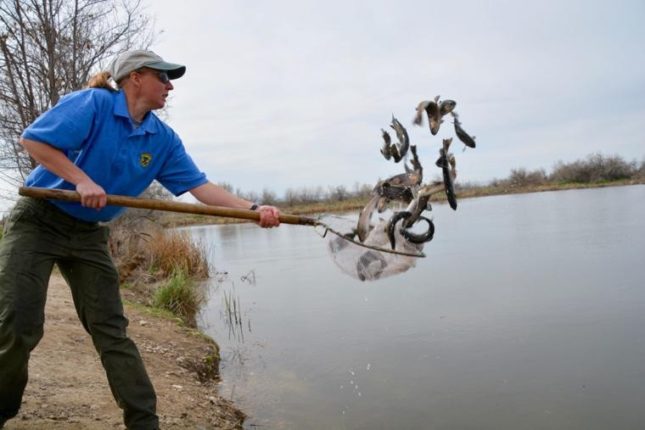
Hatchery highlights: Notable fish stockings in March

Idaho Fish and Game stocks over 30 million fish from its hatcheries into waters throughout the state every year, providing Idahoans with fishing opportunities for a variety of species.

Stocking is ramping back up in many parts of the state in March as the weather gets warmer and spring approaches, and many waterbodies are being stocked for the first time since the fall. With so many fish stocked in so many places, it can be hard for anglers to sift through the stocking forecasts and records to identify noteworthy stocking events. To make it easier, we asked Fish and Game hatchery staff to highlight some stocking events for the month of March.

Whether it is a large number of fish being stocked relative to the size of the water, a unique species, a new location, or a one-time-only stocking, we asked them to point out events anglers would be interested in knowing about. Here’s what they came up with:

Clearwater Region

Kiwanis Park Pond — 1,500 rainbow trout. This convenient community pond is located next to the Snake River within walking distance to picnic shelters and a playground. The pond is stocked with rainbow trout from March through June and in October to maintain high catch rates for anglers. Access this levee pond in Lewiston’s Kiwanis Park along Snake River Avenue south of Bridge Street.

Mann Lake — 5,400 rainbow trout. Located in Nez Perce County, this lake provides a multi-species fishery. In addition to rainbow trout, anglers can catch bass, catfish and a variety of panfish. Only electric motors are allowed on this waterbody.

Southwest Region (Nampa)

Caldwell Rotary Pond — 1,000 rainbow trout. Rotary Pond is a park-like setting. Lots of bank fishing offers young anglers easy access to fish for bluegills and bass. A dock invites visitors of every mobility level to enjoy the fishing.

Crane Falls Reservoir — 1,200 rainbow trout. This waterbody is alongside the Snake River in the sagebrush south of Mountain Home. This lake is best fished from small boats and float craft, though several fishing docks are available.

Esther Simplot Pond — 1,300 rainbow trout. Located next to the Boise River, this park offers fishing, walking and biking paths, docks, shelters and a playground.

Horseshoe Bend Mill Pond — 450 rainbow trout. Just north of town, this pond features easy access and productive fishing for bass and trout in a pleasant setting next to the Payette River. This pond is one of more than seventy waters designated as Family Fishing Waters in Idaho. These waters have been established to make it easier for families to go and enjoy fishing. The rules are simple and there are lots of fish to catch.

McDevitt Pond — 900 rainbow trout. Located in west Boise’s McDevitt Sports Park, this pond is between Meridian and Eagle at the northwest corner of McMillan and Eagle roads. This small neighborhood pond offers easily accessible fishing to catch tasty trout for dinner.

Riverside Pond — 900 rainbow trout. This is a quiet neighborhood pond right off the Boise Greenbelt. It is tucked into the trees off Glenwood Road. It offers good bank fishing and a large fishing dock.

Magic Valley Region

Blair Trail Fishing Pond — 2,000 rainbow trout. First stocking event for 2020! Located on Little Canyon Creek, this remote desert water is surrounded by sagebrush solitude.

Cedar Creek Reservoir (Roseworth Reservoir) — 2,000 rainbow trout. If you are looking to get out of town for the day, this reservoir is a remote trout fishery in the high desert. It has great shoreline access as well as high water and low water boat ramps.

Southeast Region

American Falls Reservoir — 18,000 rainbow trout. This large waterbody on the Snake River provides abundant boating opportunity. Additionally, there is good shoreline fishing near the west side boat ramp located by the dam. These fish will be stocked once ice is off.

Bannock Reservoir — 1,000 rainbow trout. Located within the Portneuf Wellness Complex near the county fairgrounds in Pocatello, this community park offers trout fishing with many recreational amenities nearby. The five-acre pond is surrounded by playgrounds, soccer fields, basketball courts, running and biking trails, and an amphitheater for community events. Multiple docks provide fishing access around the pond.

Bear River below Oneida Dam — 1,500 rainbow trout. These fish will be stocked in the very scenic Oneida Narrows reach of the river below the dam. This popular section of the river offers the longest continuous public access along the entire Bear River.

Upper Snake Region

Gem Lake — 3,000 rainbow trout. Conveniently located near Idaho Falls at the Gem Lake Recreation Area.

Salmon Region

Hayden Creek Pond — 650 rainbow trout. This is a family friendly fishing area in the high desert along Hayden Creek. Anglers will find ample bank fishing opportunities and a dock for anglers with limited mobility.

Kids Creek Pond — Located near downtown Salmon, this small fishing pond offers good trout fishing and is regularly stocked throughout the spring and summer. Take the kids out to cast a line!

Rocky Mountain Elk Foundation banquet to be held Saturday; ticket sales end Thursday

This year’s annual banquet and auction of the Southeast Idaho Chapter, Rocky Mountain Elk Foundation, will be held Saturday and will have hunting gear and art produced in Idaho available for participants. These prizes are produced in Idaho by some of the most recognized names in the recreation technology industry including: Hayden and Dallen Lambson, Partner Steel, Cordova coolers, Eberlestock packs and Buck Knives.

Hayden and Dallen Lambson have donated two prints for the auction. The Lambsons’ artwork is nationally recognized and headlines auctions by Whitetails Unlimited, the North American Wild Sheep Association, the Mule Deer and Rocky Mountain Elk foundations and other wildlife conservation organizations.

Partner Steel has crafted and donated an American flag sculpture cut out of steel with the stars and stripes flame-burnished on the surface. A Rocky Mountain Elk Foundation logo is tastefully mounted on this dramatic sculpture. Partner Steel has been in business for 70 years and owned by Rick and Debbie Eskelson for 14 years.

The bidding for two large Cordova coolers will be highly competitive and the set of RMEF-branded Buck Knives are essential to any big game trophy hunter. Eberlestock day and frame packs will be sought after by backcountry hunters at the aution.

The RMEF banquet and auction will begin at 5 p.m. Saturday in the Shoshone-Bannock Event Center in Fort Hall. Auctions, games and raffles will include name-brand-guns, tools and other exciting prizes. A delicious buffet dinner will be served during the activities.

The RMEF Southeast Idaho Chapter was the second formed and the first to hold a banquet and auction. Funds raised are used for elk habitat conservation and enhancement that benefit all wildlife and the public. The Rocky Mountain Elk Foundation was formed in 1984 and has reserved over 7.9 million acres of North American habitat through land purchase and conservation easements. Projects in East Idaho include land conservation easements and purchases, fence removal in elk habitat, aspen planting, post wildfire habitat rehabilitation and desert water source development.

Ticket sales end at midnight Thursday. Tickets start at $65.

To register, visit events.rmef.org/shop/southeastidaho or call 208-241-1726.

Rocky Mountain Elk Foundation banquet to be held Saturday; ticket sales end Thursday

This year’s annual banquet and auction of the Southeast Idaho Chapter, Rocky Mountain Elk Foundation, will be held Saturday and will have hunting gear and art produced in Idaho available for participants. These prizes are produced in Idaho by some of the most recognized names in the recreation technology industry including: Hayden and Dallen Lambson, Partner Steel, Cordova coolers, Eberlestock packs and Buck Knives.

Hayden and Dallen Lambson have donated two prints for the auction. The Lambsons’ artwork is nationally recognized and headlines auctions by Whitetails Unlimited, the North American Wild Sheep Association, the Mule Deer and Rocky Mountain Elk foundations and other wildlife conservation organizations.

Partner Steel has crafted and donated an American flag sculpture cut out of steel with the stars and stripes flame-burnished on the surface. A Rocky Mountain Elk Foundation logo is tastefully mounted on this dramatic sculpture. Partner Steel has been in business for 70 years and owned by Rick and Debbie Eskelson for 14 years.

The bidding for two large Cordova coolers will be highly competitive and the set of RMEF-branded Buck Knives are essential to any big game trophy hunter. Eberlestock day and frame packs will be sought after by backcountry hunters at the aution.

The RMEF banquet and auction will begin at 5 p.m. Saturday in the Shoshone-Bannock Event Center in Fort Hall. Auctions, games and raffles will include name-brand-guns, tools and other exciting prizes. A delicious buffet dinner will be served during the activities.

The RMEF Southeast Idaho Chapter was the second formed and the first to hold a banquet and auction. Funds raised are used for elk habitat conservation and enhancement that benefit all wildlife and the public. The Rocky Mountain Elk Foundation was formed in 1984 and has reserved over 7.9 million acres of North American habitat through land purchase and conservation easements. Projects in East Idaho include land conservation easements and purchases, fence removal in elk habitat, aspen planting, post wildfire habitat rehabilitation and desert water source development.

Ticket sales end at midnight Thursday. Tickets start at $65.

To register, visit events.rmef.org/shop/southeastidaho or call 208-241-1726.

Unique to Idaho: Wild game feeds

This time of year is slow for outdoorsmen. Well, as slow as it ever gets. There is still ice fishing, cougar hunting, trapping, snowshoeing — and varmint hunting is in full swing. In fact, I just ordered a new FoxPro X2 electronic call and can’t wait for it to get here.

But there are some other fun outdoor-related activities going on January through March. It is the show season. I just got back from the Dallas Safari Club Convention in Dallas, SHOT Show in Vegas and the Safari Club International Convention in Reno. And then as far as I can tell nearly every state puts on a big show (or multiple shows).

But there is something unique to Idaho, or at least I haven’t noticed it anywhere else, and that is our wild game feeds. I’ve never seen them in any other state like we have here. And that’s a shame because they’re a blast.

If you’ve never heard of a wild game feed, here’s how they’re run. A lot of local churches put on one as an outreach project. Also, a lot of clubs have one. For instance, years ago I attended one in Emmett put on by the Black Canyon Bowhunters Association. I’ve been to ones put on by a local SCI chapter, Idaho Varmint Hunters Association, Gem State Flyfishing Club and numerous other groups. There are multiple organizations that put them on. But the format somewhat follows the same guidelines.

The menu will be a potluck. You have to bring a wild game dish. If you’re not a hunter but still want to attend, no problem-o, just bring a salad, dessert or run down to the grocery store and buy a salmon and fake it. Usually the group will supply paper plates, utensils and coffee/water/tea.

Many of the wild game feeds will have what I call preliminary events. For instance, many times you’ll see Jim Combe, a local gunsmith who will set up an old Winchester display along with some old bear traps. Or Jim Fox will set up an archery display of some recurves/longbows that he has made. Sometimes they’ll have vendors set up tables, such as a call company, etc. These are always fun to check out before the event kicks off. SCI has a cool game trailer I’ve seen at some events.

Then the actual event will kick off. It will begin with everyone lining up for the potluck dinner. Near the tail end of the dinner, they will introduce the guest speaker.

What the speaker talks about can cover a wide range of topics. I’ve heard speakers give bear hunting seminars, give calling seminars and so forth. The Black Canyon Bowhunters Club did something unique. Everyone who wanted to, got up and told that year’s hunting story. That was an interesting twist. So what you do for a speaker or main event can vary greatly. Usually the speaker will be someone local but I’ve attended wild game feeds where they flew in a celebrity speaker.

Then a big majority of them will have a raffle table to raise money for their club or purpose. They’ll get local companies to donate items to raffle off. I always enjoy these raffles. Of course the more tickets you buy, the better your odds of winning.

If you’ve never attended one, I’d encourage you to do so. You’ll have a good time.

Tom Claycomb lives in Idaho and has outdoors columns in newspapers in Alaska, Idaho, Utah, Nevada, Colorado and Louisiana. He also writes for various outdoors magazines and teaches outdoors seminars at stores like Cabela’s, Sportsman’s Warehouse and Bass Pro Shop.
The 2020 Safari Club International Convention

I recently conducted four seminars at the SCI Convention in Reno. As is usual, there were tons of world class mounts. Some of the taxidermists nowadays can only be described as artists. Some of their displays were unbelievable. Katy burned up a lot of film taking pics of the mounts and displays.

Between seminars I had multiple media luncheons and then hit as many booths as I could. There were a lot of awesome guides present from all over the world.

There were so many booths that there is no way that I could have hit them all. But luckily, I did stop by the GAJOGO Safarilands booth and meet Gary R. Goltz. We’re looking at doing some stuff together. But for now I want to write briefly about some of his conservation efforts.

In talking to Gary, it reminded me of what great conservationists that outdoorsmen are and made me proud. That is not a message you hear much about today. To illustrate what I’m talking about I’ll share some of his story.

If you read any stories about safari hunters in the mainstream media, you are led to believe that they fly to Africa, pay a lot of money and shoot an elephant or lion in a cage and fly home and brag about it.

I’m sure the people that propagate these misconceptions honestly care for animals but they end up doing a lot more harm than good for the animals and the indigenous people in Africa. Let me explain.

Right before Gary took over the 1.1-million-acre reservation that he is running, it had been abandoned by all forms of management. The natives had built their huts by the few watering holes that were there, which starved off most of the wildlife.

They also poached all the game they could for food. Poachers ran amuck, and the Chinese poachers aren’t good guys. To further exacerbate the problem a drought hit. When Gary hit the scene there was no wildlife left to speak of.

Since that first day, he has been busy digging water wells for humans and wildlife alike. He has also helped establish villages. From the hunts that he guides he provides meat to the villagers, which keeps them from having to poach.

The work building blinds, cooking, cleaning camp, helping guide, tracking animals, skinning animals and processing game all provide jobs and income for the villagers. Otherwise, many of them would have no income at all.

So when some Hollywood mentality type of person boycotts to eliminate hunting rhinos, lions etc. they cause major disruptions and harm for the villagers and also mass destruction for the animals that they claim to be helping. Due to the money raised from hunters they are able to afford to pay law enforcement to combat poachers.

So far I believe Gary said that he has hauled in 250 cape buffalo and seven lions that he released on the preserve. He is building the environment and the people back to what it could be. I understand how you may have originally thought that it is counterintuitive to think that hunting can actually benefit and make wildlife prosper. But upon checking out the facts you will find that it is so.

I won’t go into detail because it would sicken you, but the poachers are plenty cruel. Gary showed me a layout of the traps that had been confiscated. I didn’t count but there appeared to be hundreds. And they don’t check their traps daily like a normal trapper in America does. And they don’t tie them down or use a drag. Many of them will chase down the trapped animal and kill them with crude axes.

Needless to say, things are prospering and it looks like there is a bright future ahead on the hunting preserve that Gary is managing. Look for more articles to come over the next year on this project. And good luck Gary.

Tom Claycomb lives in Idaho and has outdoors columns in newspapers in Alaska, Idaho, Utah, Nevada, Colorado and Louisiana. He also writes for various outdoors magazines and teaches outdoors seminars at stores like Cabela’s, Sportsman’s Warehouse and Bass Pro Shop.
The 2020 Safari Club International Convention

I recently conducted four seminars at the SCI Convention in Reno. As is usual, there were tons of world class mounts. Some of the taxidermists nowadays can only be described as artists. Some of their displays were unbelievable. Katy burned up a lot of film taking pics of the mounts and displays.

Between seminars I had multiple media luncheons and then hit as many booths as I could. There were a lot of awesome guides present from all over the world.

There were so many booths that there is no way that I could have hit them all. But luckily, I did stop by the GAJOGO Safarilands booth and meet Gary R. Goltz. We’re looking at doing some stuff together. But for now I want to write briefly about some of his conservation efforts.

In talking to Gary, it reminded me of what great conservationists that outdoorsmen are and made me proud. That is not a message you hear much about today. To illustrate what I’m talking about I’ll share some of his story.

If you read any stories about safari hunters in the mainstream media, you are led to believe that they fly to Africa, pay a lot of money and shoot an elephant or lion in a cage and fly home and brag about it.

I’m sure the people that propagate these misconceptions honestly care for animals but they end up doing a lot more harm than good for the animals and the indigenous people in Africa. Let me explain.

Right before Gary took over the 1.1-million-acre reservation that he is running, it had been abandoned by all forms of management. The natives had built their huts by the few watering holes that were there, which starved off most of the wildlife.

They also poached all the game they could for food. Poachers ran amuck, and the Chinese poachers aren’t good guys. To further exacerbate the problem a drought hit. When Gary hit the scene there was no wildlife left to speak of.

Since that first day, he has been busy digging water wells for humans and wildlife alike. He has also helped establish villages. From the hunts that he guides he provides meat to the villagers, which keeps them from having to poach.

The work building blinds, cooking, cleaning camp, helping guide, tracking animals, skinning animals and processing game all provide jobs and income for the villagers. Otherwise, many of them would have no income at all.

So when some Hollywood mentality type of person boycotts to eliminate hunting rhinos, lions etc. they cause major disruptions and harm for the villagers and also mass destruction for the animals that they claim to be helping. Due to the money raised from hunters they are able to afford to pay law enforcement to combat poachers.

So far I believe Gary said that he has hauled in 250 cape buffalo and seven lions that he released on the preserve. He is building the environment and the people back to what it could be. I understand how you may have originally thought that it is counterintuitive to think that hunting can actually benefit and make wildlife prosper. But upon checking out the facts you will find that it is so.

I won’t go into detail because it would sicken you, but the poachers are plenty cruel. Gary showed me a layout of the traps that had been confiscated. I didn’t count but there appeared to be hundreds. And they don’t check their traps daily like a normal trapper in America does. And they don’t tie them down or use a drag. Many of them will chase down the trapped animal and kill them with crude axes.

Needless to say, things are prospering and it looks like there is a bright future ahead on the hunting preserve that Gary is managing. Look for more articles to come over the next year on this project. And good luck Gary.

Tom Claycomb lives in Idaho and has outdoors columns in newspapers in Alaska, Idaho, Utah, Nevada, Colorado and Louisiana. He also writes for various outdoors magazines and teaches outdoors seminars at stores like Cabela’s, Sportsman’s Warehouse and Bass Pro Shop.

Public shooting range bill advances to House floor

BOISE — An effort to maintain and promote public shooting ranges in Idaho hit the bull’s-eye last week, earning unanimous support from the House Resources and Conservation Committee.

The bill establishes public shooting ranges as an appropriate use for Idaho Department of Fish and Game lands. It also authorizes the agency to work with cities, counties, recreation districts and nonprofit clubs and associations to develop new ranges or relocate existing ranges.

The legislation is co-sponsored by Rep. Caroline Troy, R-Genesee; House Majority Leader Mike Moyle, R-Star; House Resources Chairman Marc Gibbs, R-Grace; and Sen. Bert Brackett, R-Rogerson.

Troy said the closure of traditional “rock pit-type” shooting ranges, together with the continued population growth, is putting increased pressure on public ranges around the state.

“Shooting is going to happen in Idaho,” she said. “The state, in my opinion, should actively encourage construction of safe and controlled ranges, or shooting activities will be pushed into public and private lands, creating the potential for added conflict and unsafe activity. This legislation encourages the maintenance of existing ranges, the construction of new ranges and assists with the relocation of ranges, as necessary.”

The bill also creates a new fund within the Department of Fish and Game to help pay for shooting range engineering studies and design work, new site construction, noise abatement or safety projects and relocation.

Money from Fish and Game fines and forfeitures would flow into the fund, together with any grants or donations, or proceeds from the sale of any Fish and Game land that’s used for shooting ranges.

The committee sent the bill to the House floor with a favorable recommendation.