City of Rocks lifts total ban against highlining

The total ban against highlining at the City of Rocks National Reserve and Castle Rocks State Park has been lifted.

Park superintendent Wallace Keck said Tuesday that after an assessment of the activity, certain areas away from the historic California Trail viewshed, roads and trails will be allowed to accommodate highlines.

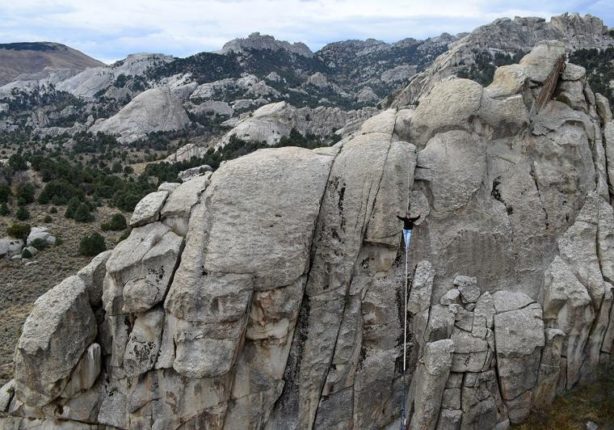
Highlining is similar to slacklining where practitioners walk along nylon webbing stretched between two cliffs or trees. Slacklines are usually only a few feet above the ground. Highlines can be several hundred feet above the ground. Highliners wear climbing harnesses with safety tethers to catch them should they fall.

Keck issued a temporary ban on highlining late last summer after seeing photos of a group highlining between two pinnacles at the state park and personally observing another party highlining at the City of Rocks. Both areas are popular with rock climbers, who make up the majority of visitors during the summer months.

“When there is a new visitor use, there is a requirement of the superintendent to see if it potentially impacts not only the resource but other recreation opportunities or the original opportunities for which the park was set aside,” Keck said.

He said the park was not set aside for highlining, but for its historical significance. A segment of the California Trail, used extensively during the gold rush of 1849, passed through the area on its way to the Sacramento, Calif., area.

“(City of Rocks) was set aside for the California Trail and the cultural history and landscape,” he said. “Any new form of recreation can’t encroach upon the value of the original purpose for which the park was set.”

Keck said after the assessment marked off all the places where highlining was not going to be allowed, “there are still places where highlining would be acceptable.”

Jeremy Shive, a 10-year highline veteran of East Idaho, said people should not expect highlining to become as popular as rock climbing.

“It’s never going to be like climbing,” Shive said. “It takes a lot of skill and knowledge of gear and rigging. And it’s challenging. It’s easy to get on (an easy) 5.7 climb and have fun, but highlining is always going to be hard, even if it’s short. It’s scary being up there. If it was going to take off in popularity, it would have taken off by now.”

Shive said he and friends have highlined at the City of Rocks occasionally in past years, but have rarely seen others doing the same.

There are precedents for highlining in national parks and state parks. Yosemite National Park in California and Smith Rock State Park in Oregon allow highlining with specific restrictions, such as seasonal closures to protect nesting raptors, no highlines over lakes or watercourses or roads or trails, no leaving highlines unattended and protecting trees with padding to prevent damage. An annual highline festival is held at Smith Rock State Park.

Keck said in his assessment that highlining will be managed similar to rock climbing with no application or written permit needed to construct a highline in approved areas with temporary anchors. Areas involving fixed anchors will require park permission.
March trout stocking schedule for Idaho’s Southeast Region

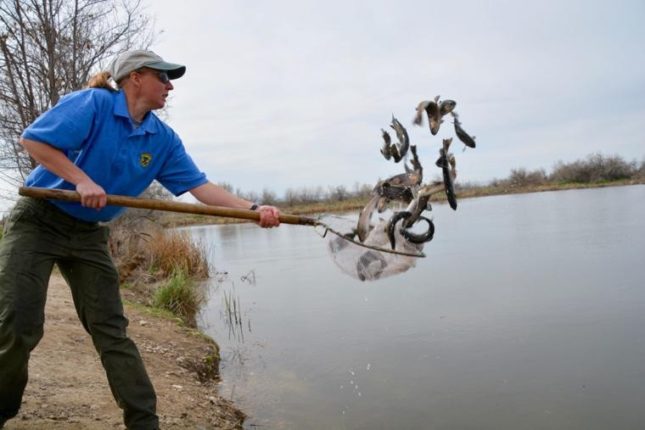
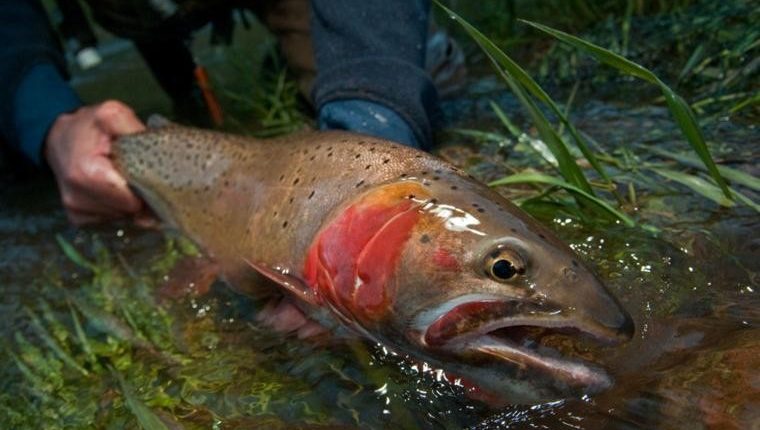
Is it that time of year again? Yes, it’s fish stocking time! Personnel from Idaho Fish and Game’s hatcheries in the Southeast Region will be releasing over 21,000 catchable-sized rainbow trout at various locations during March.

Here is the stocking schedule:

  • Bannock Reservoir at the Portneuf Wellness Complex: March 16 to 20 (500 fish)
  • Bannock Reservoir at the Portneuf Wellness Complex: March 30 to April 3 (500 fish)
  • Bear River (Oneida Narrows at Red Point and first bridge below Oneida Dam): March 9 to 30 (750 fish)
  • Bear River (below Alexander Dam): March 16 to 20 (250 fish)
  • Bear River (Oneida Narrows at Red Point and first bridge below Oneida Dam): March 23 to 27 (750 fish)
  • Crystal Springs Pond: March 16 to 20 (250 fish)
  • Edson Fichter Pond: March 16 to 20 (625 fish)

The number of trout actually released may be altered by weather, water conditions, equipment problems or schedule changes. If delays occur, trout will be stocked when conditions become favorable.

March trout stocking schedule for Idaho’s Southeast Region

Is it that time of year again? Yes, it’s fish stocking time! Personnel from Idaho Fish and Game’s hatcheries in the Southeast Region will be releasing over 21,000 catchable-sized rainbow trout at various locations during March.

Here is the stocking schedule:

  • Bannock Reservoir at the Portneuf Wellness Complex: March 16 to 20 (500 fish)
  • Bannock Reservoir at the Portneuf Wellness Complex: March 30 to April 3 (500 fish)
  • Bear River (Oneida Narrows at Red Point and first bridge below Oneida Dam): March 9 to 30 (750 fish)
  • Bear River (below Alexander Dam): March 16 to 20 (250 fish)
  • Bear River (Oneida Narrows at Red Point and first bridge below Oneida Dam): March 23 to 27 (750 fish)
  • Crystal Springs Pond: March 16 to 20 (250 fish)
  • Edson Fichter Pond: March 16 to 20 (625 fish)

The number of trout actually released may be altered by weather, water conditions, equipment problems or schedule changes. If delays occur, trout will be stocked when conditions become favorable.

Fish and Game to host Southeast Idaho fisheries open house on March 18

POCATELLO — Anglers are invited to join Idaho Fish and Game staff for an open house to visit about current fisheries management issues and happenings in Southeast Idaho. Pizza and refreshments will be provided, and Fish and Game fisheries staff will share updates on the region’s fisheries and activities planned for 2020. The open house is scheduled for March 18 from 6:30 to 8:30 p.m. at the Southeast Region Fish and Game Office, 1345 Barton Road in Pocatello.

Anglers and other community members interested in the status of the diverse fish stocks in Southeast Idaho are encouraged to attend several short presentations by Fish and Game staff followed by a question-and-answer session. Biologists will share the latest population trends and research related to some of the popular fisheries in the area such as the Blackfoot River, Bear Lake, American Falls Reservoir and the Snake River. Several fisheries staff will be on-hand during and following the meeting to field questions and visit with attendees.

This is the first time Fish and Game has hosted this type of event in the Southeast Region, and the fisheries staff looks forward to your involvement. The meeting is not centered on regulation scoping or development at this time but, rather, on engaging with local anglers and increasing public participation in fisheries management.

For more information, contact the Fish and Game Southeast Region office at 208-232-4703.

Fish and Game to host southeast Idaho fisheries open house on March 18

POCATELLO — Anglers are invited to join Idaho Fish and Game staff for an open house to visit about current fisheries management issues and happenings in Southeast Idaho. Pizza and refreshments will be provided, and Fish and Game fisheries staff will share updates on the region’s fisheries and activities planned for 2020. The open house is scheduled for March 18 from 6:30 to 8:30 p.m. at the Southeast Region Fish and Game Office, 1345 Barton Road in Pocatello.

Anglers and other community members interested in the status of the diverse fish stocks in Southeast Idaho are encouraged to attend several short presentations by Fish and Game staff followed by a question-and-answer session. Biologists will share the latest population trends and research related to some of the popular fisheries in the area such as the Blackfoot River, Bear Lake, American Falls Reservoir and the Snake River. Several fisheries staff will be on-hand during and following the meeting to field questions and visit with attendees.

This is the first time Fish and Game has hosted this type of event in the Southeast Region, and the fisheries staff looks forward to your involvement. The meeting is not centered on regulation scoping or development at this time but, rather, on engaging with local anglers and increasing public participation in fisheries management.

For more information, contact the Fish and Game Southeast Region office at 208-232-4703.

What’s the fuss about airguns? Part 2

Last week, we did an introductory article on airguns. This week, let’s go a little deeper and assume that you’re interested and want to get into airguns and see what it is all about. If you listen to me, I’ll talk you into buying one of everything! But everyone has some kind of budget that they have to live within so, here’s what I’d recommend to get started.

Buy a decent break barrel to get started. They’re relatively inexpensive, at least as compared to a decent PCP (precharged pneumatic) and way less expensive to operate than a CO2 or a PCP. One word of caution, though: Don’t buy a cheap piece of junk spring-action from China, or you’re just going to get frustrated with its inaccuracy and give up on airguns. I know that about happened to me. You can spend as much as you want, but you should be able to get a decent one for around $225.

Actually, I have two words of caution: Of the airguns that I’ve tested, many of them come with a cheap piece of junk for a scope. I understand their reasoning. Companies are trying to keep the price point down so people buy their airguns, but if it is a super cheap scope on your gun, you’re going to get frustrated and not have fun. It is a dilemma. You don’t want to spend $1,000 on an airgun scope but at least buy a functional one. My Sig Sauer and Crosman/Benjamin have all come with good scopes. If yours doesn’t come with a good one, then check out the Riton Optics Primal X1 3-9×40 or, better yet, their Primal X1 4-16×44. But whatever scope you buy, make sure that it is airgun compatible because a lot of scopes aren’t.

Next topic: Pellets. We all know that it is important to buy not only good ammo but also exact ammo to get good groups and have the ultimate performance out of big game rifles. It is just as important to do the same when selecting pellets.

Some airgun companies are trying to make them cheap pellets so they’re affordable, but many are lightweight and flimsy and impossible to get a good group with. I don’t usually rag on companies because everyone is trying to make a living, but one popular airgun company makes horrible pellets. You might as well throw rocks at your target. The best is made by JSB, but Sig Sauer and Crosman also make good pellets. And then I am about to start testing pellets for two companies out South America: Rifle Ammo and Air Boss. To adequately cover pellets will be a whole article in and of itself, so for now let’s move on.

So what are the opportunities to use airguns? Limitless. I see a lot of options. Let’s list out a few.

Airguns are a great avenue to get your kids into hunting if they’re non-hunters. If they don’t want to hunt, just shoot, then airguns are a great place to start. They’re real guns so kids need to be taught gun safety rules because they can hurt or kill you, but hopefully if they make a mistake it won’t be as dangerous as with a big caliber gun. The good deal about starting out kids on airguns is that they don’t kick and don’t make a loud report. So they’re less intimidating.

You’ll need something to shoot. Sig Sauer makes a lot of cool airgun targets, but if you’re a kid on a paper route budget, don’t forget the all-time favorite: tin cans! Or bottles filled with water.

Hunting options abound. Groundhog hunting is about to hit full speed ahead, and opportunities to shoot pigeons in agricultural settings abound. All farmers and ranchers need them thinned out. They poop in their barns, on their equipment and in their livestock feed bunks and spread diseases.

I saw a video of an airgun guide in Africa and they hunted rats at night while spotlighting. That’d be a blast in a barn, wouldn’t it?

Also, now that a lot of people are buying ranchettes out in the country, there are always varmints to thin out. Starlings, pigeons, rats, etc. It is probably not prudent to blast around your neighbors with your ole 30-06, so why not use an airgun?

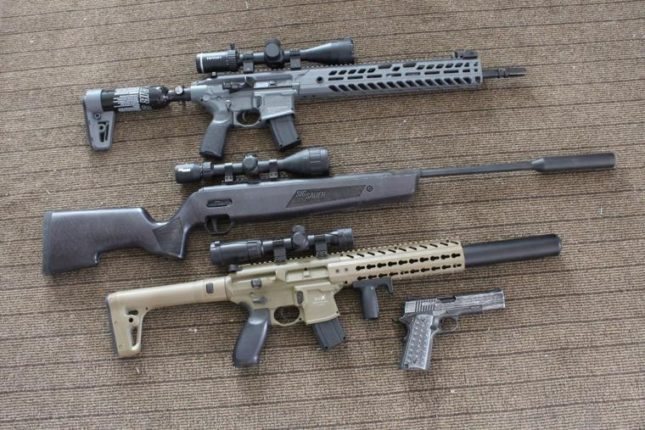
Well, once again those pesky editors are limiting my word count so I had better shut down, but you can see why airguns are so popular. Plus, some companies are making some cool ones that your kids would love. Sig Sauer makes some cool modern sporting rifles on the AR platform. Ruger made one that mimics their ever popular 10/22, and Springfield made one that mimics the old .30 M1 Carbine.

Tom Claycomb lives in Idaho and has outdoors columns in newspapers in Alaska, Idaho, Utah, Nevada, Colorado and Louisiana. He also writes for various outdoors magazines and teaches outdoors seminars at stores like Cabela’s, Sportsman’s Warehouse and Bass Pro Shop.

What’s the fuss about airguns? Part 2

Last week, we did an introductory article on airguns. This week, let’s go a little deeper and assume that you’re interested and want to get into airguns and see what it is all about. If you listen to me, I’ll talk you into buying one of everything! But everyone has some kind of budget that they have to live within so, here’s what I’d recommend to get started.

Buy a decent break barrel to get started. They’re relatively inexpensive, at least as compared to a decent PCP (precharged pneumatic) and way less expensive to operate than a CO2 or a PCP. One word of caution, though: Don’t buy a cheap piece of junk spring-action from China, or you’re just going to get frustrated with its inaccuracy and give up on airguns. I know that about happened to me. You can spend as much as you want, but you should be able to get a decent one for around $225.

Actually, I have two words of caution: Of the airguns that I’ve tested, many of them come with a cheap piece of junk for a scope. I understand their reasoning. Companies are trying to keep the price point down so people buy their airguns, but if it is a super cheap scope on your gun, you’re going to get frustrated and not have fun. It is a dilemma. You don’t want to spend $1,000 on an airgun scope but at least buy a functional one. My Sig Sauer and Crosman/Benjamin have all come with good scopes. If yours doesn’t come with a good one, then check out the Riton Optics Primal X1 3-9×40 or, better yet, their Primal X1 4-16×44. But whatever scope you buy, make sure that it is airgun compatible because a lot of scopes aren’t.

Next topic: Pellets. We all know that it is important to buy not only good ammo but also exact ammo to get good groups and have the ultimate performance out of big game rifles. It is just as important to do the same when selecting pellets.

Some airgun companies are trying to make them cheap pellets so they’re affordable, but many are lightweight and flimsy and impossible to get a good group with. I don’t usually rag on companies because everyone is trying to make a living, but one popular airgun company makes horrible pellets. You might as well throw rocks at your target. The best is made by JSB, but Sig Sauer and Crosman also make good pellets. And then I am about to start testing pellets for two companies out South America: Rifle Ammo and Air Boss. To adequately cover pellets will be a whole article in and of itself, so for now let’s move on.

So what are the opportunities to use airguns? Limitless. I see a lot of options. Let’s list out a few.

Airguns are a great avenue to get your kids into hunting if they’re non-hunters. If they don’t want to hunt, just shoot, then airguns are a great place to start. They’re real guns so kids need to be taught gun safety rules because they can hurt or kill you, but hopefully if they make a mistake it won’t be as dangerous as with a big caliber gun. The good deal about starting out kids on airguns is that they don’t kick and don’t make a loud report. So they’re less intimidating.

You’ll need something to shoot. Sig Sauer makes a lot of cool airgun targets, but if you’re a kid on a paper route budget, don’t forget the all-time favorite: tin cans! Or bottles filled with water.

Hunting options abound. Groundhog hunting is about to hit full speed ahead, and opportunities to shoot pigeons in agricultural settings abound. All farmers and ranchers need them thinned out. They poop in their barns, on their equipment and in their livestock feed bunks and spread diseases.

I saw a video of an airgun guide in Africa and they hunted rats at night while spotlighting. That’d be a blast in a barn, wouldn’t it?

Also, now that a lot of people are buying ranchettes out in the country, there are always varmints to thin out. Starlings, pigeons, rats, etc. It is probably not prudent to blast around your neighbors with your ole 30-06, so why not use an airgun?

Well, once again those pesky editors are limiting my word count so I had better shut down, but you can see why airguns are so popular. Plus, some companies are making some cool ones that your kids would love. Sig Sauer makes some cool modern sporting rifles on the AR platform. Ruger made one that mimics their ever popular 10/22, and Springfield made one that mimics the old .30 M1 Carbine.

Tom Claycomb lives in Idaho and has outdoors columns in newspapers in Alaska, Idaho, Utah, Nevada, Colorado and Louisiana. He also writes for various outdoors magazines and teaches outdoors seminars at stores like Cabela’s, Sportsman’s Warehouse and Bass Pro Shop.

Forest Service seeks young applicants for outdoor jobs

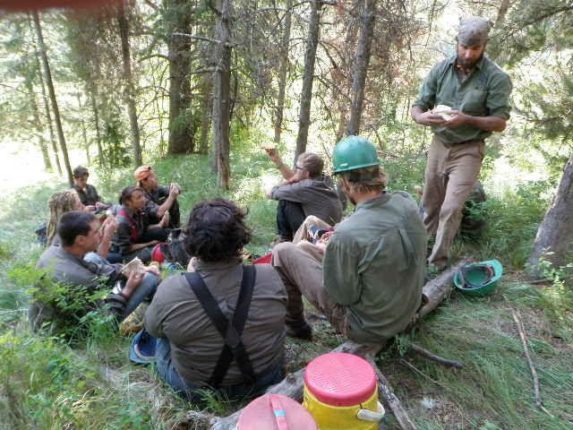
For youths not afraid to swing a pulaski or use a shovel, the National Forest Service has an offer for you.

The Forest Service is seeking summer help for its Youth Conservation Corps program to work in the Soda Springs/Montpelier region. The summer positions are a full-time job for eight weeks for applicants age 15 to 18 years old. Pay is $10 per hour. Other Forest Service districts will also be hiring for the summer.

“This (Youth Conservation Corps) crew will primarily be with the forest trail crew, doing basic tread work and trail clearing,” said Dell Transtrum, resource manager with the Forest Service. “That being said … though the crew this year will be with the trail program a lot of the time, I have arranged for them to also work with the range and timber programs doing things like structure work, (water troughs, fencing), collecting (vegetation) monitoring data, timber stand data and marking, as well as fuel reduction work. It is a great introduction for them into the Forest Service and provides valuable experience for them.”

Transtrum said the numbers hired vary from year to year depending on funding available. He expects to hire two to three for an eight-week period.

Applicants must be U.S. citizens or eligible to work in the U.S. Housing will not be available and participants must provide their own transportation to work. Crews will be provided transportation from the Soda Springs Forest Service Warehouse to the worksite each day.

Applications can be obtained online at tinyurl.com/pr-trail-crews and emailed to Transtrum at dell.transtrum@usda.gov. The application deadline is April 10. Contact Dell Transtrum at 208-847-8939 or by email at dell.transtrum@usda.gov

Bears are emerging in Yellowstone National Park

Spring is beginning to stir and so are the bears.

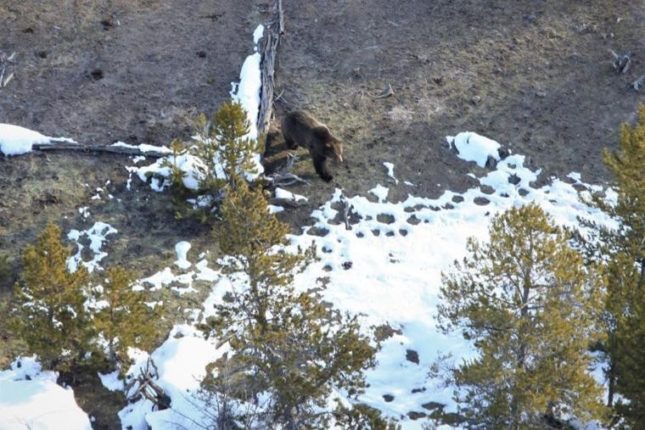
Yellowstone National Park reported the first sighting of a grizzly bear this year on Saturday.

“The bear was observed from the air by biologists during a radio telemetry flight near Grand Prismatic Spring just one day before last year’s first sighting,” the park said in a news release.

The park said typically male grizzly bears emerge from hibernation in early March. Females with cubs emerge in April and early May. When the bears emerge, they often feed on winter-killed elk and bison.

“Sometimes, bears will react aggressively while feeding on carcasses,” the park said.

Starting Tuesday, the park issued restrictions in established bear management areas. Areas such as the Firehole area, Mary Mountain Trail and Gneiss Creek have entrance restrictions through Memorial Day and beyond to reduce human-bear interactions. Many of these areas have a high density of elk and bison carcasses, attracting bears. For specifics on bear management areas, go to tinyurl.com/pr-bear-closures.

With the exception of the road open year-round from Mammoth to Cook City, Montana, park roads are closed for spring plowing.

“As spring approaches and snow begins to melt, more people will come to see wildlife, hike some of the lower elevations trails, and ski and snowshoe in the higher elevations,” said park spokesperson Linda Veress. “Many visitors enjoy the relative quiet this time of year.”

Veress said this time of year between winter oversnow season and spring season sees few visitors.

“The only people in the park (aside from the areas accessible from the year-round road) are employees, contractors, and other administrative personnel,” she said.

The park also reminds visitors that Yellowstone is bear country and bears can be encountered anywhere.

“Now that bears are emerging from winter dens, visitors should be excited for the chance to view and photograph them, but they should also treat bears with respect and caution,” said Kerry Gunther, the park’s bear management biologist. “Many visitors think bears are ravenously hungry and more likely to attack people for food after emerging from hibernation, but almost all bear attacks result from surprise encounters when hikers startle bears at close distances and the bears react with defensive aggression. Hikers, skiers and snowshoers should travel in groups of three or more, carry bear spray, and make noise.”

The news release reminds visitors firearms are allowed in the park, but the discharge of a firearm by visitors is a violation of park regulations. Bear spray has proven effective in deterring bears defending cubs and food sources. It can also reduce the number of bears killed by people in self-defense.

What’s the fuss about airguns? Part 1

You may have noticed a lot of articles written about airguns by grown men recently. And if you’re like me, your first thought was that you had outgrown airguns when you were 9 or 10 years old and had graduated to the real gun club.

That’s the boat that I was in. When my brother-in-law proudly whipped out a break-action pellet gun, I thought that he’d lost it. Why would a grown man digress back to his early grade school days?

Then I got into them. Let me cover that process. I was at a Professional Outdoor Media Association Convention in Columbia, South Carolina, years ago and met Susan, the marketing guru for Winchester airguns. I’d been hearing a lot about airguns and thought that it’d be a good topic to cover. I publish about 325 articles a year, so I’m always scrambling for new topics.

But I had a rocky start with airguns. With my first one, I could only get a 1 ½-inch group at 15 yards. Since we hunt small game with airguns that have a small kill zone, it’s imperative that they be accurate. So it’s a miracle that I even stuck with them. But for some reason I did.

Then in 2014, I got invited to the first GAMO Squirrel Master Classic. I didn’t have much better results there or in their 2015 event. Then I started testing other airguns. Walthers, Ruger, Springfield, Umarex, Benjamin, Crosman and a plethora of other manufacturers.

Because of their inaccuracies I about gave up on airguns numerous times. Then I went on Prostaff with Crosman. I got introduced to some decent break actions and some super accurate PCPs. By now I was all in.

Since then I’ve tested most of the new Sig Sauer airguns. More to come on Sigs later. For this first airgun article I want to cover the basics. So let’s start at the beginning. There are various models available but here are the top three designs.

CO2 AIRGUNS

Sig Sauer makes the coolest CO2 airguns. I think they were smart in that they made airguns that mimic their real guns. They have the same features and are the same weight as their real guns so they’re great training tools. I think this was ingenious.

The Sig airguns are also super cool looking. They have pistols and ARs that your kids would love. I had two “Hunting Small Game with Airguns” seminars in Reno the other day and the young people loved the AR replicas that Sig makes.

If you’re wanting to get your kids into hunting, airguns are a great avenue. I say that they’re great because there is no recoil and they aren’t loud. They are especially great for introducing little girls into hunting. The downside of CO2s is that they aren’t very powerful so they are not really good for hunting small game.

But Sig makes some super cool targets — spinners, box flippers, etc. — which further enhance a kid’s enjoyment in shooting airguns. Or it is fun to shoot the old tried and true tin cans. And CO2s are semi-automatic, so that’s fun. The CO2 pistols are great if you want to run off pest and not kill them.

BREAK ACTIONS

These are the most popular models. Some of the manufacturers boast speeds of up to 1,450 feet per second. Remember, your trusty ole .22 only spits out bullets at 1,250 feet per second, so they’re powerful enough to hunt small game with.

Break actions get their power by compressing a spring or a gas chamber, usually nitrogen. While these may spit out pellets fast, some of the cheaper ones aren’t very accurate. And to me, accuracy trumps all. We’re hunting small game with pellet guns with small kill zones so it is super important to be accurate.

Break actions have a unique recoil system. They kick forward and backwards. Because of their unique recoil, they will destroy a normal rifle scope so you only want to use scopes that are airgun compatible.

Because of their unique recoil, you need to use the artillery hold. Here’s how that works. Hold your right hand tight but with your left hand, cup the forestock loosely and let it slide back/forwards. It’s important to hold the forestock in the exact same spot or it will change the point of impact. Trust me, shoot it in this manner and your groups will tighten.

PRECHARGE PNEUMATICS (PCP)

These are my most favorite because they are the most accurate. These operate by using a charge of air. The rifle will have a tank that will hold 3,000 PSI — that’s right, 3,000 PSI, not 30 PSI like your car tires. The bad deal is, you’ll need an air tank to re-charge your rifle.

So where can you fill your air tanks? You’ll have to go to a skin-diving shop. Or Air Venturi came out with two compressors. One is a plug-in model or recently they came out with a portable model that hooks onto your truck battery so you can fill your tank while out in the field.

Ugh, I can’t believe it but we’re out of room and have hardly gotten started. Standby; there’ll be more upcoming articles on airguns.

Tom Claycomb lives in Idaho and has outdoors columns in newspapers in Alaska, Idaho, Utah, Nevada, Colorado and Louisiana. He also writes for various outdoors magazines and teaches outdoors seminars at stores like Cabela’s, Sportsman’s Warehouse and Bass Pro Shop.