Minnetonka Cave to open Saturday with COVID-19 restrictions

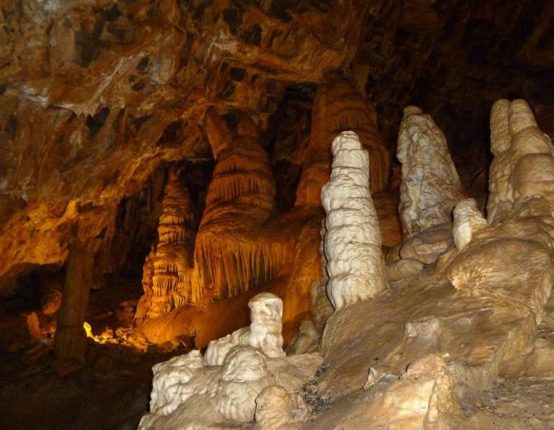
One of Idaho’s largest caves, Minnetonka Cave near Bear Lake, is opening back up for visitors starting Saturday.

The Caribou-Targhee National Forest conducts tours through the cave and will open up again under Idaho’s stage 4 reopening plan.

“The safety and health of employees, visitors, partners, volunteers, and resources remain our top priority,” said Mike Duncan, Montpelier District ranger in a news release. “We have been making operational changes in response to the changing environment.”

Visitors to the cave will be required to wear face masks or face coverings during the cave tour. Children younger than 2 will not be allowed into the cave. Tours will be limited to nine visitors and one guide.

Tours will be booked on a first-come-first-served basis starting at 10 a.m. and ending at 5:30 p.m. For information, call the Montpelier Ranger District at 435-491-0618.

The Minnetonka Cave is located in St. Charles Canyon northwest of Bear Lake. It is one of the largest limestone caves in Idaho. The cave attracts nearly 50,000 visitors each summer.

Fish stocking continues statewide, and here are some highlights for June

Idaho Fish and Game has continued stocking fish during COVID-19, and despite this being an abnormal year, most of Idaho’s angling opportunities remain unchanged. Here’s a sampling of some places that will get generous trout stockings during June.

To see more about what waters have been stocked, go our the Fish Stocking webpage at https://idfg.idaho.gov/fish/stocking.

Magic Valley Region

Little Wood Reservoir — 6,000 rainbow trout. This reservoir provides great trout fishing and a retreat from the heat in an upland desert setting.

Camas Kids Pond — 1,500 rainbow trout. This is a small, scenic pond near Fairfield. The Centennial Marsh and Camas Prairie Wildlife Management Area are nearby and provide great bird watching opportunities.

Penny Lake — 1,000 rainbow trout. Great rustic fishing on a small pond! Penny Lake also offers hiking and biking opportunities.

Southeast Region

Bannock Reservoir — 1,000 rainbow trout. Located within the Portneuf Wellness Complex in Pocatello, this community park offers good trout fishing. Multiple docks provide fishing access around the 5-acre pond.

Montpelier Reservoir — 1,000 tiger trout. This reservoir offers angling opportunity for a variety of fish species in a peaceful rural setting.

Upper Snake Region

Camas Creek — 750 rainbow trout. This was a new stocking location beginning in 2019. Come experience what it has to offer.

Henry’s Fork — 10,000 rainbow trout. World famous for trout fishing! The river is suitable for wade fishing, bank fishing and fishing from a boat.

Birch Creek — 3,400 rainbow trout. A productive spring creek in a high desert basin, this small stream is ideal for kids and less experienced anglers. rainbow trout are stocked heavily around access areas and wild brook trout are fairly common.

Salmon Region

Salmon River — Sections 5 to 8 will be stocked with a total of 8,800 rainbow trout.

Stanley Lake — 4,200 rainbow trout. This is a popular spot known for its breathtaking view of the Sawtooth Mountains. It offers great fishing and places for kids to explore nature.

Alturas Lake — 3,480 rainbow trout.

Yellowstone opens with classic beauty and small crowds

The bison were out in full regalia, sightings of grizzly bears brought traffic to a halt, and Old Faithful continued to erupt on schedule as Yellowstone’s Montana entrances opened welcoming Idahoans. Concerns of coronavirus were put aside for a moment as family enjoyed one of America’s premier natural attractions. Traveling in the park was enjoyable with light traffic, clear roads and only the occasional “bear jams” with visitors gawking at wildlife while parked in the middle of the road.

Now is the time to visit the park. The animals have not been bothered by thousand of cars, loads of buses and tourists and are less wary. You have the trails to yourself and the thermal wonders are as spectacular as ever, minus the normal throngs of people. Plus, cutthroat trout fishing is good.

The June 1 opening of the West Yellowstone gate provides Idahoans excellent access to the park. The best way to keep informed on park facilities from lodge openings to construction closures is by going to nps.gov/yell. Updates are posted on nps.gov/coronavirus.

Yellowstone’s classic places to visit

Lamar Valley in the northeast corner of the park is a vibrant green with bison dotting the landscape. Called the Serengeti of North America, it is where wolves, elk, bison and antelope live out a real-life drama unchanged by time. The chance of seeing a wolf draws visitors from around the world here. Driving down the highway, I spotted dozen photographers at Slough Creek. Big camera lenses and spotting scopes marked the spot to get a long distance look at a wolf den and possibly mom with the pups. Bent over 60 power optics, visitors were watching and photographing wolves nearly a mile away.

Farther on, I saw two different grizzlies on the mountain sides near Pebble Creek. Both bears were over a quarter mile away but drew a flock of photographers snapping pictures through long lenses. They ignored a striking pronghorn antelope not 50 yards up the road that was grazing unconcerned.

Mammoth Hot Springs

In early morning light, the travertine-formed terraces of Mammoth Hot Springs glowed. A short walk up the boardwalk, the world of geyser basin formations called. The elegant flowing beauty of golds, yellows, white and copper colors found in the formations are best described in photographic brilliance not words. These flowing hot springs have a singular beauty.

In town, elk graze on the lawn and around the park residences. I photographed a month-old calf out of my truck window!

The main challenge here is that little except a grill offering take out food is open for dining. Campgrounds and the hotel are closed. Some opening are planned in the near future so call ahead or check the website for information.

Hayden Valley

Bison are currently the main attraction in Hayden Valley. Parked in one of the pull outs, I had a herd of over 100 scattered around my vehicle on both sides of the road. They were so comfortable they slept next to road while their young calves snoozed or romped. Once the traffic increases, they will move away from the roadways.

At LeHardy Rapids on the Yellowstone River, I spotted three male Harlequin ducks diving in the rapids for insects. Not much bigger than a pigeon, they bob and dived in the rapids with great agility. Their plumage is a unique pattern of bold white and black crescents with spots and puffs of cinnamon. They breed along the Yellowstone River after flying in from the pacific coast. Truly a splendid bird.

Old Faithful Geyser

The only semi-crowed place I encountered was Old Faithful. Even during a pandemic, it can draw a crowd. Erupting with its usually precision, everyone knew when to grab a seat to watch it go off. Jetting water into a blue sky it was spectacular. Most visitors adhere to 6-foot distancing requests even at the seating area.

Take a walk through the basin surrounding Old Faithful. Enjoy the series of small geyser spouting regularly and swirling river pools. Unfortunately the historic inn, where a hot cup of coffee or tea was always welcome, is closed.

Weekend tripping

Pack the car, gather up what you need and go to Yellowstone before the crowds arrive. You can get hotels and camping spots outside the park in West Yellowstone or Gardiner, Montana. NPS is doing a good job of keeping the park bathrooms open and facilities sanitized. They are letting the public do their own social distancing and from what I saw it is working fairly well. Enjoy this rare opportunity. Remember how lucky we are to be close to the park.

Harry Morse is currently a freelance writer living in Pocatello. His articles have appeared in national hunting and fishing magazines. The majority of his career he worked for Washington, Idaho and California Departments of Fish and Wildlife as an information officer. He has travel broadly an enjoys photography, fishing and hunting.

Fish tacos are hard to beat

I’ve got to clarify one item. A lot of people think/expect an outdoor writer to write about a different topic every time and for my magazines I do but for my newspapers I don’t. Let me explain.

Right now bear season, whistle pig hunting and crappie fishing are all in full bloom. And crappie fishing is leading the pack. They are still spawning and fishing is still unbelievable. Why would I veer off on some other tangent when crappie fishing is as good as it can get?

And there are so many angles to a topic if you love it. On crappie for instance: Pre-spawn crappie fishing, post-spawn crappie fishing, different methods to fish for them, then of course different ways to cook them. So, in a nutshell what I’m saying is that I could write for six weeks just on crappie fishing.

The outdoors runs on seasons. You may wake up Aug. 4 and want to go morel mushroom picking but sorry, it’s out of season then. You’ll have to wait until next spring. So that’s what I love about writing for the Journal. Doing a weekly article allows me to write about pertinent topics as they are happening — real time. Make sense?

So, if you’ve read my crappie fishing articles and been going fishing, then most likely you have the question, “What do I do with all of these fish now”?

I love crappie fried plain, dusted with cornmeal. But I also love them battered in pancake batter. Or blackened with Paul Prudhomme’s blackened Redfish spices. Or using Roe’s (a Cajun girl I know) trout meuniére recipe.

But — for a light lunch on a hot day, fish tacos are hard to beat. 

So with that said, I’m going to tell you how I like to make my fish tacos but realize, there is nothing sacred about my recipe. Tweak it to fit the taste of your family.

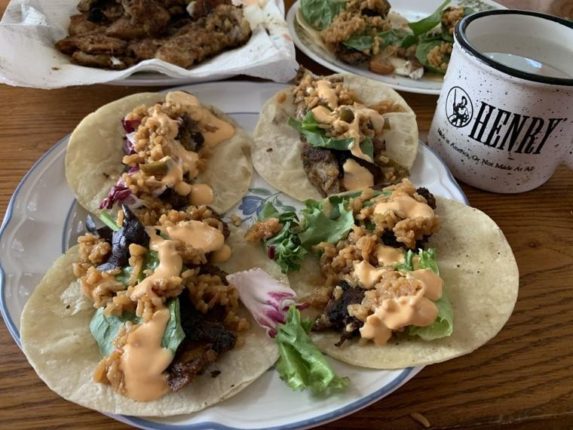
To begin, cook your fish. I like to roll my fillets in cornmeal and season with Tony Chachere’s seasoning and fry to a golden brown.

Then heat some corn tortillas in a skillet. I put in a little grease and heat them up.

Next, lay out the tortillas on your plate or a cookie sheet. Lay a fillet on each tortilla and put on a little bit of salad.

Splash on some salsa and sprinkle on cheese. Instead of salsa we also like some of the spicy or vinaigrette types of dressings — or last week I used some Sweet Baby Ray’s Dipping Sauce. That was excellent, too.

Lately, I’ve also chopped up some onion slips and sprinkled on, too, which are good. You can also add fresh chopped tomatoes and especially slices of avocados.

Fold the tortilla over and indulge.

Try a fish taco and you might just find it hard to go back to eating fish fillets by themselves.

Tom Claycomb lives in Idaho and has outdoors columns in newspapers in Alaska, Idaho, Utah, Nevada, Colorado and Louisiana.He also writes for various outdoors magazines and teaches outdoors seminars at stores like Cabela’s, Sportsman’s Warehouse and Bass Pro Shop.

Free Fishing Day is June 13, and here’s what you need to know for a fun day of fishing

Free Fishing Day is June 13, and anyone can enjoy a day of fishing without a fishing license, but all other rules still apply.

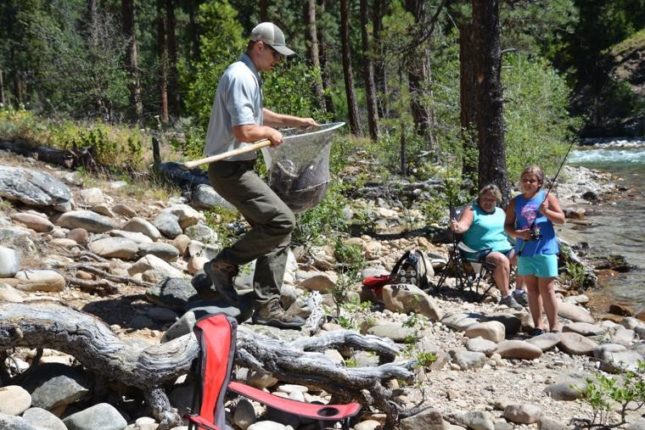
Free Fishing Day is an Idaho tradition that usually includes Fish and Game employees and volunteers bringing fishing gear to various fishing spots and loaning rods, reels and tackle and helping people learn to fish. While that’s not an option because of COVID-19, it’s still a great opportunity for novice anglers to experience some of the wonderful fishing opportunities Idaho has to offer. Be sure to practice appropriate social distancing and be safe when you’re enjoying your time outdoors.

If you’re new to fishing, or new to fishing in Idaho, the state has thousands of places to fish, and you can catch a variety of species ranging from palm-sized bluegill to 9-foot sturgeon.

Fish and Game also stocks about 30 million fish annually for anglers, which includes millions of trout that are immediately available to catch, as well as millions of young salmon and steelhead destined for the ocean that will later return as adults.

“In the month leading up to Free Fishing Day, Fish and Game hatcheries stock over 400,000 catchable rainbow trout in waters throughout the state,” Fish and Game Hatchery Manager Bryan Grant said.

Catchable-sized trout ranging from about 10 to 13 inches are stocked statewide and in many easily accessible fishing spots, including community ponds, local reservoirs and nearby lakes. Those are all convenient places to go for Free Fishing Day that are close to home and provide a good chance to catch fish.

If you don’t have fishing gear, it’s fairly inexpensive to get started. You can get a basic rod/reel combo for about $25, and the only tackle you need at first is a few hooks, weights, bobbers and bait, which will costly only a few bucks more. It’s tough to beat live worms for bait because nearly all fish will eat them, but if you don’t want to deal with squirming live worms, there are many other bait options, and lures, flies and other tackle give you even more options.

If you’re unsure how to rig a rod for fishing, Fish and Game provides simple instructions on its Learn to Fish webpage. For information about bag limits and other rules, see the 2019-21 Idaho Fishing Seasons and Rules booklet, which is available in a printed booklet at Fish and Game offices and many license vendors and sporting goods stores.

Fishing is a fun family activity, and easy for kids to learn. Remember when taking young kids out to make sure they wear lifejackets and bring lots of snacks, a hat and sunscreen. Be patient with kids and enjoy your time outdoors with them, even if the kids decide they’d rather explore nature or do something other than fishing.

If you’re wondering where to fish, here are some suggestions, but this is a tiny sample of what’s available for anglers. You can learn about many more places to fish, as well information on when they were last stocked, by to going to Fish and Game’s Fishing Planner, which also shows exact location of each of the waters listed below.

Upper Snake Region

Ryder Park Ponds

Managed by the Idaho Falls Parks and Recreation Department, Ryder Park offers two ponds to double your fishing fun. Becker and Riverside ponds are located within 50 yards of each other and are stocked regularly with an abundance of rainbow trout and occasionally catfish. Ospreys take full advantage of the fishing bounty at Ryder Park and can be seen regularly as they skim the ponds to grapple a fish dinner in their talons.

Though close in proximity, the two ponds offer very different experiences. Becker pond is well manicured and surrounded by a walking path that leads to several picnic shelters and an ADA accessible dock, while Riverside pond offers a more undeveloped setting, but is often less crowded and offers anglers more elbow room. Small spinners are a good option when temperatures are cool, but worms seem to work well in both ponds during the warmer months.

Trail Creek Pond

Nestled at the base of Teton mountain range, this often overlooked pond is the perfect stop for families headed on vacation to Jackson Hole or the nearby Grand Teton National Park. Restroom facilities, picnic tables and beautiful mountain scenery make Trail Creek an opportune place to stretch your legs and catch a few rainbow trout before continuing on your journey, or when camping nearby. Stocking began in early May, just in time for that summer vacation.

Due to its high elevation and cooler water temperatures, this pond fishes well all through the summer heat when other lower elevation ponds start to warm up and fishing tends to slow. Kids are not likely to get bored here as catch rates are usually high and the fish tend to bite on bait or lures equally. Several open areas make this a good place for beginners to learn how to cast a fly or throw a spinner without too much risk of hanging up in the brush.

Rexburg City Ponds

Young anglers can catch perch, catfish and rainbow trout at this urban fishery located within the Rexburg Nature Park. A fun network of trails and bridges make this a great place for families with young children to enjoy a fishing adventure without straying too far from paved trails and picnic shelters. A simple bobber and worm are a great setup for the abundant perch in these ponds, and by replacing the bobber with a sinker you can easily transition to catching catfish.

Anglers looking for trout will have better luck fishing in the early morning or late night hours when temperatures are cooler. Don’t forget to have a few quarters in your pocket to drop into one of the vending stations that dispense food for the ducks and geese that call this park home. No fishing trip to the Rexburg City Ponds is complete without being surrounded by a flurry of feathers!

Salmon Region

Southeast Region

Bannock Reservoir

This urban fishing spot is part of the Portneuf Wellness Complex in Pocatello. It is about 6.5 acres and down to 35-feet deep and regularly stocked with catchable rainbow trout. The trout limit is two, and all other species are managed under general rules.

The Portneuf Wellness Complex is a large 80-acre, manicured, multi-use complex designed to serve team and individuals sports and activities. The complex has over 2 miles of paved walking trails, a mountain bike park, and offers a playground for the kids. The reservoir is divided into a swimming area complete with a sandy beach and a fishing area with docks and a rocky shoreline to accommodate anglers. Anglers can also bring their float tubes, and “beach bums” can bring kayaks and paddleboards. There are pavilions, bathrooms and plenty of parking.

Edson Fichter Pond

This 3-acre urban fishery is tucked inside Edson Fichter Nature Area in south Pocatello. Access is by paved trails from a paved parking lot. No boats or float tubes are allowed, but who needs that with all the bank fishing and two large docks that are available? This pond is also ADA-accessible.

Catchable rainbow trout are regularly stocked, just remember the two-trout bag limit. A smaller puppy pond is located near the fishery for those who wish to train or play with their four-legged friends, but this smaller pond is not stocked or open for fishing.

Edson Fichter Nature Area boasts 40 acres of natural landscape dominated by native plants and trees, and springtime wildflowers connected by looping trails that lead visitors to the Portneuf River, the ponds, and to other parts of the site. Paved trails maintained by the Portneuf Greenway Foundation border the Edson Fichter Nature Area and are a great way to get some extra exercise or nature watch after an afternoon of fishing. Visitors enjoy seeing wildlife such as cliff swallows, osprey, mule deer, foxes, waterfowl, and even an occasional bald eagle.

Upper Kelly Park Pond

This 1-acre pond is small in size but packs a large amount of fun for kids when the trout are biting, which is most of the time. Located within Arthur Kelly Park in Soda Springs, this community fishery is an easy quarter-mile hike from the paved parking lot. Don’t be “lured” to the lower pond by the parking area for fishing because it isn’t stocked, but is still a great place for kids to catch a frog or two.

The easy trail hike ends at a picturesque little pond — perfect for kids to dunk a worm and have a picnic lunch. The upper pond is stocked regularly by Fish and Game and the bag limit is six trout per day. Besides a fishing pond, the park boasts a pavilion, restrooms and concession stand, two softball fields, two tennis courts, a playground, picnic tables, several miles of walking trails and a disc golf course.

Jensen Grove Pond

This 55-acre pond is located within Jensen Grove Park along the Blackfoot Greenbelt in the heart of Blackfoot. Bring your boat or fish from the bank — either way you can catch one of the thousands of rainbow trout stocked in this fishery every year. The trout limit is six per day. This large fishery is surrounded by extensive paved trails perfect for walking and biking, and many areas of this park and fishery are ADA-accessible. This is a seasonal fishery relying on irrigation water, usually from April through October.

Park amenities are numerous, including a skate park, playground, picnic areas, and restrooms. People use the large pond for everything from fishing to boating to jet skiing.
Crappie fishing 101: Springtime is crappie fishing time

I was about to panic.

I love the spring in Idaho. If you’re an outdoorsman how can you not love it?

Bear hunting, turkey hunting, mushroom hunting, whistle pig hunting and crappie fishing is in full swing.

And I was stuck over in South Dakota for six and a half weeks — and then came down with COVID-19.

I’m probably exaggerating a little but it was cold and somewhat snowy up until I flew back home. I got to Idaho and everything was green. I felt like I’d lost one and a half months of my life. One day it was still somewhat winter and then suddenly I woke up in Idaho and we were on the tail end of spring. If I missed crappie fishing, I’d die! Katy and I had gone crappie fishing before I’d left but it had been about two weeks too early so we’d only caught a few.

So, I was afraid the crappie had already spawned and moved out but I had to run try ‘em. My daughter Kolby had just healed up from COVID-19 so she said she wanted to go with me. I had a few hours of writing to take care of and since it was Memorial Day I told her we’d leave at noon and hopefully the crowds would have thinned out a little by then and we’d fish until dark. Turned out to be a good call.

Due to minor complications we didn’t arrive at the lake until 3:30 p.m. Things started off a little slow. We were catching enough to be happy and at this rate would end up with a decent mess of fish but we had to get things sped up so we jumped and tried one of my old reliable hot spots.

We pulled up to my hot spot but no bueno. I always slaughtered the crappie there but something had happened. OK, back west I had a few spots, we’ll go hit them.

I have a little jon boat with a trolling motor so we don’t move too fast so we were fishing as we moved to our new location. There is a flat spot that I never fish because it’s no good but for some reason we hit it. We got a decent one. In all my articles I tell everyone if they catch one to stop and jig because crappie are schooling fish. Where you get one there’s more. So, I decided to follow my own advice even though it looked like a dead spot.

We caught a couple more. Then it got hot. I don’t know if we had found a spot packed with crappie or they had moved in as the sun went down but it was crazy. The last hour we literally had a hit every cast.

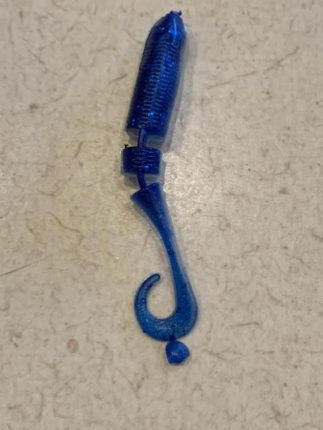
Usually when we start fishing, I’ll put a different colored jig on every now and then and we’ll go with whichever color they’re hitting best. The last few years we’ve been doing good on black/white or red/white tube jigs so that’s what I put on Kolby’s line. I decided to put on a Lake Fork Trophy Lures 2 1/4-inch Sickle Tail Baby Shad. After 45 minutes, I’d caught six and Koko had only caught one or two. I told her we were switching hers to a Lake fork jig. Right away she started smoking them too.

Also, usually I’ll put a couple of split shots six inches above the jig. When I changed Koko’s jig, I removed her split shots. Lake Fork makes the best plastics. They have slots cut in the tail so any movement causes the jig to quiver realistically.

Here’s what was working for us. They were spawning so we’d cast right up close to the shoreline. We’d lift our rod tip and then reel in slowly as we let it back down. You don’t want to reel too fast.

Crappie are called “papermouths” for a reason. They have really soft mouths that can easily rip out so be gentle when working them. Don’t set the hook. Just lift your rod tip and reel steadily to keep pressure on.

The bigger (heavier) they are, the more likely they’ll rip off when hauling them into the boat. So I net all of mine. I haven’t documented it but I bet you’ll lose 15 to 20% if you try to lift them in so that’s why I use a net.

Kolby and I both wondered, did the fishing get hot because the sun was going down or had we just missed this little crappie stronghold when we went by the first time? I don’t know but I think we’re going back again near dusk and try to do a repeat.

If you haven’t been out crappie fishing this spring, then you better get out fast and get in on the fun!

Tom Claycomb lives in Idaho and has outdoors columns in newspapers in Alaska, Idaho, Utah, Nevada, Colorado and Louisiana.He also writes for various outdoors magazines and teaches outdoors seminars at stores like Cabela’s, Sportsman’s Warehouse and Bass Pro Shop.

Grace period to register recreational vehicles extended until end of June

The Idaho Department of Parks and Recreation, in consultation with Gov. Brad Little, asked law enforcement agencies to suspend enforcement of 2020 registrations for recreational vehicles until July 1.

A current grace period was set to expire at the end of May. The extension allows the department time to complete the transition to a new registration system, which ultimately will give customers the ability to easily buy or renew registrations online, at county motor vehicle offices or at retail vendors.

Registration sales were paused, as planned, for most of April to allow the transition from the old system to the new one, including migrating the data of nearly 320,000 customers. The COVID-19 outbreak complicated the transition when it closed county motor vehicle offices, which traditionally handled half of the registrations.

This pause and shutdowns created a backlog of customers wanting to register, renew or get help, overloading the department’s phone lines. 

“We’re sorry for any inconvenience, and please know we’re working hard to improve the website sales and to get the county offices and retailers selling again,” said Tammy Kolsky, the department’s manager of registrations and reservations.

The department continues to refine the registration website, making it easier to use — and more than 10,000 customers have successfully bought or renewed registrations for boats, off-highway vehicles and snowmobiles with it. 

In coming weeks, the department anticipates bringing the local motor vehicle offices and hundreds of retail vendors back online, giving customers more purchasing options.

Customers who call the department for assistance and are placed on hold have the option to leave a call-back number, which Kolsky suggests they use. Whether a customer leaves a call-back number or remains on hold, they have the same place in line and will be serviced in the order in which they called.

Orphaned baby bald eagles rescued

Somewhere high in a tree south of Clarkston, Montana, two bald eagle chicks are settling into a new home.

After less than a week at the Montana Raptor Conservation Center, the two eaglets rescued from a nest in Bozeman, Montana, were placed in a new nest, giving them another shot at life in the wild.

The relocation involved the help of state wildlife officials, a willing landowner and a volunteer climber who rescued the chicks and eventually hauled them up to the new nest, said Becky Kean, rehabilitation director at the raptor center.

“We’re pretty proud of how it all worked out,” Kean said.

The eaglets were rescued April 24 after two adult bald eagles were found dead below the nest on state trust lands just east of Interstate 90 in north Bozeman, according to a Montana Fish, Wildlife and Parks news release.

No cause of death has been identified for the eagles. The birds have been turned over to the U.S. Fish and Wildlife Service, which is investigating their deaths.

A climber got the chicks down from the nest — about 75 feet high, Kean estimated — and the birds were taken to the raptor center. The chicks were in good condition.

Eagles can’t be raised in captivity and released, so the best chance for the birds to survive in the wild was finding an active nest where they could be taken in by adult eagles. Adults will typically adopt orphaned eaglets placed in their nests.

FWP and the raptor center went to work looking for a place to put the birds. Kean said they needed an agricultural area, open water and adult eagles that were already taking care of chicks near the same age, but not too many chicks.

A nest on private land near the Missouri River south of Clarkston met all those criteria. The landowner agreed to accommodate the chicks, and Montana Rail Link allowed access to the property via one of its roads.

All they had to do now was reach the nest. Bringing machinery in wasn’t an option. They needed the climber again.

Kean said the raptor center found the person through a volunteer who works at Spire, the climbing gym.

“He was the last piece of the puzzle to come together and one of the most important,” Kean said. “He was extremely good at what he did.”

The new nest was a little higher than the original, Kean said, and it was a more technical climb. Then there were the adult eagles themselves, flying close to the nest to protect the other chicks while a human scaled the tree.

But the eaglets were placed safely into the nest without issue. The two orphans had spent just five days at the raptor center.

“It’s pretty amazing when you wrap your head around it,” Kean said.

Ground squirrel hunting

Ground squirrel hunting is a blast and a great way to get kids into hunting. Elk hunting can be tough some years. You get up well before daylight and don’t get back to camp until well after dark. By the third day, you’re so sore that you can’t even move and some years if you see an elk you’re lucky, especially now that Idaho is overrun with wolves. And you’re really lucky if you even get a shot every three to five years.

So for a kid just starting off, elk hunting is not the hunt to take them on — unless you want to scar them for life. That’s why I say ground squirrel, aka whistle pig hunting, is a great hunt for a beginner. (Their actual name is Townsend’s ground squirrel).

To begin, they get a lot of shooting. On a good day, I’ll get 400 to 500 shots. Secondly, they don’t have to be quiet. I remember deer hunting as a 7-year-old. In those days, they didn’t make cold weather clothing for kids so you were freezing and Dad wouldn’t let you make a move. If you had to scratch, you had to slowly move your hand up and scratch yourself. And you couldn’t make a peep.

On a whistle pig hunt, that’s not the case. A kid can move around and talk. Of course, you don’t want to talk too loud or do calisthenics, but still, you have a lot more freedom. Let’s be real. A kid wants to shoot and the whistle pigs oblige.

While hunting them, you’ll see some cool stuff. One time while I was shooting and a badger ran out and grabbed my whistle pig. Another time, an 87-year-old buddy hit one and I said, “You got it!” Right while it was bouncing around a hawk swooped down, grabbed it and took off. Then I said, “You had it.” Many times while shooting, hawks will land out in front of you and pick them up.

Whistle pigs and badgers can totally destroy a pasture if they aren’t thinned out. They will make a pasture useless for grazing cattle and you’re sure scared to ride a horse across the pasture or he may step in a hole and break a leg and flip and hurt you to boot.

Most of your shots will be within 75 yards, so a .22 is a great rifle to use. The Ruger 10/22 is great because of the after-market 25 round clips that are offered. I love tricking out Ruger 10/22s to make them more accurate, which helps since whistle pigs are so small. You can also hunt them with your bow to sharpen up your archery skills.

.22 shell prices have dropped and are once again affordable, or another good option are airguns. I’m about to start testing a Umarex Hammerli 850 Air Magnum, which is a break-barrel .22-caliber airgun. That should work perfectly. Plus, with an airgun the bullet won’t skip across the prairies as bad which makes it a perfect choice for a kid to learn with.

Another fun option that I’m going to have to check out is the Umarex Air Javelin. It is an air archery option. It is like an airgun that shoots arrows. How cool would that be to hunt whistle pigs with?

On these hunts, it is a good time to teach your kids about the need to watch the background so a bullet doesn’t skip across the prairie and hit someone. They need to always be watching to make sure that someone didn’t drive up behind where they’re shooting.

It is best not to touch them or if you take your dog with you not to let him eat one. Many times they carry the plague, which you don’t want to catch. Which brings up the point that shooting them helps thin out the population which in turn helps prevent the plague, which in turn actually in the long run helps preserve the population.

Moral to the story: Get out of house isolation and go isolate out on the prairie and have a fun day of shooting with your kids.

Tom Claycomb lives in Idaho and has outdoors columns in newspapers in Alaska, Idaho, Utah, Nevada, Colorado and Louisiana.He also writes for various outdoors magazines and teaches outdoors seminars at stores like Cabela’s, Sportsman’s Warehouse and Bass Pro Shop.

From antler hunter to wildlife artist

Antler hunting is a hard occupation. For two decades, Jason House searched frozen hillsides of Wyoming from March to May looking for antler tines sticking out of the snow with a massive elk or deer antler hidden below. His passion for antler hunting evolved along with his appreciation of their sculptured lines into crafting unique art pieces from antlers.

At a recent art and hunting show I stopped mid-step and gawked at his luminescent reproductions of a massive mule deer skull and antlers. Next to it was a reproduction of giant bighorn sheep skull embedded in a chandelier. Next to it a reproduction of elephant tusks with transparent light glowing up and through them.

Each is a stunning pieces of modern art and decor not to be relegated to hunting cabins and attics. They are magnificent wildlife art to share with friends, family and colleagues. I stepped into his Creations in Antlers booth to learn more about how he creates his works of art.

Metal, light and sculptured wood are the mediums he uses to turn antlers and skulls into works of art. His reproductions of bighorn sheep skulls with a copper texture and a patina of emerald mounted on polished rustic burls are show stoppers. Definitely a welcome addition to any contemporary living space.

Displaying hunting and fishing art tastefully

Today’s tastes in natural arts are refined. Artists, collectors and hunters look for ways to artistically enhance natural beauty. This is where Jason’s wildlife and antler artistry shines. What he calls his Ice Creations, acrylic antler reproductions with luminescent light traveling into and through antlers, took half a decade to perfect.

His creations grace homes, lodges, restaurants and hotels through out Wyoming, Montana, Idaho and Alaska. At Stonewood Lodge, he created the lighting decor for a 10,000-square-foot lodge in remote Alaska. All the materials were flown in. Two of the more than 50 items he created for the lodge were massive moose antler chandeliers measuring 8 feet by 5 feet weighing over a thousand pounds.

What Jason titles Creations in Metal are a custom cold metal-coatings he applies to skulls and finishes the art piece by adding a patina. The end product is a striking piece of art commemorating the animal, the hunt and the artist.

Currently, Jason is crafting a special artistic reproduction of moose antlers for a widow. Weeks after her husband died, a once-in-a-lifetime moose hunting permit arrived in the mail for him. She donated it to Hunting with Heroes, a Wyoming organization that sponsors hunts for disabled veterans. Jason guided the recipient of the tag, Army veteran Don Walk, to a bull moose of a lifetime. Jason made a cast of the antlers and is working on the artistic reproduction of the antlers to give to the widow to commemorate her donation.

Turning the corner on a small business

His business boomed when he began exhibiting at art shows like the Jackson Hole Antler Art Show, the Safari Club International Convention and the Wild Sheep Foundation Annual Convention. At each of these venues potential clients drift by looking at his custom casting of bear skulls, Marco Polo and Gobi argali sheep horns, desert bighorn sheep skulls. Word spreads about a new way to create art from a hunting experience. One hunter had him stylize the skull of a bighorn sheep; another wanted the antlers of a magnificent elk he took in Wyoming cast in acrylics with light streaming through them. A decor buyer for high-end, five-star resorts bought all of his art works at the end of this year’s Safari Club International Convention.

Today business is booming, gone are the days of grinding it out in 12-degree cold and frozen fingers looking for antlers. His studio Creations in Antlers studio in Greybull, Wyoming, attracts clients from around the west. His love for antlers and art turned into a lucrative occupation he once only dreamed of.

Harry Morse is currently a freelance writer living in Pocatello. His articles have appeared in national hunting and fishing magazines. The majority of his career he worked for Washington, Idaho and California Departments of Fish and Wildlife as an information officer. He has travel broadly an enjoys photography, fishing and hunting.