Cleaning up after history: Collaborative effort hopes to restore Yankee Fork for salmon, steelhead

A 10-year restoration project to repair catastrophic ecological damage to the Yankee Fork of the Salmon River is expected to be mostly concluded this summer.

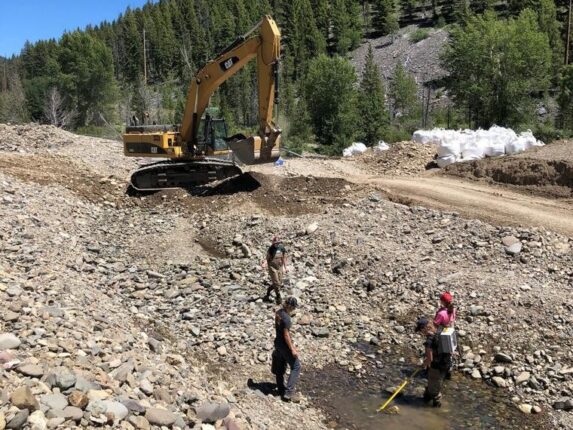
The Bonanza project has seen about 100,000 cubic yards of old mining tailings removed from the area in an effort to restore the Yankee Fork and offer Chinook and steelhead improved habitat.

Bart Gamett, a fisheries biologist for the Salmon-Challis National Forest, said the project of removing mining tailings, restoring the floodplain and rebuilding stream channels started as a collaborative effort between the Bonneville Power Administration, Bureau of Reclamation, Custer County, Idaho Governor’s Office of Species Conservation, J.R. Simplot Company, National Marine Fisheries Service, Salmon-Challis National Forest, Shoshone-Bannock Tribes and Trout Unlimited. The restoration project is one of the largest in Idaho.

“This project is significant because it substantially improves the health, diversity, and productivity of the Yankee Fork watershed,” said Heath Perrine, a ranger on the Challis-Yankee Fork district.

Gamett said the timing of heavy construction work on the Yankee Fork is limited by nature.

“We have a fairly narrow window we can actually do that work because the steelhead spawn in that area in the spring and their eggs hatch in the early summer,” he said. “Then the Chinook come in and spawn in the fall. Their eggs are in the gravel through the winter and early spring. So there’s only about a one month window we can actually do stream work in the Yankee Fork without it having significant effects to the Chinook and the steelhead. That runs from July 8 to Aug. 15.”

The project is an effort to repair damage to the stream caused by a gold mining operation between 1940 and 1952. The dredge tore up 5.5 miles of the river bed. The Yankee Fork dredge still sits in the canyon as a museum of a bygone era.

“I don’t want to speak too negative,” Gamett said. “It was a different time. Part of that was coming at the end of the Great Depression and the beginning of World War II. It certainly provided employment opportunities for people and helped Idaho’s economy. Yet the impact on the Yankee Fork — the valley floor, floodplain and the channels — it was just devastating. It significantly reduced the ability of that section of river to support fish. Those dredge tailing piles are so big that the river doesn’t have the power to move through them and do what it would normally do.”

Not all of the tailings left by the dredge have been removed, said Amy Baumer in a news release about the project. About 7 acres of tailings near the dredge are “being left in place to help preserve the mining history of the area and maintain the historic setting of the dredge.”

Visitors to the area can expect heavy equipment operating during the next few weeks and the project may cause short traffic delays, Baumer said.

“A lot of people feel very strongly about those dredge tailings,” Gamett said. “Their dad or their grandpa or uncle worked on the dredge. It was a way that they helped provide for their family. They see a lot of value in the dredge tailings and the history of that area.”

Gamett said it is costing substantially more to clean up the destruction than the value of the gold that was removed. According to the Yankee Fork Dredge website, the operation extracted $1,023,024.89 in gold and $14,298 in silver.

“They didn’t give a lot of consideration back then to some of the other values that we find are important today, like fish,” he said. “That’s been one of the big challenges with all the work that we’re doing up there, from an ecological perspective that dredge mining and the legacy of that has been catastrophic on the river.”

Spawning salmon once numbered in the thousands in the Yankee Fork. Today, the Shoshone-Bannock tribes operate a trap that allows them to count migrating salmon before they are released back into the stream to spawn.

“I would not expect there to be more than 30 fish come into the Yankee Fork this year,” Gamett said.

Gamett said the project is only one piece of the puzzle to save Idaho’s declining salmon and steelhead.

“Our efforts by themselves in the Yankee Fork will not save Chinook and steelhead but we’re hopeful that our restoration efforts will increase the ability of the Yankee Fork to produce Chinook and steelhead,” he said. “This will contribute to an overall recovery. We’ve got to take care of issues in other areas where they complete their life cycles as well.”

Gamett said the lion’s share of work will be completed this year and there will be some replanting of vegetation next season.

The acres of tailings hauled out of the site have not gone to waste. Custer County crushed some and used it to resurface a section of the Yankee Fork Road. A private contractor took the rest to crush up and sell in his business.

The Bonanza project, which covers about 46 acres, is located on both private land owned by the J.R. Simplot Company and national forest land administered by the U.S. Forest Service.
Hog hunting with an airgun

A couple of weeks ago a good buddy of mine Bill Olson who is the publisher for Texas Outdoors Journal lined us up an airgun hunt with Adventures Missions Recreation Properties on one of their ranches in Menard, Texas.

I was going to use the new Umarex .50-caliber Hammer on axis deer and then switch to the Umarex Air Saber and hog hunt.

The air saber is like an airgun that shoots arrows-at 450 fps. That’s fast.

The hunt gelled fast due to the quality of people making it happen. Bill called me Wednesday and told me to grab a plane ticket and fly into San Antonio the next Tuesday.

D-Day soon hit and Air Olson (Bill’s truck) picked me up and we were off. We stopped by Uvalde to meet Bob Zaiglin, whitetail deer extraordinaire biologist.

I hadn’t been to Uvalde since years ago when right after the bell rung, I got thrown under my horse and he stomped me pretty bad. Ended up in the hospital in San Antonio.

The next morning we headed to Menard and met our guide Robert Shipman and owner Scott Huggins. We sighted in our guns and then jumped in a blind. We were going to hit the axis deer and Aoudad sheep first and then hogs.

We set up a Slow Glow to get the hogs coming in and were going to give it a few days to get hit. But sometimes schedules get changed up when hunting. Robert and I were doing a spot/stalk hunt for axis deer. If I remember correctly it was the middle of the day and the sun was up and it was warming up.

By now the axis would be bedded down under a mesquite tree or live oak. We were creeping along stopping ever so often to glass with our Riton Optics 10×42 binocs. No need for a spotting scope because half the time you couldn’t see 50 yds.

We must have been moving along pretty quiet because we got within 20 feet of a boar on his bed under some brush. He shot out like a bullet and Robert hissed hog!

When spotting/stalking I keep my scope cranked down to 4x so I can take a fast shot. If something is way out there you should have time to crank it up.

I threw up my .50-caliber Hammer and hit him in the rear end. The big 350 gr. slug flattened him. Impressive.

But in a hot second he jumped up and charged downhill straight at us. Robert yelled he’s charging.

I jacked in another pellet and leveled out again. He was coming down the slope at a full charge. The brush stopped about 10 feet from me. I didn’t want to shoot at him in the brush and take a chance of the bullet deflecting so I was going to wait until he hit the edge of the brush. At 10-15 feet he went down.

I don’t know if he stumbled and fell or what but I shot him again right fast and ran up and shot him behind the ear with my .44 mag and he was down for the count.

Wow, that was exciting. Don’t even have to go hog hunting in Texas, they come hunt you!

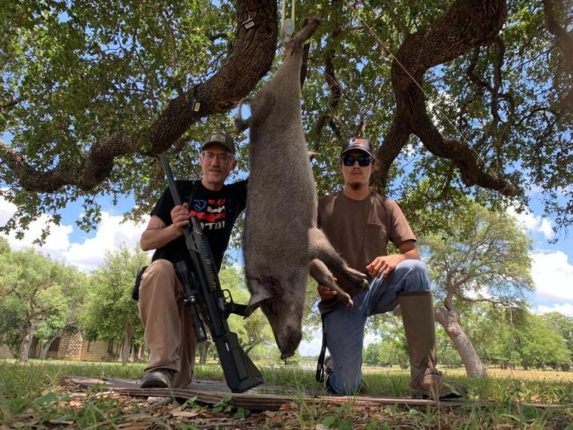
We drug him down to where we could get the truck to him and took him back to the lodge and hung him up. We took pics and then skinned him out right fast.

I had a prototype of the new Professional Boning Knife that Knives of Alaska is just coming out with. I’ve been working with them on developing it so am excited to see it hit the market, probably by the time this article prints.

I whipped out the new knife and in a few minutes we had a pile of meat. Upon getting home I smoked the forequarter and wow, it was the best smoked ham I’d ever had.

Katy and I made chopped BBQ sandwiches and the forequarter didn’t last long. Now I can’t wait to go get another hog. That’s the first big game animal that I’ve killed with an airgun. I’m hung.

Tom Claycomb lives in Idaho and has outdoors columns in newspapers in Alaska, Idaho, Utah, Nevada, Colorado and Louisiana. He also writes for various outdoors magazines and teaches outdoors seminars at stores like Cabela’s, Sportsman’s Warehouse and Bass Pro Shop.

Hog hunting with an airgun

A couple of weeks ago a good buddy of mine Bill Olson who is the publisher for Texas Outdoors Journal lined us up an airgun hunt with Adventures Missions Recreation Properties on one of their ranches in Menard, Texas.

I was going to use the new Umarex .50-caliber Hammer on axis deer and then switch to the Umarex Air Saber and hog hunt.

The air saber is like an airgun that shoots arrows-at 450 fps. That’s fast.

The hunt gelled fast due to the quality of people making it happen. Bill called me Wednesday and told me to grab a plane ticket and fly into San Antonio the next Tuesday.

D-Day soon hit and Air Olson (Bill’s truck) picked me up and we were off. We stopped by Uvalde to meet Bob Zaiglin, whitetail deer extraordinaire biologist.

I hadn’t been to Uvalde since years ago when right after the bell rung, I got thrown under my horse and he stomped me pretty bad. Ended up in the hospital in San Antonio.

The next morning we headed to Menard and met our guide Robert Shipman and owner Scott Huggins. We sighted in our guns and then jumped in a blind. We were going to hit the axis deer and Aoudad sheep first and then hogs.

We set up a Slow Glow to get the hogs coming in and were going to give it a few days to get hit. But sometimes schedules get changed up when hunting. Robert and I were doing a spot/stalk hunt for axis deer. If I remember correctly it was the middle of the day and the sun was up and it was warming up.

By now the axis would be bedded down under a mesquite tree or live oak. We were creeping along stopping ever so often to glass with our Riton Optics 10×42 binocs. No need for a spotting scope because half the time you couldn’t see 50 yds.

We must have been moving along pretty quiet because we got within 20 feet of a boar on his bed under some brush. He shot out like a bullet and Robert hissed hog!

When spotting/stalking I keep my scope cranked down to 4x so I can take a fast shot. If something is way out there you should have time to crank it up.

I threw up my .50-caliber Hammer and hit him in the rear end. The big 350 gr. slug flattened him. Impressive.

But in a hot second he jumped up and charged downhill straight at us. Robert yelled he’s charging.

I jacked in another pellet and leveled out again. He was coming down the slope at a full charge. The brush stopped about 10 feet from me. I didn’t want to shoot at him in the brush and take a chance of the bullet deflecting so I was going to wait until he hit the edge of the brush. At 10-15 feet he went down.

I don’t know if he stumbled and fell or what but I shot him again right fast and ran up and shot him behind the ear with my .44 mag and he was down for the count.

Wow, that was exciting. Don’t even have to go hog hunting in Texas, they come hunt you!

We drug him down to where we could get the truck to him and took him back to the lodge and hung him up. We took pics and then skinned him out right fast.

I had a prototype of the new Professional Boning Knife that Knives of Alaska is just coming out with. I’ve been working with them on developing it so am excited to see it hit the market, probably by the time this article prints.

I whipped out the new knife and in a few minutes we had a pile of meat. Upon getting home I smoked the forequarter and wow, it was the best smoked ham I’d ever had.

Katy and I made chopped BBQ sandwiches and the forequarter didn’t last long. Now I can’t wait to go get another hog. That’s the first big game animal that I’ve killed with an airgun. I’m hung.

Tom Claycomb lives in Idaho and has outdoors columns in newspapers in Alaska, Idaho, Utah, Nevada, Colorado and Louisiana. He also writes for various outdoors magazines and teaches outdoors seminars at stores like Cabela’s, Sportsman’s Warehouse and Bass Pro Shop.

Improving angler accommodations in Southeast Idaho through Fish and Game’s fishing and boating access program

Idaho Fish and Game’s fishing and boating access program, while possibly lesser known than other department programs, focuses on creating and maintaining water-based public access for fishing, hunting, and trapping at over 300 locations statewide. That includes over 60 locations on 33 different water bodies in the southeast corner of the state.

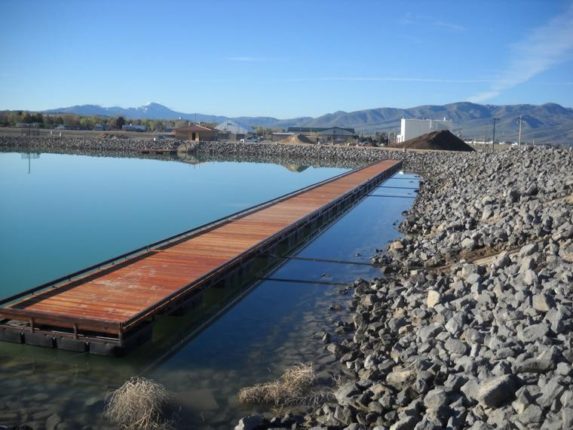
Partnerships, whether with private or government entities, are the cornerstone to this program in the Southeast Region and ensure the abundance of recreational access enjoyed by the area’s sporting public. These partnerships are diverse and help to leverage the improvement of accommodations at access sites. As an example, Bannock County recently partnered with Fish and Game to fund the construction of custom docks at several boating access sites around the region.

Many of our local boatable waters have aging docks or could benefit from better designed/constructed docks to facilitate safe access for the public. Fish and Game has played a major role in the endeavor to improve sportsman access to fish and wildlife resources through sites offering comfortable and functional accommodations, like sound docks to launch and moor boats.

While docks are an important part of providing accommodations for boaters, they also enhance shoreline fishing opportunities in many places. Fish and Game fabricates a custom dock that provides great service to sportsmen and demonstrates pride in the program. The original Fish and Game dock design started in the Panhandle Region quite some time ago. For nearly a decade, over 60 similarly designed custom docks (with some modification) have been fabricated in the Southeast Region from the ground-up. Tweaks to the original design are reflective of the water bodies in the Southeast Region, which are mostly irrigation reservoirs and large rivers (like the Snake River) that can fluctuate drastically in response to water use and availability. The design of this product has been a proven winner and performed well at many locations on the numerous rivers and reservoirs in the region, including the “Big One” (American Falls Reservoir) where a solid product is needed to handle the high winds that frequently sweep across the lake.

When you buy a hunting or fishing license, your dollars — along with federal funds — help Fish and Game work with its partners to maintain access to many world-class fishing and hunting opportunities through the Fishing and Boating Access Program. Outstanding partnerships, on a number of levels, make this program what it is and helps the public enjoy the rich and diverse resources for which Idaho is known. 

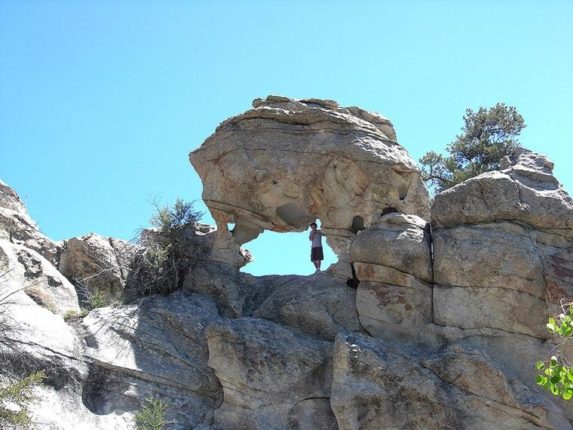
City of Rocks has new plans to update camping, parking

The City of Rocks National Reserve has big plans for its big challenges.

Chaotic, congested and messy might be kind words for some of the parking and camping during a busy weekend for visitors at City of Rocks near Almo.

But hope is on the horizon in the newly released General Management Plan by the National Park Service. The finalized plan was presented this week.

“The general management plan is sort of the marching orders and the Bible for how the park will be managed in the next 15 to 20 years,” said Wallace Keck, superintendent at the City of Rocks.

Keck said most of the plan calls for reorganizing campsites, parking areas and some high-tech aids, but there is also a perk for horse people.

“We are looking at creating an equestrian trailhead that’s on the north side of the reserve,” he said. “It’s been promised to the equestrian user groups for a long time. Now we have the property and the planning to go forward on that. That will be exciting.” Keck said the new equestrian parking lot will accommodate six to eight horse trailers.

The park’s 64 campsites will be changed up to remove conflicts with hikers and day users and eventually total 70 campsites. New vault toilets will also be added.

“We’re going to reconfigure camping and parking so that people at major trailheads aren’t competing with the campers and campers aren’t getting invaded by the trailhead day hikers,” Keck said. “We’re trying to separate those users. We’re going to create more campsites and new campsites in some places, but also removing some others. There will be a no net loss of campsites.”

Parking, a bugaboo for years at the City of Rocks, also gets special attention in the new plan.

“If you were here three or four weekends ago, we were at 120 to 130 percent capacity,” Keck said. “People were parked along the county road. There was literally nowhere to park.”

He said special attention will be made to improve the parking at Parking Lot Rock and Flaming Rock.

“Those are all going to get reorganized,” he said. “They’ll have wheel stops and people will know how to park to maximize the parking lot and where not to park.”

Keck said most of the improvements will occur in the next five to six years.

The park also plans to give visitors online/phone apps to aid in navigation and other information in real time.

“But it takes someone behind the scenes,” Keck said. “We will shift some of our face-to-face employees to behind the scenes to package together some of the kinds of information that visitors want. They’ll have it at their fingertips. Things like maps, history, frequently asked questions, so they can have it when they want it.”

Keck said he expects to be following the new general management plan for the rest of his career at the City of Rocks.

In the future, the park plans to update its climbing management plan.

“We will be looking at a climbing management plan rewrite, a trails plan, and things that have been neglected for 30 years,” he said. “The climbing plan was written in about 1997. That’s too old. Climbing has really evolved at City of Rocks, and we want to make sure we are reflective of our policies on highlining, on bouldering, sport and trad, and other things that seem to keep popping up on the grid. That’s another plan that will go through the public process.”

Cleaning fish the old-school way — am I losing it?

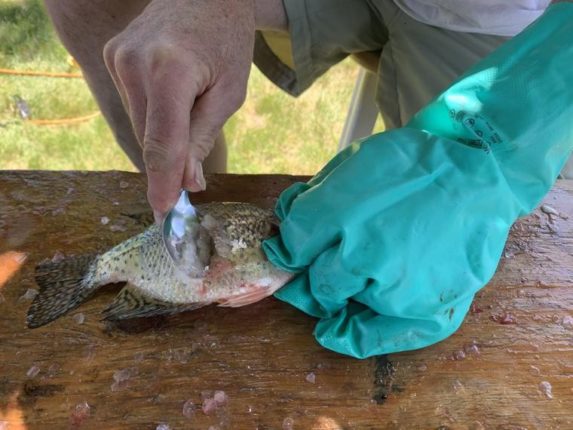
When I was a kid, no one filleted their fish. Dad had us kids use a teaspoon and we’d scrape the fish to remove the scales. Then you made a cut up to the head and then cut the head off. Then you’d pull out the guts. On larger fish like bass you’d make a cut on each side of the dorsal fin and then pull the fin out, and you can do this on crappie and smaller fish, too.

Due to the fish being whole you had to have nearly an inch of grease in the skillet.

Fast forward. After college I moved off for a job and while home on vacation, I hired a guide on Lake Texoma to go striper fishing. We had a good day and when we got back to the dock the guide whipped out an electric fillet knife and filleted our catch.

I’d never seen anyone fillet fish before. I’d heard rumors of filleting fish or maybe read about it in an article but had never seen it. Plus, Dad said you wasted too much meat when filleting, so I’d written it off.

But wow, filleting was nice. With a fillet it took up less room in the skillet and made for easy cooking. 

This totally rocked my world. So I jumped in with both feet and for the last 40 years, I’ve filleted all of my fish.

The other day while my daughter Kolby and I were filleting a mess of fish I had a flashback and told her how we used to clean fish before we learned how to fillet them. She said, “Really?” I said, “Yeah, I’ll show you how we did it.” I told her the good deal is you did get to save the meat over the rib cage and you waste zero meat.

I ran in the house and grabbed a spoon and showed her.

It was now lunchtime and I was going to fry up some fish so I told her we’d fry up this one, too. We sat down to eat and I showed her how you pull the meat off the top of one side and then you can lift up and remove the whole skeletal structure.

Wow! I’d forgotten how much more meat you can retrieve doing it this way. This will work on a lot of your smaller fish, such as trout, perch, crappie bluegill, etc. Gee, have I gone full circle and landed back where I started when I was 4 years old?

I don’t know. For years I’ve even filleted trout but while up backpacking I guess I always pull out the gills, clean out the guts and fry them up whole, head and all. And eat it as described above, eating one side and then pull the head and removing the skeletal structure.

So maybe that’s my answer. Sometimes I’ll fry them whole — and sometimes I’ll fillet my fish.

Tom Claycomb lives in Idaho and has outdoors columns in newspapers in Alaska, Idaho, Utah, Nevada, Colorado and Louisiana. He also writes for various outdoors magazines and teaches outdoors seminars at stores like Cabela’s, Sportsman’s Warehouse and Bass Pro Shop.

Backcountry fishing: East Idaho is blessed with many opportunities to get away and fish

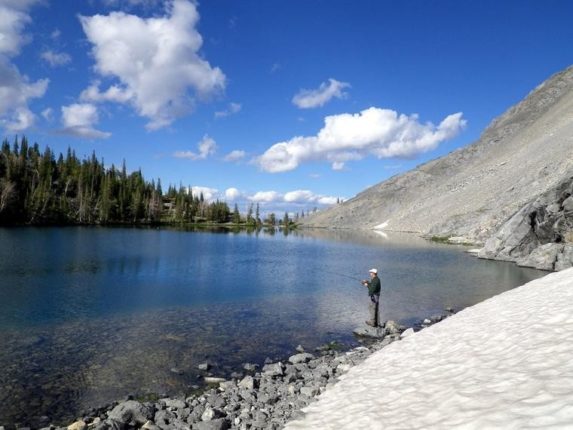
It’s like combining two great flavors — peanut butter and chocolate or pie and ice cream. Backcountry fishing melds the fun of hiking or exploring with the pursuit of fish. And summer is the prime time to do it.

Idaho has about 3,000 backcountry lakes and hundreds of miles of streams that are generally lightly fished and surrounded by world-class scenery.

Getting to these backcountry gems is half the fun and fishing them in total solitude is the cherry on top.

“We like to backpack into an area and disappear from the world,” said Kara Dressen, of trips with her husband. “I catch a couple and then he just goes until he’s done. No busy roads or traffic or competition, it’s just how fishing should be I guess, surrounded by majestic features and silence.”

Brett High, fish manager for Idaho Department of Fish and Game’s Upper Snake Region said “backcountry” means different things to different people.

“Some people think Ryder Park is backcountry,” High said jokingly. He said East Idaho has about 50 alpine lakes in the surrounding mountain ranges, including the Centennial, Big Holes, Snake River, Lemhi and Lost River ranges.

“I’m biased but the alpine lake fishing in the Upper Snake Region is as good as it gets,” High said. “We have diversity, we have size, we have diversity of access with some trails being open to motorbikes and ATVs, and some without any trails at all. Nearly all of the lakes have fish. The lakes that have fish, all fish pretty well.”

To avoid “hot spotting” and listing specific lakes or streams in the backcountry, High spoke mostly in generalities about where to go. One good place to start in choosing a mountain lake or stream is Fish and Game’s Fishing Planner found on its website. Find the Fishing Planner’s interactive map that shows trails, stocking records and fish survey records on fish species present. Contour maps can help users determine how difficult or remote an area is to get to.

“That’s a great resource for people who are trying to do a combo trip,” High said. “That will help them tailor their trip to the type of experience they are looking for.”

East Idaho outdoorsman Fred Eaton also turns to the internet for directions.

“I usually will use Google maps and OnX to check out streams and hiking areas,” he said via online message, “then I go on a hike to a river and try it out, maybe make a backpacking campout out of it.” OnX is a hunting app that offers GPS mapping for hunting nationwide.

The appeal of backcountry fishing is a regular draw for Eaton.

“I love the peacefulness of fishing in the backcountry, seeing the amazing trout and wildlife you can find out there, and having that waterside campfire where you can enjoy your catch right where it came from,” Eaton said. “I try to get into the backcountry for fishing at least once a month. Sometimes it will be a few times a week, or go a month or two without.”

Another avid fisherman from Rigby, Eric Call, said he enjoys going to places that require effort to get to.

“I’ve fished most lakes through the Sawtooth mountains as well as some in the Lemhi mountain range,” Call said via online message. “Alpine lakes and the fish are spectacular.”

Speaking once again in generalities, High said most alpine lakes and streams have brook, rainbows or cutthroat trout in them. Waters that are fished less frequently often have smaller fish but greater abundance. Specifically, he said most of the streams flowing into the Henry’s Fork of the Snake River have brook trout. One example is the Buffalo River in the Island Park area.

“The Buffalo River has a lot of brook trout in it but they‘re not big fish,” High said. “You can drive to the springs that are the source of Buffalo River but there’s several miles in between where there is no access other than floating or hiking.”

Another stream that requires some hiking is Robinson Creek flowing out of Yellowstone National Park.

“There are places you can drive to Robinson Creek, but there’s some really good fishing off the road if you’re willing to hike and get up in there,” High said. “The same with Warm River.”

In the early 1900s, most of Idaho’s alpine lakes and streams were fishless. Fish and Game’s Roger Phillips explained why many of Idaho’s mountains lakes now are good fisheries.

“Most have fish in them thanks to Fish and Game’s mountain lake stocking program,” Phillips said in a news release. “Every year, crews hike, pack in by horseback and fly in fingerling trout, which typically grow to catchable sizes within a few years.”

Brook trout sometimes dominate streams where they are present.

“Brook trout can provide lots of fishing action, and they can be a lot of fun to catch for young or new anglers,” Phillips said. “There’s typically a 25-fish bag limit for brook trout, but check the Fishing Seasons and Rules booklet because there are exceptions. The trade off with brook trout is they can overpopulate mountain lakes, and while catch rates can be high, fish are likely to be small.”

High recommends the motorized users check on access before setting off.

“With ATVs, I’d recommend you first get the (Bureau of Land Management) or Forest Service travel plan maps to verify that the location you want to go is open,” he said. “There are some trails in the Salmon-Challis National Forest in the Copper Basin area that have access to ATVs, like Lake Creek or Corral Creek.”

For all backcountry visitors, the experts recommend going prepared with navigation tools and skills and extra clothing backup in case of nasty weather.

“Be sure to pack clothing for cold and wet weather, even during summer because thunderstorms are common and can drop the temperature by 20-30 degrees, and a warm, sunny day can turn cold and wet within minutes,” Phillips said. “Bring enough food and water to enjoy a day outdoors, and don’t forget other items, like sunscreen and bug repellent.”

“Nearly all the streams in Eastern Idaho have fish in them to one degree or another,” High said. “What better way to get out and learn what your backyard is all about, than by hiking and doing some fishing and just exploring.”

Mormon crickets don’t know about social distancing

I just don’t think that the Mormon crickets heard about the social distancing bit. They travel in hordes packed so tight that they will bring to remembrance the old biblical plagues; you’ll have flashbacks to Charlton Heston’s “The Ten Commandments” movie. If you hate bugs like Katy does, they will freak you out.

Hordes like this are cyclical; some years you see millions and then it may go for years before I see them in high numbers again. If you’re new to Idaho, you need to go check them out. Over the years, I’ve seen them in various places.

Years ago, there were millions on the road before Horseshoe Bend. There were so many that the Idaho Department of Transportation had up a warning sign about slick roads. So many were getting run over that it looked like an oil slick. It sounded like popcorn popping when you were driving since you were running over so many. The road was a mahogany color.

One year, thousands tried to cross the river behind Anderson Ranch Dam. They drowned by the thousands and were thick as a carpet on top of the water in the backwater eddies. It stunk like there was a dead cow in the river.

If you want to see some right now, I found many on the road down to Jordan Valley. I don’t know how long they’ll be there. They were by the concrete barriers on the east side of the road. They strung down the road for probably five miles but the concentrations were a lot less.

I see them but really didn’t know much about them. Where are they migrating to? Are they like the locusts in biblical times? I had to do a little research. They say they can grow to 3 inches long but the ones I see are about 2 ½ inches.

Weird, but they say they live in the rangelands dominated by sagebrush and forbs and are actually not crickets but in the katydid family. (See, they are in the locust family). They are a blackish/brown color although they say they turn this color when swarming but are green or purplish when living in solitary.

How far do they travel? Do they fly in swarms? They can’t fly, only walk, but can travel up to 1.2 miles per day.

According to some of the research that I did, their eggs hatch in the spring when soil temps hit about 40 degrees. Although a lot of time Mormon crickets seem to live almost in solitary confinement in the sagebrush there can be huge population explosions which leads to them forming large roving bands numbering in the millions. What’s weird is that there doesn’t seem to be definite research that explains what causes the fluctuations in populations.

One document that I read said the reason that they have their huge migrations is that they are hunting new sources of nutrition and to avoid from being eaten by their traveling partners. They have no known predators, per se. Sure, various animals and birds will feed on them but not in large enough numbers to thin them out.

I’m only used to seeing seagulls around water. I know it is a different type of seagull but there are a lot of seagulls out on the prairies. I’ve even had seagulls try to carry off whistle pigs when I’m out shooting. So maybe the seagulls that we see out there are surviving on Mormon crickets?

It doesn’t take much of an imagination to envision the damage that a horde of a million Mormon crickets could do on your crops if you’re a farmer or your pastures if you’re a rancher.

As we close, don’t panic if you look out your kitchen window and discover that the sun is blocked by the army of Mormon crickets covering your window. You hear the screams of slow-moving people and pets getting eaten alive. The Mormon crickets have hit your town! Sleep well.

Tom Claycomb lives in Idaho and has outdoors columns in newspapers in Alaska, Idaho, Utah, Nevada, Colorado and Louisiana.He also writes for various outdoors magazines and teaches outdoors seminars at stores like Cabela’s, Sportsman’s Warehouse and Bass Pro Shop.

Chasing Chinook: Outdoor journalist lives in the back of a truck while following Idaho’s migrating fish

Kris Millgate has been traveling like crazy lately. Her schedule is relentless, similar to the migrating fish she is following.

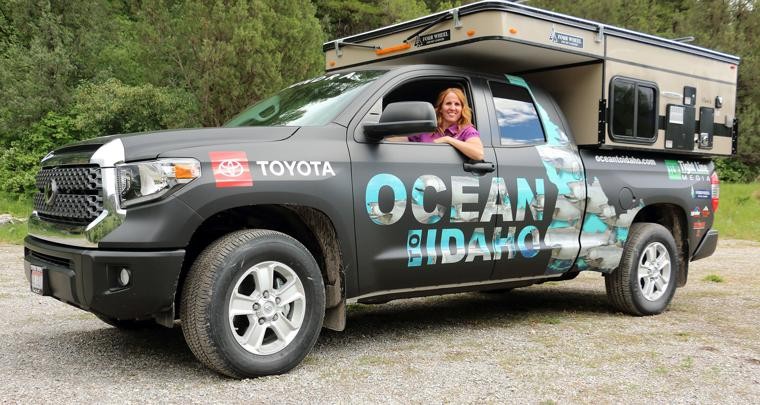
There’s little time for showers — maybe every 10 days — just stop for gas and get going. She sleeps by herself in the back of a loaned truck and camper. The outdoor multimedia journalist has been hunting down pertinent people and places along the route of one of the longest fish migration paths in the world, and puts a camera and microphone in their faces, gathering a story to retell. Her project is called “Ocean to Idaho.”

“I’m following salmon,” Millgate said. “I’ve been researching it for months and months and months. I feel like I’ve been living, breathing everything fish. This time of year, you have 15 hours of light. So, you’re working 15 hours, and I go back to my camper and input everything so I’m up all night. It’s kind of like a crazy crunch, but I love every minute of it. I’m not even tired like I think I should be.”

Millgate is inviting people along for the journey via social media posts. You can find them at tightlinemedia.com/oceantoidaho.

The idea for the project came from a broken leg. While couched up for four months she hatched the plan to follow migrating Idaho salmon from the mouth of the Columbia River to their spawning waters in the Yankee Fork of the Salmon River, 850 miles away.

“During that time on the couch I had a lot of time to think about my work and my life, everything I wanted to do and what I hadn’t done yet,” she said. “I knew the end of the salmon route at the Yankee Fork of the Salmon River. I’ve shot that. I was intrigued by the idea of what on earth was it like for salmon to swim from the ocean all the way to Idaho.”

She made her plans, then a pandemic hit and she had to rethink everything.

“That’s adding an extra layer of challenge that I didn’t even see coming,” she said.

Dams were closed, people were staying home, she originally planned on flying places and staying in hotels. As sponsors Northwest Toyota Dealers offered up a Tundra pickup and Four Wheel Campers fitted it with a camper. She would ditch any helpers and go solo.

“When I do interviews, I have masks, I have wipes, I do not touch the microphone to the people,” she said. “They handle it and I sanitize it afterward. There’s all these extra layers that have to go on during a pandemic. It makes the job more challenging. It’s hard enough to travel across the Pacific Northwest and then to add extra layers of pandemic pressure makes it a little bit interesting.”

Her end game is to produce a documentary film to come out next spring and several stories for local media outlets, including the Post Register. She is focusing on Chinook salmon because “no one really remembers being able to fish for sockeye, they remember fishing for Chinook. So, I’m following Chinook salmon.” Specifically, Chinook from the Yankee Fork of the Salmon River. They use the Columbia, the Snake, the Salmon and the Yankee Fork and return by mid-August.

Along her journey she shoots photographs, video, an underwater camera, a drone for overhead, and her phone. “Sometimes two at a time, but if I’m doing my drone, it’s just the drone and same with underwater.”

Already, she’s learned a few interesting tidbits.

“I’ve talked with a tribal fisher and her son off of their scaffold,” she said. “They caught their first sockeye of the season. It was for dinner. It was magnificent. They were mostly catching shad. … Watching them off that scaffold is amazing. … They’ll be there every night for hours on end. They just shove that dip net down into that fast water. If I ever did that it would fling me right into the current. It’s so fast.”

Another thing Millgate has learned during her venture is about fish rest stops.

“I went to a spot where Chinook salmon from the Yankee Fork of Idaho stop as a rest area,” she said about an area downstream from Portland, Oregon. “It’s an amazing chunk of backwater that used to be like a pasture for cows. It’s been restored and fish come in there. What they’ve discovered is that everyone thinks that salmon head straight to the ocean and they don’t stray. Or they head straight back to Idaho and they don’t stray. But they do. They stray into estuaries. They’ll hold in these safe backwaters. It’s just like a rest stop. Then they’ll get back on the route. They take these little detours to get a break.”

Besides closely following the fish, Millgate is interviewing other stakeholders along the way. The commercial fishermen, sport fishers, tribe fishers, the Corps of Engineers, dam operators, scientists, hatcheries operators, historians and more.

One big issue that comes up is the impact of dams on the fish.

“There are so many dynamics to this,” she said. “Of course, what comes up is the dams, should they stay or should they go? The answer to that is it depends on who you’re asking.”

Millgate said her journey ends in August when the salmon arrive at the Yankee Fork.

“It’s a very packed and tight schedule,” she said. “I have to stay on schedule or I miss something. I’m in country I’ve never seen. The farther you put me from Idaho, the less I know about the landscape and the people. I’m going to put in thousands of miles to follow a fish for 850.”

What to get your outdoorsman for Father’s Day

As an outdoor writer, I test hundreds of outdoor items a year. I’m going to list out some items that have caught my eye for some good Father’s Day gifts. Remember, you don’t have to spend a fortune to light up his eyes. We use everything from a $1.49 package of crappie jigs on up to a $75,000 boat. So whether you’re a kid on a 50-ce-per-week allowance or the Queen of Sheba, you can make his day if you choose wisely.

First off, investigate. With a little work you can figure out what he wants or needs. Just because he is a fisherman doesn’t mean he wants a bag full of red and white bobbers. If he only fly fishes, then you might as well give him a bag of rocks as a bag of bobbers. Get my drift? Let’s get started.

CLOTHING

  • 5.11 makes some cool tactical pants that are great for hunting, fishing and hiking. They also offer great shorts.
  • Heybo makes some sporty fishing shirts.
  • Irish Setter offers great hiking boots. Right now I’m testing their Canyons hiking boots.
  • Hiking socks. These are like a gift from heaven for your feet.
  • Base layers. I use XGO First Aid/Survival.
  • Aquimira offers a lot of filtered water bottles and straws.
  • Adventure Medical Kits offers a plethora of first-aid kits and accessories.
  • Fire starting gear. Waterproof matches and a pack of cheap Bic lighters work great.

BACKPACKS

Outdoorsmen use daypacks, backpacking packs and packs to pack out game. Make sure you buy the size he wants and with the desired features.

KNIVES

(This could be a whole list by itself since we use so many different knives.

• Knives of Alaska Pronghorn, Elk Hunter, Cub Bear or Legacy.

• Spyderco folding knives, Native Chief, Endura, Endela.

• Stones, Smith’s Consumer Products makes the best. Fine Diamond stones, Trihone stone etc. They also offer a lot of folding knives and a boning knife.

FISHING GEAR

(You can buy a lot of small inexpensive items here.)

  • Lures, flies, weights, fishing line, jig heads, plastics, Pautzke Crappie Fireballs, Field & Stream fishing rods
  • Dip net
  • Fly vest
  • Polarized sunglasses

CAMPING

  • Tents — I’ve got a few Alps Mountaineering tents.
  • Lodge Dutch oven.
  • Camp Chef backpacking stove.
  • Grizzly makes some great coolers. They’re durable, bear rated and hold a lot of food.
  • Cook set. If you’re on a tight budget, go to Goodwill and put together a cooking set. Pots, pans, plates, silverware, glasses, etc. — and put it all in a large Tupperware container.
  • MyTopoMaps makes the best maps on the market.
  • For fun around camp get him a Daisy P51 slingshot or a throwing knife or hatchet.
  • SneakyHunter BootLamps for hikers. These are like headlamps for your feet.

HUNTING

  • Get him a Umarex air rifle. He’d have a blast plinking Ruger 10/22. I love these little rifles. They are the most popular .22 on the market.
  • Brick of Federal or some CCI .22 ammo.
  • Riton Optics scopes and binoculars.
  • SwabIts makes some cool gun-cleaning swabs.
  • NRA magazine subscription.
  • SneakyHunter BootLamps. They have three light options, one of which is a blood-tracking light.
  • Targets. He’d love the Birchwood Casey ShootNC targets.

SIMPLE GIFTS

Tell him you don’t have much but you’ll go fishing/hiking/camping/hunting with him. I love it when my wife or daughters go with me. That means more to me than any gift in the world. That way I’m doing what I love and with the people I love the most.

Tom Claycomb lives in Idaho and has outdoors columns in newspapers in Alaska, Idaho, Utah, Nevada, Colorado and Louisiana.He also writes for various outdoors magazines and teaches outdoors seminars at stores like Cabela’s, Sportsman’s Warehouse and Bass Pro Shop.