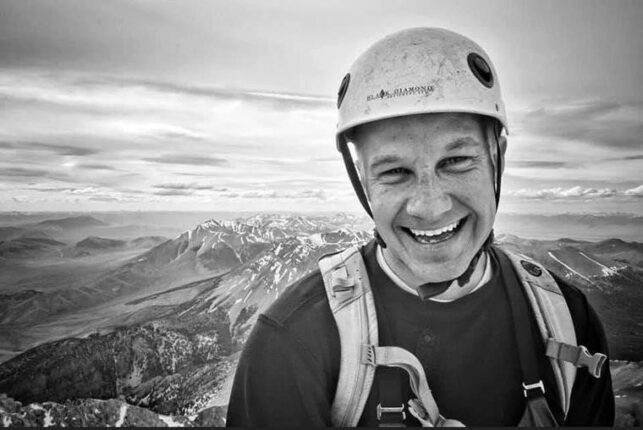
Losing a friend in a climbing accident sucks

A week ago, I was showing a couple of talented college students how to rappel. Neither had ever done it despite being good climbers.

We were at the top of a new rock climbing cliff along the Blackfoot River Canyon and rappelling seemed to be the best way down.

I remember telling them, “Rappelling is easy and fun but probably the most dangerous thing climbers do.” I told them that there is no margin for error. Mistakes tend to end catastrophically bad.

Then looking on Facebook the next day, I read how a long-time climbing friend died in an accident coming down Granite Peak in Montana with his father and two brothers. He had set up a rappel anchored to a large block, but the car-sized block rolled down on top of him. A brother who was rappelling at the time, fell about 15 feet and was injured. A search and rescue helicopter removed the climbers from the mountain.

I remember looking through an old issue of “Accidents in North America Climbing” and reading a comment from one of its editors about how that particular year (and most years) more incidents occurred when climbers were coming down a mountain than when going up. Most involved rappelling.

My friend Kevin Hansen, a graduate of Idaho Falls High School, was climbing the peak with his father and two brothers. The accident was one of those things that would have been nearly impossible to foresee, like a large truck suddenly swerving into oncoming traffic and hitting you head on.

I remember Hansen as a kind soul, loving life and lifting those around him with his sense of humor and impish antics. He was described as a fun-loving Hobbit. Poor guy wasn’t any taller than me. He had moved to the Twin Falls area after college to teach high school seminary for The Church of Jesus Christ of Latter-day Saints. More recently, he was living in Melba south of Nampa. Sadly, he leaves behind a wife and four younger children.

I only climbed with him a few times in the gym and at local crags. His main climbing love was big alpine projects and ice climbing. He often wanted to climb the hardest line on a peak. He always talked of climbing Denali Peak in Alaska. This was the year to get it done. He and another friend of mine were pounding the gym and gathering gear for the expedition. Then the pandemic hit and his Denali plans were put on hold. This summer he stuck to the nearby Rocky Mountains.

Granite Peak is Montana’s tallest point. It sits about 10 miles north of Cooke City, Montana, above the northeast corner of Yellowstone National Park. It has the reputation of being a bit harder than Idaho’s Borah Peak with some technical routes.

As I look at Facebook comments from friends and see old and recent photos of Hansen, it’s a heartbreaker. But maybe we’ll meet up in the hereafter and tie into a rope again, if that’s something that still interests us.

In the meantime, be safe out there, especially when rappelling.
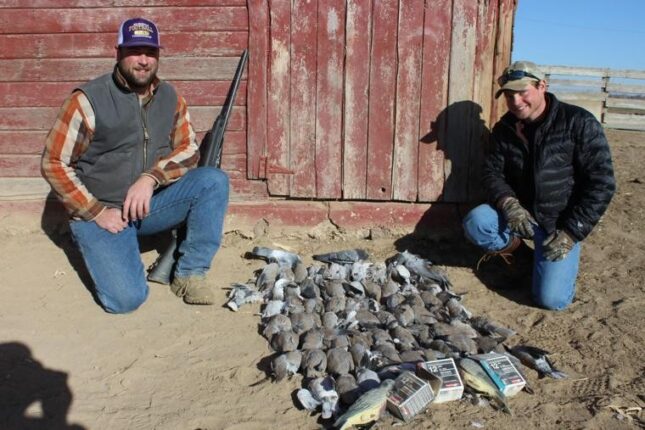
Dove hunting is upon us

Katy and I just put a Honda BF2.3 motor on our jon boat, ditched the trolling motor and are zipping around the lake slaughtering the crappie. I may have crappie addiction issues. This year, the fishing is unbelievable although it was a lot slower this past Saturday. We only caught 50 in three and a half hours. I flew home Friday night, had plane troubles and was late getting in. As we were going to bed, Katy said she wanted to go crappie fishing the next day. I’m a lucky guy.

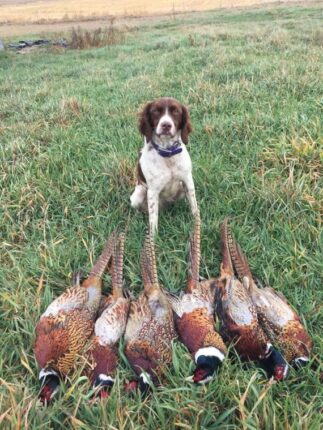
I need to be up bow hunting this week but things are a little scattered this year. Or maybe I have to broaden out that statement and say this lifetime. Then suddenly I remembered! A few more days and it’s dove season. Yikes! School is starting and we don’t want any school kids getting attacked by dive bombing doves, do we? So, we must get out and do our civic duty and protect the kids.

Dove hunting is a blast. It’s a great hunt for many reasons. It is low-key, you can talk, it’s not too intense, you don’t have to get camo’d to the max like when whitetail hunting and the weather is mild.

It’s also a great hunt to start kids on.

When dad started me dove hunting, I couldn’t even reach the trigger of the double barrel shotgun. I couldn’t have been 6 years old. I had to tuck the butt under my arm and shoot like Granny on the “Beverly Hillbillies.” Opening day at lunch mom would come pick us up at school and take us to meet dad to hunt.

Since those days I’ve dove hunted in Idaho, Texas, Kansas, Nebraska and Colorado. Hunting is somewhat similar no matter what state you hunt. Doves are agricultural birds. What I mean by that is they prosper around farms. Hunting over milo fields is awesome or near water ponds in the evening/morning. Years ago in Nebraska, we hunted the marijuana patches that grew wild.

In Idaho I’ve had good luck around old farm yards, corrals, feedlots and water sources. They like to set in dead trees. Dove season opened Sept. 1, as far as I know, pretty much nationwide. But don’t forget another side hunt-Eurasian doves. The Eurasian dove is about one-third larger and since it is an invasive species you can hunt it year-round and there’s no limit. The daily limit on mourning doves is 15 with a possession limit of 45.

As you can see, dove hunting is a great hunt since we can hunt mourning doves and Eurasian doves at the same time. You can really rack up and get a mess of doves. Like in all hunting, if you scout, you’ll be more successful. Drive around and see if you see any flying and ask permission to hunt. Scout out grain fields, old barn yards and water sources.

They don’t really start flying good until late afternoon so you can sneak out after work and still have a great hunt. Last September, when I was working over at Burley, I had a great field that they were feeding in. And right across the dirt road was some big barns that held hundreds of Eurasian doves. I had a lot of shooting there. But right out of Nampa a buddy’s grandparents had an old farmstead that was unbelievable. I don’t remember how many we shot in less than three hours but it was close to 100. What a hunt.

So how do you hunt them? In the middle of the afternoon if they’re out in the fields feeding it can be tough to sneak up on them. You and your buddy may have to take turns jumping them so they fly around and the other one can get some shots.

Get concealed along tree rows. They like to follow them. As alluded to above and especially on dry years early/late it can be good at ponds and slow-moving rivers/creeks. Wear a camo shirt and cap and get semi-concealed for maximum shooting.

I use 7 ½ shot and either a 12-gauge or a .20. I like modified chokes because most shots will be close. A semi-auto is fun but you’re limited to three shots. I usually use low base shells but high base shells are more effective.

Cotton Ward, the old outdoor writer for the Idaho Press back when I first started writing for the IP 19 years ago, ago gave the most accurate description of the flight of a dove that I’ve ever heard. He said “when they come dipsy doodling in, they can be deceptive and hard to hit.” Even though they are smooth, beautiful fliers don’t let them deceive you, they are hauling. If you’re missing, try leading them more. And for sure follow through when shooting.

In the old days, everyone cleaned them whole. Mr. Teague used scissors to clip off the wings, the feet, the rear end and then cut up each side of the back bone and remove it and the guts. Now everyone just breasts them. They make great poppers. Have fun.

Tom Claycomb lives in Idaho and has outdoors columns in newspapers in Alaska, Idaho, Utah, Nevada, Colorado and Louisiana. He also writes for various outdoors magazines and teaches outdoors seminars at stores like Cabela’s, Sportsman’s Warehouse and Bass Pro Shop.

Fall hunting fun is here — are you ready?

Hunting seasons are upon us in Idaho with opening day for general archery season starting on Sunday. Here are some things to keep in mind as you get ready for your fall hunting adventures.

— New this fall, the pheasant stocking program has been expanded in Southeast Idaho to include the Portneuf Wildlife Management Area south of Pocatello near Inkom. This makes two WMAs in the Southeast Region at which pheasant hunters will be able to pursue their quarry, the other being Sterling WMA near Aberdeen which has been traditionally stocked for years. More information about this expanded stocking program will be coming soon.

— Also new this fall is an opportunity for 50 hunters to pursue tundra swans in Benewah, Bonner, Boundary and Kootenai counties. The season runs from Oct. 19 through Dec. 31. Tags went on sale on Aug. 1 and are sold out. If you were successful in buying a swan tag, check out Fish and Game’s swan hunting orientation course, which can be found online at idfg.idaho.gov/hunt/swan/course. This experimental hunt will provide a hunting opportunity for swans for at least three years. After that period, the hunt could become a continued opportunity for swan hunters upon approval by the Pacific Flyway Council and the U.S. Fish and Wildlife Service.

— The big game hunting outlook in the Southeast Region should be similar to last fall. A detailed hunting forecast will be coming out in the next couple of weeks.

— The results for the second controlled hunt application period are not out yet, but will be soon. Any tags leftover from the second drawing will be sold first-come, first-served on Aug. 25 at 10 a.m. Leftover tags can be purchased online, at any license vendor, or at any Idaho Fish and Game regional office.

— Remember, if you have a tag you wish to exchange, don’t wait too long. Once a season has started for the hunt for which you have your tag, exchanging that tag is not possible.

— Figuring out where to hunt is one of the biggest hurdles new hunters face, and Idaho Fish and Game has produced a three-part video tutorial to help guide hunters through the process of finding a place to hunt big game. The series will be featured on Fish and Game’s recently-launched website, gohuntidaho.org, which contains a wealth of information for hunters.

— Hunter education will continue to be offered online through the end of the year without the in-person field day requirement. Bowhunter education is also offered online. For access to online courses, visit idfg.idaho.gov/hunt/education. No regular in-person hunter or bowhunter education classes are being offered at this time, however, the Southeast Region is preparing to offer an in-person trapper education class this fall.

— Those who like to hunt wild turkey should take note that Unit 71 has been added to the list of units in the Southeast Region for either-sex general turkey season, and the season has been extended. This general turkey season is for units 71, 73, 74, 75, 77, and 78 and runs Sept. 15 through Nov. 30.

— Ever wonder what the most common hunting violations are? Check out this list, and make sure you don’t make one of these mistakes in the field this year.

Wrong class license: It is unlawful for any person to purchase and possess a license of the wrong class. This is commonly individuals who are not residents of Idaho purchasing Idaho resident licenses.

Possession/transportation of big game without evidence of sex: Failure to leave evidence of sex naturally attached to the carcass, largest portion of meat if boned or hide for mountain lion, black bear and wolf.

Unlawful take: It is the hunter’s responsibility to know the season open and close dates, hunt area boundaries, which species and sex may be taken, authorized methods of take such as archery, muzzleloader and any weapon hunt, and what license, tag and/or permit is required.

Violate Forest Service road/area closures: The US Forest Service and Bureau of Land Management establish designated routes in Idaho’s National Forests and BLM lands. Please pay attention to the current Motorized Vehicle Use Maps for the areas you hunt.

Hunt without a tag or with an invalid tag: It is the hunter’s responsibility to know the species and sex their tag is valid for, whether the tag is for a controlled hunt or a general hunt, which zone and dates the elk tag is valid for and hunt area boundaries.

Hopefully this information helps gets you both prepared and excited for your upcoming fall adventures. Don’t forget to check out the current Idaho seasons and rules brochures for your hunts this fall and winter. Brochures are available at license vendors and online at idfg.idaho.gov.

Fall hunting fun is here — are you ready?

Hunting seasons are upon us in Idaho with opening day for general archery season starting on Sunday. Here are some things to keep in mind as you get ready for your fall hunting adventures.

— New this fall, the pheasant stocking program has been expanded in Southeast Idaho to include the Portneuf Wildlife Management Area south of Pocatello near Inkom. This makes two WMAs in the Southeast Region at which pheasant hunters will be able to pursue their quarry, the other being Sterling WMA near Aberdeen which has been traditionally stocked for years. More information about this expanded stocking program will be coming soon.

— Also new this fall is an opportunity for 50 hunters to pursue tundra swans in Benewah, Bonner, Boundary and Kootenai counties. The season runs from Oct. 19 through Dec. 31. Tags went on sale on Aug. 1 and are sold out. If you were successful in buying a swan tag, check out Fish and Game’s swan hunting orientation course, which can be found online at idfg.idaho.gov/hunt/swan/course. This experimental hunt will provide a hunting opportunity for swans for at least three years. After that period, the hunt could become a continued opportunity for swan hunters upon approval by the Pacific Flyway Council and the U.S. Fish and Wildlife Service.

— The big game hunting outlook in the Southeast Region should be similar to last fall. A detailed hunting forecast will be coming out in the next couple of weeks.

— The results for the second controlled hunt application period are not out yet, but will be soon. Any tags leftover from the second drawing will be sold first-come, first-served on Aug. 25 at 10 a.m. Leftover tags can be purchased online, at any license vendor, or at any Idaho Fish and Game regional office.

— Remember, if you have a tag you wish to exchange, don’t wait too long. Once a season has started for the hunt for which you have your tag, exchanging that tag is not possible.

— Figuring out where to hunt is one of the biggest hurdles new hunters face, and Idaho Fish and Game has produced a three-part video tutorial to help guide hunters through the process of finding a place to hunt big game. The series will be featured on Fish and Game’s recently-launched website, gohuntidaho.org, which contains a wealth of information for hunters.

— Hunter education will continue to be offered online through the end of the year without the in-person field day requirement. Bowhunter education is also offered online. For access to online courses, visit idfg.idaho.gov/hunt/education. No regular in-person hunter or bowhunter education classes are being offered at this time, however, the Southeast Region is preparing to offer an in-person trapper education class this fall.

— Those who like to hunt wild turkey should take note that Unit 71 has been added to the list of units in the Southeast Region for either-sex general turkey season, and the season has been extended. This general turkey season is for units 71, 73, 74, 75, 77, and 78 and runs Sept. 15 through Nov. 30.

— Ever wonder what the most common hunting violations are? Check out this list, and make sure you don’t make one of these mistakes in the field this year.

Wrong class license: It is unlawful for any person to purchase and possess a license of the wrong class. This is commonly individuals who are not residents of Idaho purchasing Idaho resident licenses.

Possession/transportation of big game without evidence of sex: Failure to leave evidence of sex naturally attached to the carcass, largest portion of meat if boned or hide for mountain lion, black bear and wolf.

Unlawful take: It is the hunter’s responsibility to know the season open and close dates, hunt area boundaries, which species and sex may be taken, authorized methods of take such as archery, muzzleloader and any weapon hunt, and what license, tag and/or permit is required.

Violate Forest Service road/area closures: The US Forest Service and Bureau of Land Management establish designated routes in Idaho’s National Forests and BLM lands. Please pay attention to the current Motorized Vehicle Use Maps for the areas you hunt.

Hunt without a tag or with an invalid tag: It is the hunter’s responsibility to know the species and sex their tag is valid for, whether the tag is for a controlled hunt or a general hunt, which zone and dates the elk tag is valid for and hunt area boundaries.

Hopefully this information helps gets you both prepared and excited for your upcoming fall adventures. Don’t forget to check out the current Idaho seasons and rules brochures for your hunts this fall and winter. Brochures are available at license vendors and online at idfg.idaho.gov.

Fish and Game stocking thousands of fish in East Idaho in September

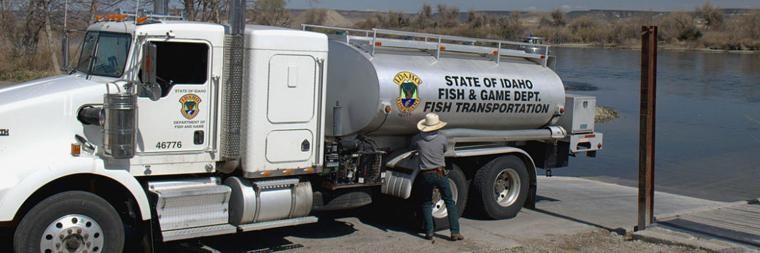
With the expectation of cooler temperatures in the coming weeks, fishing in East Idaho promises to heat up, and Idaho Fish and Game plans to help by stocking thousands of trout in local waters.

Local ponds and Gem Lake are scheduled to get 7,000 catchable-size rainbow trout.

“These ponds are all close to town, making them an easy after school getaway or quick weekend outing,” said James Brower of Fish and Game’s Upper Snake region. “The cooler weather and shorter days should make for some great fishing fun for the entire family.”

Here is the schedule:

• Gem Lake, 3,000, Sept. 14-18

• Trail Creek Pond, 800, Sept. 14-18

• Rexburg City Ponds, 1,200, Sept. 21-25

• Becker Pond, 1,000, Sept. 21-25

• Ryder Park Riverside Pond, 1,000, Sept. 21-25

In the Salmon area, Fish and Game plans to stock 4,500 10- to 12-inch rainbow trout next month in five different waters. Here is the rundown:

• Blue Mountain Meadow Pond, 300, Sept. 7-11

• Hayden Creek Pond, 1,500, Sept. 7-11

• Hyde Creek Pond, 600, Sept 7-11

• Kids Creek Pond, 600, Sept. 7-11

• Mosquito Flat Reservoir, 1,500, Sept. 14-18

Several thousand fish are planned to be stocked in Southeast Idaho locations next month.

Some of the highlights include:

• The Snake River near Blackfoot, Firth and Shelley, 2,000, Sept. 7-11

• Crystal Springs Pond, 750, Sept. 14-18

• Edson Fichter Pond, 750, Sept. 14-18

• Bear River (three locations), 1,750, Sept. 14-18

• Crowthers Reservoir, 1,100, Sept. 14-18

• Deep Creek Reservoir, 1,000, Sept. 14-18

• Devil Creek Reservoir, 5,150, Sept. 14-18

• Bannock Reservoir (at Portneuf Wellness Complex Pond), 1,000, Sept. 28- Oct. 2

• Montpelier Reservoir, 900, Sept. 28-Oct. 2

• Blackfoot Reservoir, 3,000, Sept. 28-Oct. 2

Fish and Game said stocking dates may fluctuate depending on the weather or staffing situations. For more information on specific waters, consult Fish and Game’s online Fish Planner.

Fish and Game stocking thousands of fish in East Idaho in September

With the expectation of cooler temperatures in the coming weeks, fishing in East Idaho promises to heat up, and Idaho Fish and Game plans to help by stocking thousands of trout in local waters.

Local ponds and Gem Lake are scheduled to get 7,000 catchable-size rainbow trout.

“These ponds are all close to town, making them an easy after school getaway or quick weekend outing,” said James Brower of Fish and Game’s Upper Snake region. “The cooler weather and shorter days should make for some great fishing fun for the entire family.”

Here is the schedule:

• Gem Lake, 3,000, Sept. 14-18

• Trail Creek Pond, 800, Sept. 14-18

• Rexburg City Ponds, 1,200, Sept. 21-25

• Becker Pond, 1,000, Sept. 21-25

• Ryder Park Riverside Pond, 1,000, Sept. 21-25

In the Salmon area, Fish and Game plans to stock 4,500 10- to 12-inch rainbow trout next month in five different waters. Here is the rundown:

• Blue Mountain Meadow Pond, 300, Sept. 7-11

• Hayden Creek Pond, 1,500, Sept. 7-11

• Hyde Creek Pond, 600, Sept 7-11

• Kids Creek Pond, 600, Sept. 7-11

• Mosquito Flat Reservoir, 1,500, Sept. 14-18

Several thousand fish are planned to be stocked in Southeast Idaho locations next month.

Some of the highlights include:

• The Snake River near Blackfoot, Firth and Shelley, 2,000, Sept. 7-11

• Crystal Springs Pond, 750, Sept. 14-18

• Edson Fichter Pond, 750, Sept. 14-18

• Bear River (three locations), 1,750, Sept. 14-18

• Crowthers Reservoir, 1,100, Sept. 14-18

• Deep Creek Reservoir, 1,000, Sept. 14-18

• Devil Creek Reservoir, 5,150, Sept. 14-18

• Bannock Reservoir (at Portneuf Wellness Complex Pond), 1,000, Sept. 28- Oct. 2

• Montpelier Reservoir, 900, Sept. 28-Oct. 2

• Blackfoot Reservoir, 3,000, Sept. 28-Oct. 2

Fish and Game said stocking dates may fluctuate depending on the weather or staffing situations. For more information on specific waters, consult Fish and Game’s online Fish Planner.

Scouting, the key to success

I decided years ago that the people who get a bull or buck every year scout. And I don’t mean a little. They scout a lot. And therein lies the problem for most of us. The ones who don’t scout enough usually fall into two categories.

NO. 1: LOVE TO DO IT ALL

I’m definitely in this category. I’m not an expert at anything because I like to do it all. I have a buddy and all that he does is fly fish. I love fly fishing but I’ll never be as good as him because that is all he does., year-round. Read my articles. You see what I do. Spring it is mushroom, bear, whistle pig and turkey hunting, bowfishing and crappie fishing.

Then it’s strictly crappie fishing and then backpacking/fly fishing and picking huckleberries.

Then bow hunting and on and on it goes. So if you’re like me, it’s hard to dedicate three to four weekends to strictly scouting. I know that I should. But we live in Idaho. There is too much to do. I still want to do four to six more crappie trips, one to two more backpacking… You get my drift. Because of all of the opportunities there are just too many voices screaming for our time. So this is one big reason we don’t scout as much as we should.

NO. 2: FAMILY AND WORK

There are some people that are rich and have unlimited time off, but as a whole most of us have precious little free time. For the last 43 years, I’ve worked 10 to 12 hours a day. Most of you readers have one to four weeks of vacation. If you have a growing family, you’re lucky if you get to take one week of vacation to hunt.

You sure can’t justify taking one to two more weeks to go scouting.

You have to (and want to) take vacation with your family. So unfortunately, for many of us the first one to three days of our hunt (if you’re lucky enough to hunt for one week solid) is spent scouting more than hunting. The first elk that I ever got we moved camp twice before we got into them.

And the above scenario is why a lot of people hire guides. And guides are a great option if you can afford them. But that’s not an option for many of us.

So with all of the above said, there are a lot of underlying reasons as to why we don’t scout as much as we should. I know. I get it. I live in the same world that you do. All that I’m saying, is that the more you scout, the more successful you will be. If you can only scout for a Saturday, then so be it. If you’re lucky and can scout for four weekends prior to your hunt, that’s better. But whatever boat you’re in, let’s get into scouting.

First off, you don’t want to start scouting in April, the elk and deer are in their wintering grounds. They may migrate out 5 to 15 miles by October. You probably ought to wait to do your scouting until July and hitting it hard in August is actually the best.

If you draw a special tag, spend time scouting. Especially if It’s a once-in-a-lifetime draw. I’ve only been successful in drawing three tags. A bull moose, cow moose and an antelope tag. A moose is a once-in-a-lifetime deal so you want to give it full attention. The good deal on my moose tag was, I had something like two to three months to hunt. So I could hunt while scouting. But most hunts may only be a week so you need to scout beforehand.

So how do you scout? Let’s go over my antelope scouting deal. Ugh, it started off rough. Katy and I were going to go scouting but the four-wheeler wouldn’t start so I threw a chain on it and had her pull me to jump start it. Unfortunately, it locked up, threw me over the front sliding on the asphalt and then flipped over on top of me. Luckily, she was looking in the mirror and stopped right fast or she’d have drug it over the top of me. Trip to the emergency room, broke rib, jerked the skin loose from the knee to the hip, thought I’d broke both legs, etc.

But despite the minor delay, we got out 24 hours later. Just like when hunting, you need to scout at daylight/dark. Find out where the herds are. Find a shootable buck. On most draw hunts you’ll be hunting a trophy animal so it is worth the time to scout.

You’ll want good optics. I used Riton Optics and have had good luck with their 10X42 binoculars. You’ll also want a good spotting scope. Your goal when scouting isn’t necessarily getting up right on top of them, you just want to know where they are and if there’s a good one in the herd and pattern them.

It took me a couple of trips but I found a nice buck. Now I knew where to go. BUT — you need to have two to three spots checked out. What if you get there opening morning and someone else is there? Or what if wolves have moved in and run everything out of the country? You’ll have to jump.

Also, pre-locate a spot to camp. You don’t want to camp in the meadow where the elk are at. A lot of hunters throw up their tent the weekend before. It stakes out their spot plus, they can drive up and not have to take a day to set-up camp.

Well, hopefully some of these tips help. Good luck!

Tom Claycomb lives in Idaho and has outdoors columns in newspapers in Alaska, Idaho, Utah, Nevada, Colorado and Louisiana. He also writes for various outdoors magazines and teaches outdoors seminars at stores like Cabela’s, Sportsman’s Warehouse and Bass Pro Shop.

Scouting, the key to success

I decided years ago that the people who get a bull or buck every year scout. And I don’t mean a little. They scout a lot. And therein lies the problem for most of us. The ones who don’t scout enough usually fall into two categories.

NO. 1: LOVE TO DO IT ALL

I’m definitely in this category. I’m not an expert at anything because I like to do it all. I have a buddy and all that he does is fly fish. I love fly fishing but I’ll never be as good as him because that is all he does., year-round. Read my articles. You see what I do. Spring it is mushroom, bear, whistle pig and turkey hunting, bowfishing and crappie fishing.

Then it’s strictly crappie fishing and then backpacking/fly fishing and picking huckleberries.

Then bow hunting and on and on it goes. So if you’re like me, it’s hard to dedicate three to four weekends to strictly scouting. I know that I should. But we live in Idaho. There is too much to do. I still want to do four to six more crappie trips, one to two more backpacking… You get my drift. Because of all of the opportunities there are just too many voices screaming for our time. So this is one big reason we don’t scout as much as we should.

NO. 2: FAMILY AND WORK

There are some people that are rich and have unlimited time off, but as a whole most of us have precious little free time. For the last 43 years, I’ve worked 10 to 12 hours a day. Most of you readers have one to four weeks of vacation. If you have a growing family, you’re lucky if you get to take one week of vacation to hunt.

You sure can’t justify taking one to two more weeks to go scouting.

You have to (and want to) take vacation with your family. So unfortunately, for many of us the first one to three days of our hunt (if you’re lucky enough to hunt for one week solid) is spent scouting more than hunting. The first elk that I ever got we moved camp twice before we got into them.

And the above scenario is why a lot of people hire guides. And guides are a great option if you can afford them. But that’s not an option for many of us.

So with all of the above said, there are a lot of underlying reasons as to why we don’t scout as much as we should. I know. I get it. I live in the same world that you do. All that I’m saying, is that the more you scout, the more successful you will be. If you can only scout for a Saturday, then so be it. If you’re lucky and can scout for four weekends prior to your hunt, that’s better. But whatever boat you’re in, let’s get into scouting.

First off, you don’t want to start scouting in April, the elk and deer are in their wintering grounds. They may migrate out 5 to 15 miles by October. You probably ought to wait to do your scouting until July and hitting it hard in August is actually the best.

If you draw a special tag, spend time scouting. Especially if It’s a once-in-a-lifetime draw. I’ve only been successful in drawing three tags. A bull moose, cow moose and an antelope tag. A moose is a once-in-a-lifetime deal so you want to give it full attention. The good deal on my moose tag was, I had something like two to three months to hunt. So I could hunt while scouting. But most hunts may only be a week so you need to scout beforehand.

So how do you scout? Let’s go over my antelope scouting deal. Ugh, it started off rough. Katy and I were going to go scouting but the four-wheeler wouldn’t start so I threw a chain on it and had her pull me to jump start it. Unfortunately, it locked up, threw me over the front sliding on the asphalt and then flipped over on top of me. Luckily, she was looking in the mirror and stopped right fast or she’d have drug it over the top of me. Trip to the emergency room, broke rib, jerked the skin loose from the knee to the hip, thought I’d broke both legs, etc.

But despite the minor delay, we got out 24 hours later. Just like when hunting, you need to scout at daylight/dark. Find out where the herds are. Find a shootable buck. On most draw hunts you’ll be hunting a trophy animal so it is worth the time to scout.

You’ll want good optics. I used Riton Optics and have had good luck with their 10X42 binoculars. You’ll also want a good spotting scope. Your goal when scouting isn’t necessarily getting up right on top of them, you just want to know where they are and if there’s a good one in the herd and pattern them.

It took me a couple of trips but I found a nice buck. Now I knew where to go. BUT — you need to have two to three spots checked out. What if you get there opening morning and someone else is there? Or what if wolves have moved in and run everything out of the country? You’ll have to jump.

Also, pre-locate a spot to camp. You don’t want to camp in the meadow where the elk are at. A lot of hunters throw up their tent the weekend before. It stakes out their spot plus, they can drive up and not have to take a day to set-up camp.

Well, hopefully some of these tips help. Good luck!

Tom Claycomb lives in Idaho and has outdoors columns in newspapers in Alaska, Idaho, Utah, Nevada, Colorado and Louisiana. He also writes for various outdoors magazines and teaches outdoors seminars at stores like Cabela’s, Sportsman’s Warehouse and Bass Pro Shop.

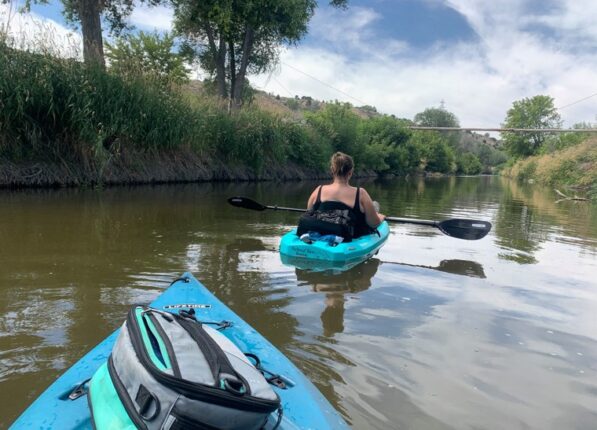
New watercraft rental business opens to support floating Portneuf

The city of Pocatello’s ongoing effort to make a recreational asset of the Portneuf River has spurred a local man to launch a new business that rents small watercraft.

Josh Randall, 35, of Pocatello, started Portneuf River Rentals about a month ago, renting small canoes and kayaks from his home. Randall will also provide shuttle service for groups that rent six or more watercraft.

Randall said business has been steady, and he plans to offer rentals through Labor Day.

“The demand is definitely higher than we expected initially,” Randall said. “We just got eight more (kayaks) today.”

Randall’s family has enjoyed floating rivers and lakes and saw an opportunity to to fill a need when the city began developing Portneuf River put-ins, signs marking their locations and maps of good floats a couple of years ago.

To promote floating on the underutilized stretches of river at both ends of the concrete channel through town, the city started a river festival in July 2019 called Poky Portneuf Paddle. The initial event drew more than 1,000 floaters, as well as about 500 people who attended a celebration of the river at Centennial Park. This year’s event was canceled due to COVID-19.

Randall said kayaks are expensive and hard to find, and many people have no place to store them. He rents larger kayaks for $25 per day and youth kayaks for $15 per day. Customers may place their orders on the Portneuf River Rentals Facebook page, or call or text a reservation at 208-339-6484. Randal, who also leases commercial building space, will then send them information about where to pick up their rented boats.

“People want to float. People want to stay local as kayaks and tubes become more available,” Randall said.

His family enjoys floating area rivers and lakes, and he said customers may also take their rentals to other bodies of water. But he anticipates floating will gain in popularity locally, especially next summer.

“This is just something we’re able to do in our own backyard,” Randall said. “It’s a local secret.”

His initial customers have been satisfied, and many have said they didn’t realize the Portneuf River was so big. His favorite stretch to float takes about three and a half hours, from Edson Fichter Nature Area to Centennial Park.

“It’s a very calm and relaxing float. That’s the biggest thing people are going to see with it,” Randall said.

Barrie’s Ski & Sports and the city also rent watercraft.

Lance Clark, the city’s outdoor supervisor, said the city rents tubes for $7 per day, and kayaks or stand-up paddle boards for $20 per day. This summer, Clark said the city has fielded fewer requests from groups interested in renting several large rafts for a float trip in another part of Idaho and far more requests for renting small watercraft to use on the Portneuf. Clark said most of the business has been locals making day trips, but he envisions customers from some surrounding areas will also start floating the Portneuf.

“I don’t think people from Preston are going to drive past Lava Hot Springs to get to Pocatello, but I think people from Idaho Falls might stop in Pocatello instead of (continuing) to Lava,” Clark said.

Hannah Sanger, science and environmental director for the city, said the city and the Idaho Department of Fish and Game will partner during the next month on improving Portneuf River access points between Edson Fichter Nature Area and Cheyenne Avenue.

“There are a lot of jobs in recreation and it’s exciting to see local entrepreneurs making a go of renting kayaks for use on the Portneuf River,” Sanger said. “You look at Boise’s river and other communities that have developed their river into recreational resources and it starts with community members getting out on the water and develops there into dining and drinking establishments and other businesses relocating to be near the river because of all of these recreation resources.”

They’re still biting! Crappie fishing is hot

Used to be, I’d catch crappie until the end of May. The last four or five years, I’m still catching them up until I start bow hunting, which is nearly September. I don’t know what has changed. But who cares? The bite is real!

Of course, the technique to catch them changes as the year goes by. On a recent Monday, Katy and I caught 114 and on Thursday we caught 141 in four hours. And she was reading a book for one to two hours both times. This year, it seems like the red/white tube jigs are the hot ticket with a small jig head but Thursday I switched to a Lake Fork Trophy Lures Baby Shad in their pearl color and it held its own.

Of course, they aren’t up right by the bank like in the spring when they’re spawning. We’re catching most of them out 50 yards from the bank and farther. To catch them is a little unique. We’ll cast out and let it sink to the bottom. If you’re fishing with two rods, cast out both.

Then pick up the first one and slowly pick up the tip of the rod and slightly reel. They start hitting right away. If not, repeat. Near dusk it is a hit every cast, literally. Reel it in, unhook your fish and by now another fish will be hitting the second rod. Don’t grab the second rod though. Cast out the first one right fast so it can be fishing and then reel in the second fish. Unhook him right fast and then cast it back in and grab the first rod. Repeat. Repeat. Repeat until you’re tired. Fishing is unbelievable right now. More than likely you’ll only be able to handle one rod.

I don’t have a depth finder on the Black Pearl (which the haters call the Edmund Fitz Terror due to a few mishaps) so I can’t tell you what depth to fish in but I’d say out to 30 feet. We catch most of them deep but as soon as I say that we get a lot of fish not over four feet deep. You might say, Tom, they’ve followed your jig up from the bottom but quite a few times we’ve had a jig laying over the side of the boat and caught a fish not three feet deep.

But big news, even though we’ve owned the Black Pearl for 34 years and she is very well weather worn, we did upgrade her last week. We put on a Honda BF2.3 gas motor. Ahh … It is like a slice of heaven. No longer do we have to monitor the battery power level nor are we limited to staying within a couple of miles of where we launched. Nor do we periodically have to paddle back due to a dead battery. A couple of times in bad winds I’ve made it back within 50 yards of the dock only for the battery to die (curse of all curses) and get blown off into eternity.

The Honda BF2.3 motor pushes the BP about three times as fast as the electric trolling motor, too. As soon as I get a free moment, I think I’ll go down to the courthouse and legally change her name to SUCK MY WAKE! That definitely sounds more prestigious than all the other names that my disillusioned buddies have called her. Such as The Edmund Fitz Terror, The Coffin or Carp 1.

Now that I have a real motor and can fish more and will be paddling and cussing less, what am I going to do with all of the fish that allows me more time to catch?

Yes, I am definitely on top of the world now that I have a gas motor. I’m thinking that I’ve reached the pinnacle of crappie fishing. 

Tom Claycomb lives in Idaho and has outdoors columns in newspapers in Alaska, Idaho, Utah, Nevada, Colorado and Louisiana. He also writes for various outdoors magazines and teaches outdoors seminars at stores like Cabela’s, Sportsman’s Warehouse and Bass Pro Shop.