Elk calf freed from discarded tomato cage and bucket

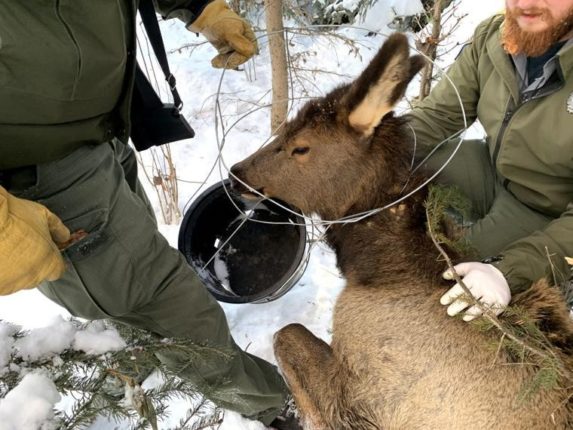
A elk calf that had become entangled in garden materials near Hailey was freed by Fish and Game officers on Dec. 28.

That day, Fish and Game officers received reports from Blaine County residents about an elk calf that had become entangled in a discarded tomato cage and bucket just north of Hailey. By mid-day, officers were able to locate the calf on the west side of Highway 75 in a grove of trees.

Knowing the calf would not be able to free itself from the metal, Fish and Game staff made the decision to dart the calf and remove the metal cage.

According to Senior Conservation Officer Clark Shackelford, “Darting an animal with an anesthetizing drug is a difficult undertaking. We can never be sure how much stress the animal has been in prior to darting or how each animal will react to the drugs. And more importantly, handling these drugs, often in extreme conditions, can place the Fish and Game officers at risk too.”

In this instance, the elk was successfully anesthetized, and the metal tomato cage and plastic bucket were removed.

Shackelford noted, “Once we removed the metal cage, we administered a second drug to reverse the effects of the first drug. The elk quickly recovered, and within minutes was up and running.”

This is not the first time that wildlife has become entangled in things such as Christmas lights, swing sets, rope, hammocks and fence wire. Residents are encouraged to properly store items on their property that could entangle wildlife.

Ice fishing 101

This article is going to be geared toward the ice fisherman with no knowledge to help you jump into it. To begin, if you aren’t geared for the cold you won’t even get a hook below the ice. I remember one ice fishing trip to a high mountain lake in Colorado that was rough. We took out before daylight and drug everything out on the ice. My buddy had a collapsible hut he was setting up. Before he could drive down the 1st stake a big mountain wind kicked up and he would of taken off across the lake but we all grabbed the sides while he was stuck inside.

In the meantime, unnoticed, our 5-gallon buckets with all of our gear had blown all the way across the lake. The only thing that saved them from being blown out of Colorado was a barbed wire fence on the other side of the lake. A little humorous-A company had given me a big sausage tray for Christmas. Scattered all the way across the lake were slices of sausage and frozen cherry tomatoes.

If you’re new to ice fishing then you probably won’t have a hut so take a 5-gallon bucket to carry your gear and a chair. Wear base layers, your warmest boots, gloves, etc. Take hand warmers.

I’ve never fallen through the ice but am always nervous about it. I carry all of my gear out in a sled, which can also be used to get someone out of a hole. It disperses your weight. Take a thick rope so you can throw it to someone. Tie a foot-long stick to the end so you can throw it out to them and they have something to grab.

P.S. When you throw it, don’t hit them in the head! Take a thermos of hot coffee and food to keep you warm.

WHERE TO FISH?

You don’t want to just randomly go out on a lake and drill a hole and set there all day. You don’t fish like that in your boat do you? When fishing in a boat or on foot you can easily move around. Not so with ice fishing, every time you move, you have to drill new holes. So do your research on the lake before you go and see where the hotspots are. Or, like all fishing, follow the crowds.

GEAR

To begin, you probably don’t want to invest in a power auger so buy a decent hand auger but if you get into ice fishing, you’ll want a gas auger. Before drilling, kick all the snow away. You’ll want a dipper so you can dip out the crushed ice and also to keep the hole from freezing up. If you discover the ice is less than 4-inches thick — SCATTER!

One time on a little sandhills lake in Nebraska Mike Helzer, my pastor’s kid and I were slaughtering the fish. The only problem, the snow was melting on top and we were standing in slushy water. If we got a hit and all three of us ran to the hole the sheet of ice would start dropping down and water would run out of the hole. Not smart. That would be the time to leave!

For rods, you’ll want something short. There are the old tip-up rods and they also make miniature rod/reel combos for ice fishing. You need to get some actual ice fishing set-ups and not try to use your regular rods. They’re too long to function.

So what lures/bait do you use? Like all fishing it varies lake to lake and hour to hour but here are some popular set-ups. They make little ice fishing jigs that everyone uses. In the old days we’d hook on a wax worm and drop it down and fish it a foot off the bottom. Now I use regular earth worms. You can also jig little Kast masters.

To help prompt a bite and to help them find your jig use scents. I use Pautzke Fireballs. Fish don’t feed in the winter as much or as aggressively as they do in the summer so you need every help you can get.

Due to the cold-water fish will be slower moving so don’t work your jig as fast as normal. A lot of the fishing is on the bottom but still, you need to work the water column to determine where the school is. If you’ve ever fished high mountain lakes in the summer then you’ve noticed that trout cruise the bank in search of food, they almost look like a shark on patrol. So I picture them moving around like that under the ice.

Perch though, they’re a big-time schooling fish so you need to find a school. I’ve seen them in shallow water in the summer where if you drop your bait there will be 15 to 20 small ones hitting it. So I usually fish for perch down right off the bottom.

The good deal about ice fishing, you don’t have to worry about your catch spoiling, just throw them in a pile of snow as you catch them. They are being drug out of cold, crystal-clear water so they should be superb eating. Have fun and be safe out there.

Tom Claycomb lives in Idaho and has outdoors columns in newspapers in Alaska, Idaho, Utah, Nevada, Colorado and Louisiana.
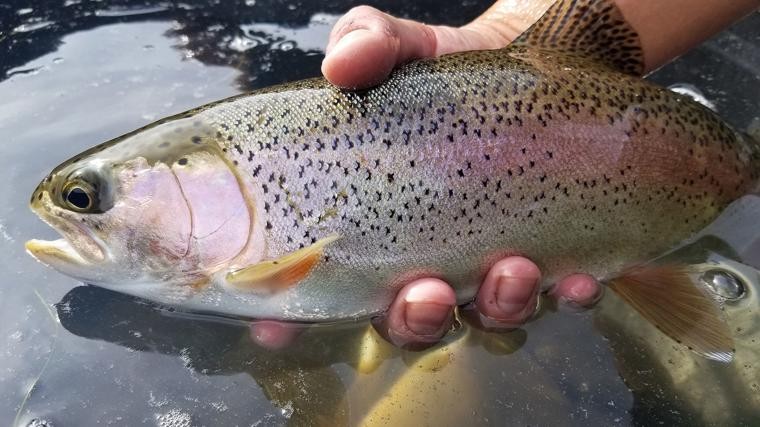
Fishing derby at American Falls Reservoir features $500 first prize for trout, $250 for perch

A fishing derby Jan. 25 at Sportsman’s Park on the west side of American Falls Reservoir features a $500 first-place prize for the largest Rainbow trout and a $250 first-place prize for perch.

The derby runs from 8 a.m. to 3 p.m. at Sportsman’s Park near Aberdeen. The derby is a fundraiser for the Portneuf Unit of the American Fisheries Society, a student-run organization at Idaho State University.

In the Rainbow trout category there will also be a $250 cash prize for second and a $150 cash prize for third. No Cutthroat or Rainbow-Cutthroat hybrids will be considered for the derby.

The runner-up prize for in the perch category is $200 and third is free entry into next year’s derby.

Winners will be announced at 3:30 p.m. Participation is limited to the first 150 participants. If spots still remain, limited registration will be available during the fishing derby at the registration booth.

A copy of the rules and release of liability will be provided at the registration table. All contestants must sign the release of liability form to participate in the derby.

Sportsman’s Park is located off Highway 39 at the end of Boat Dock Road.

In the event of derby cancellation due to unsafe ice conditions or inclement weather, refunds of entry fees will be granted or carried over to the next year. Only in the event of an extreme blizzard that closes the interstate will the event be cancelled.

There is a $35 per person entry fee. Participants can register online and review all derby regulations at shorturl.at/hkmBM or call 208-709-7538.

One raffle ticket is allotted to participants and additional raffle tickets will be available for sale.

A passionate place: New Harriman State Park manager impressed with visitors

One thing that impresses the new Harriman State Park manager is that people are passionate about the park.

“That has been the biggest surprise, just the passion that people have for the park,” said park manager Mark Eliot who started in May. “It means so much to so many people from such a wide geographic area. I’ve never seen anything like that. People are willing to do what they can.”

Eliot took over for John Sullivan, who left about a year ago. Eliot is new to the state park system, coming from the Idaho Department of Lands where he worked in fire prevention.

This is his first winter at Harriman, and he’s learning that the park just south of Island Park is just as busy under a blanket of snow as it is during summer.

“I’m still learning grooming schedules and winter access and different usage,” Eliot said, “the process of what we can do to make the park a more enjoyable experience for visitors.”

Interpretive park ranger Morgan Smith reported that the park attracted more than 400 people last Saturday during its free access day.

“Our winter is just as busy as summer,” Morgan said. “We’ve got good winter trails and grooming, so it brings in a whole bunch of people. It’s been really steady here, especially over the winter break. I think we get more locals here in the winter than in the summer.”

Eliot said he rode a fat bike for the first time during the Saturday free access day.

“One of the Nordic ski patrol lent me their fat bike,” he said. “That was the first time I’d ever been on one. That was a lot of work.”

Eliot said during the summer he spent a good deal of time hiking and mountain biking some Harriman’s 24 miles of trails to become familiar with the park. This winter he’s been cross-country skiing the trails in his spare time.

Eliot is considering organizing an advisory committee to take input and make recommendations on issues such as grooming trails for different uses and separating skate skiers from fat bikers.

“We’re not going to be able to make everybody happy,” he said. “But we’ll do our best.”

The park’s three main winter user groups will come together Feb. 1 for the fourth annual Moose on the Loose winter triathlon. The race involves 6 miles of fat biking, 1.5 miles of snowshoeing and 6 miles of cross-country skiing. For more information on Moose on the Loose, go to trithemoose.com.

Another busy park feature during the winter and summer months is its rentals. The park rents out for overnight use several buildings and yurts. Some of the larger log-cabin-style buildings will sleep up to 38 people. Yurts and smaller buildings generally sleep six. Reservations are generally filled months in advance.

The historic buildings in the Railroad Ranch area were once owned by Edward H. Harriman, the chairman of Union Pacific Railroad.

“(Buildings) are booked pretty much throughout the winter,” Smith said. “Our slowest seasons are April and November. In winter and summer, they’re booked out all the time.”

For information on facilities and reservations, go to parksandrecreation.idaho.gov/parks/harriman.

Daily entrance fee into the park is $5 per car. There is also a per person grooming fee of $5 for people accessing trails.

“I’m pretty content here, so I’d sure like to stay as long as they have me,” Eliot said.

National ice fishing tournament, workshops and free kids camp this weekend at Hebgen Lake

West Yellowstone, Montana, will host an North American Ice Fishing Circuit national qualifier this weekend. The qualifier takes place on Sunday and is open to any two-person team. Teams range from locals to national-level pros to teams just wanting to learn more about ice fishing. Teams can register up to 6 p.m. at the Saturday night reception and rules meeting.

The tournament is located on Hebgen Lake, just outside of West Yellowstone. Kirkwood Marina is the location for the tournament starting point and Kid’s Ice Fishing Camp.

Throughout the two days preceding the tournament, there are many educational opportunities. These activities are free and open to the public.

New for 2020, the NAIFC has added a High School Division/Student Ice Fishing. The SIF high school qualifier will be held Saturday morning. It is open to students 12 years of age and older, in a two-person format. Coaches and parents are allowed on the ice to assist the student anglers but are prohibited from fishing.

There are no entry fees to the high school championship or high school qualifiers. The anglers will be competing for scholarships/grants and trophies. The high school anglers will join SIF youth division of the NAIFC. A $25 SIF membership includes in-school seminars, meet-and-greets and VIP merchandise programs.

Friday night kicks-off with a gathering with a chance to meet local fishermen, familiar with Hebgen Lake, along with nationally ranked ice fishermen. A social hour and informal introductory information for people new to ice fishing — and networking with experienced friends who love to ice fish — starts at 5 p.m. at West Yellowstone Holiday Inn Conference Center, 315 Yellowstone Ave. The high school rules meeting will also take place at 5 p.m.

One of the most popular activities of the weekend is the free NAIFC Kid’s Free Ice Fishing Camp will be back again on Saturday. The classroom portion will begin at 1 p.m. at the Holiday Inn Conference Center, then move out to Kirkwood Marina on Hebgen Lake for on-ice fishing and lunch from 2:30 to 3:30 p.m. All kids can participate, along with family members, regardless of age. This is the largest kids ice fishing camp in the Intermountain West where kids get to meet ice fishing pros and members of the USA Ice Fishing team.

The classroom instruction and demonstration will cover ice fishing equipment, techniques, safety, conservation and environmental stewardship. Before leaving, all kids who participate also will receive a complimentary ice rod. The NAIFC Kid’s Ice Camp is sponsored by ice fishing industry supplies along with local businesses, food suppliers and Kirkwood Marina.

On Sunday, the NAIFC will conduct the Hebgen Lake Qualifier with two-person teams fishing from approximately 8 a.m. to 1 p.m. for thousands of dollars in cash and prizes. At 3 p.m., the NAIFC tournament weigh-in will be conducted at the Holiday Inn Conference Center. Cash and prizes will be awarded to the top teams. The top 10 finishing teams also receive an invitation to the NAIFC National/North American Championship to be held next December.

Make sure to bring the family and enjoy our other events and activities happening throughout West Yellowstone. Saturday and Sunday children and their families can enjoy activities like snowshoeing, M120 Kids snowmobile rides, live raptor programs from the Grizzly & Wolf Discovery Center, s’mores, sledding and skating for free during the Kids’N’Snow Weekend.

For more information on the NAIFC, tournament events, the Kids ICE CAMP, information about the West Yellowstone/Hebgen Lake lodging and activities for tournament, go to www.westyellowstonemticefishing.com. To enter an NAIFC qualifier please go to www.naifc.com. For information on lodging and other winter activities, go to www.DestinationYellowstone.com or contact the West Yellowstone Visitor Center at 406-646-7701.

Elk calf freed from a discarded tomato cage and bucket near Hailey

A elk calf that had become entangled in garden materials near Hailey was freed by Fish and Game officers on Dec. 28.

That day, Fish and Game officers received reports from Blaine County residents about an elk calf that had become entangled in a discarded tomato cage and bucket just north of Hailey. By mid-day, officers were able to locate the calf on the west side of Highway 75 in a grove of trees.

Knowing the calf would not be able to free itself from the metal, Fish and Game staff made the decision to dart the calf and remove the metal cage.

According to Senior Conservation Officer Clark Shackelford, “Darting an animal with an anesthetizing drug is a difficult undertaking. We can never be sure how much stress the animal has been in prior to darting or how each animal will react to the drugs. And more importantly, handling these drugs, often in extreme conditions, can place the Fish and Game officers at risk too.”

In this instance, the elk was successfully anesthetized, and the metal tomato cage and plastic bucket were removed.

Shackelford noted, “Once we removed the metal cage, we administered a second drug to reverse the effects of the first drug. The elk quickly recovered, and within minutes was up and running.”

This is not the first time that wildlife has become entangled in things such as Christmas lights, swing sets, rope, hammocks and fence wire. Residents are encouraged to properly store items on their property that could entangle wildlife.

Pocatello seeks input for Cusick Creek trailhead, Portneuf River access grant applications

POCATELLO — Pocatello officials say they are applying for grants that would help them improve the Cusick Creek trailhead and provide more access to the Portneuf River.

“We’ve seen the use of trails at places like Cusick Creek increase substantially and events like the Poky Portneuf Paddle showed us that residents want the Portneuf River to be floatable,” Hannah Sanger, Pocatello’s Science and Environment administrator, said in a news release. “These grants would help make sure that our trailheads and river access points are meeting the community’s needs and limiting erosion that makes its way into the Portneuf River.”

City officials say they are applying for a pair of grants through the Idaho Department of Parks and Recreation. The first would help them make trailhead and erosion control improvements at the Cusick Creek trailhead.

“Proposed enhancements include enlarging the parking area and re-grading the surface to limit erosion, improving fencing, and adding interpretive signage about the historic water reservoir structures in the area,” according to the news release.

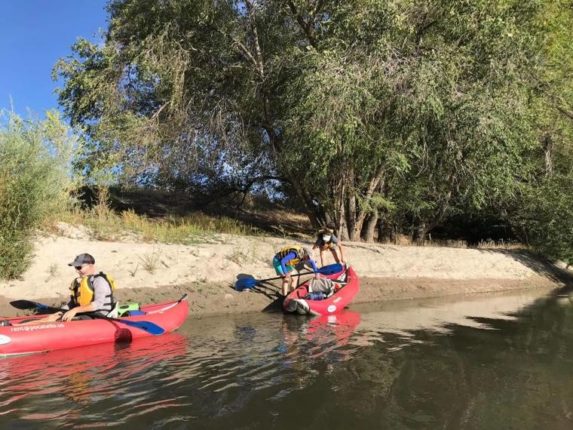
The second grant would allow them to create kayak and canoe access points on the Portneuf River near Sacajawea Park and the Abraszewski trailhead, officials said. If they receive the funding, they would be able to start the projects in late 2020 or 2021.

City officials are seeking public input for the grant applications. Those who would like to comment or get involved in the efforts can contact Sanger at (208) 234-6518 or hsanger@pocatello.us.

Crow hunting

I’d been traveling and upon arriving back home I sat down to catch up on reading my pile of newspapers. Right on the front page of one of the newspapers was a notice of a national emergency (well, kind of an emergency)! It sounds like the crows had migrated in big time over in the Nampa/Caldwell area. While they might not quite as plentiful over in the Pocatello area, you might still be able to kick up enough to make it fun. Besides, it’s winter. What are you doing to do? Sit in the house and rot?

But before you think you can just run out blasting and be successful, beware: Crows have to be close to the smartest birds in the world, but if you do it right you can shoot large numbers of them with the proper set-up. Here’s how I like to do it. If you can find a thick clump of cedar trees not over 10 to 15 feet tall, that’s perfect. If you’re in a grove of trees too tall, the crows will almost be out of range when the come gliding in.

Your tendency is to set up where you can see what is coming. Don’t do that. You want to be buried right in the midst of the brush. If they come flying in and see you, then they’ll flare off and spook. You have to be totally hidden. If you don’t have perfect cover then at least get in under the shadows.

You’ll want to use an electronic call. Set it a little bit away from you so when they come in, they’re not focusing right on you. You’ll want a call with a remote control. That way you can change sounds without running out to switch the call every time.

I always start off with a hawk fighting crow call or an owl fighting crow call. Then you can switch it up some: wounded crow call, crows fighting call, etc. Many times, you hear them coming but just as many times they’ll glide in silently. You’ve got to always be ready. After the shot, they’ll hit the after burners and dip and dive outta there.

You’ll want to be camo’d to the max. Use a face mask or net to conceal your shiny face. Since your hands are the source of 90 percent of your movement make sure and wear camo gloves or at least the old Army wool gloves. Wear camo on top for sure, and pants as well don’t hurt.

Just like on all calling, decoys help immensely. I like to have one if not two Mojo decoys. They’re the ones that have the battery-operated rotating wings. Set them up out in the open and the Mojo boys tell me they work better if they’re set up higher off the ground. Use stationary crow decoys as well if you have some, and an owl or hawk decoy will be good, too.

Also use an attractor decoy. You ask what? Yep. I started noticing a few years ago that right at daylight every morning while calling coyotes that crows are the first varmint to show up. It took a minute or two to register but then it hit me. Why not use a waggler type of attractant decoy on crows? They come in all the time to them while I’m coyote hunting.

On good hunts, it can be fast and furious, so I like using a semi-automatic 12-gauge with a modified Trulock choke and 6-shot. Crows are not good neighbors. They harass a lot of game birds and eat the eggs of ground birds (quail, sage grouse etc.), so it does the environment good to thin them out. Have fun.

Tom Claycomb lives in Idaho and has outdoors columns in newspapers in Alaska, Idaho, Utah, Nevada, Colorado and Louisiana.
Mountain lion season closed in units 66A and 76 in Southeast Idaho

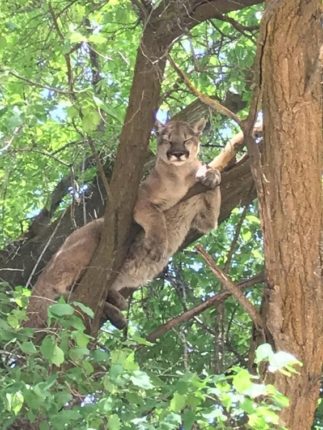
The take season for both female and male mountain lions is closed in Game Management Units 66A and 76 in Southeast Idaho. The harvest limit for males in these units as established in the 2019-2020 Idaho Big Game Seasons and Rules was reached earlier in December, and the take season for males was consequently closed at that time. The harvest limit for female mountain lions in Units 66A and 76 was reached last week, and the take season was, therefore, closed effective Dec. 27, 2019.

Hunters will be allowed to keep female mountain lions taken in Units 66A and 76 prior to the Dec. 27 closure and must report them within 5 days of harvest. A dog training season (pursuit only — no harvest) for both male and female mountain lions in both units is open and will close March 31.

The most current information on whether a quota has been met or the season has been closed for a particular game management unit anywhere in the state can be obtained by calling or stopping by any regional Fish and Game office or by calling 1-800-323-4334 (24/7 toll-free line). Information is also updated regularly on an Idaho Fish and Game webpage at idfg.idaho.gov/hunt/harvest-quotas.

Bird feeding is a way to see birds up close and help them get through winter

Feeding birds is enjoyable and mutually beneficial because you can watch nature from the warmth of your home, and birds get much-needed nutrients.

Idaho Fish and Game discourages people from feeding most wildlife because they can become habituated to hand outs, but birds are an exception. They typically don’t become dependent on feeders, but instead add them to their daily food searches and seek out other sources when feeders are empty.

Winter feeding helps our feathered friends survive a challenging season, and you will likely see local and migratory birds from as far away as Canada and Alaska.

When feeding, remember to offer food at different levels to meet the needs of different types of birds. A ground feeder will attract quail, dove, song sparrow, white-crowned sparrow, dark-eyed junco and others.

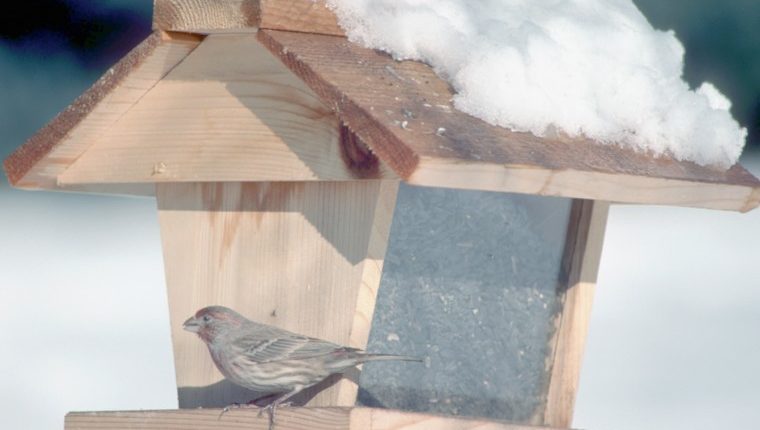
Hanging feeders, or hopper feeders, will attract songbirds, such as house finch, chickadee, jays, nuthatches and others. Thistle feeders will bring goldfinches, siskins and house finches. Suet can attract woodpeckers, chickadees and nuthatches.

Many kinds of bird seed are available. Black-oil sunflower seed is a favorite of many species. Millet and cracked corn are favorites for many ground-feeding birds. Finches and siskins love nyjer thistle.

Buying bird seed from a reputable source ensures the seed is free of dust, insects and weed seeds.

Birds are also attracted to water. While maintaining bird baths during winter may seem odd, ice-free water attracts more birds than feed alone. Not only will birds drink, they will also bathe and keep their feathers clean, boosting their insulating power against the cold.

While feeding provides obvious benefits to birds, dirty feeders and baths can also harm them.

Rita Dixon, Idaho Fish and Game wildlife program coordinator, says diseases, such as Salmonella and Avian Pox, are easily spread when birds are crowded at dirty feeders and watering devices, but a few simple steps can reduce the spread of disease.

“Simply disinfecting feeders and baths with a bleach solution each month significantly reduces the spread of many diseases,” Dixon said.

Using feeders that require birds to perch and reach for food can also reduce the risk of disease outbreaks. Avoid open feeders where birds can hop around on the food and contaminate it with feces.

Here are more tips for safely feeding birds:

  • Store seed in tight, waterproof containers to prevent mold and to deter rodents.
  • Place feeders in a quiet place near cover to protect feeding birds from weather and predators. Move feeders if you notice birds striking windows.
  • If possible, provide water nearby. You can buy a heater that keeps a bird bath from freezing.
  • After water and food are offered during winter, try to continue until spring, but don’t be concerned if you miss a few days. birds are mobile and probably visiting other feeders besides yours.
  • Clean feeders regularly to prevent disease by using one part liquid chlorine household bleach in nine parts of lukewarm water to make a 10 percent bleach solution. Make enough solution to immerse an empty, cleaned feeder completely for two to three minutes. Allow to air dry.
  • Remember feeding wildlife, other than birds, is not recommended. If food set out for birds is being eaten by other wildlife, move the food to a safe location or discontinue feeding.