Fish and Game trail cameras capture cute and grumpy bears

With grizzly bears, sometimes you get cute and sometimes you get grumpy.

When bear biologists noticed a mother bear beginning to wake up this spring from her Island Park den, they set up a trail camera in hopes of recording the action.

The trail camera captured video of a sow and two new cubs attracted to scent bait, the mother reaching high on a small tree for a taste.

Idaho Department of Fish and Game posted the video online combined with another clip of two large bears having a physical argument.

The 1-minute video clip are snippets from two different cameras set up by bear biologist Jeremy Nicholson and wildlife technician Kyle Garrett. The segment of the sow and cubs was shot east of Highway 20 after a 2-mile trek to “the middle of nowhere” and the segment of the brawling bears was taken not far from Harriman State Park. The video can be seen on YouTube at tinyurl.com/pr-griz-cam.
Research cameras capture grizzly bear sow and cubs Grizzly Bear Cam

“They put a little scent bait on the top of that tree,” said James Brower, regional communications manager with Fish and Game, about the video of the sow and cubs. “You can see her sniff it and smell it because there’s some scent lure up there. It helps her pose for the camera a little bit. She just happens to have two cute little baby cubs with her.”

Brower said the clip of the disagreeable bears is a bit rare.

“To have two bigger bears come in and decide to get in a brawl right in front of the camera is a pretty unique instance,” he said.

While most cameras are set up to determine if an area is suitable for placing a bear trap to sedate and collar bears passing through, the camera set up near the sow was to learn more about the bears.

“Because she has a GPS collar on her, they were able to tell when she had completely left the site,” Brower said. “They went back in to retrieve the camera, and they were able to go inside her den and check it out and see what went on there during the winter.”

Nicholson said bear trapping in the Island Park region began in June.

“This is a reoccurring thing,” he said. “All the data we collect, we combine it with all the other states, the park service, the Interagency Grizzly Bear Study Team and analyze it and go from there with it.”

Nicholson said his team wants to understand how bears are surviving, what’s killing them, their movements and what they are eating. Collaring bears is one of his main tools.

Brower said the scent used to attract bears to trail cameras is made mostly of rotting fish or roadkill.

“They let it rot and turn it into a mush,” he said. “The back of the bear trapping truck is the stinkiest thing you’ve ever smelled. They wash it out pretty frequently but it is rank. It stinks. We try to keep everything contained in a plastic bin that fits in the back of the truck. But it inevitably splashes out and it’s pretty rank.”

Besides bears, Brower said the cameras and traps sometimes attract other interlopers, such as coyotes, pine martens and humans.

“We get hikers every once in a while,” he said. “They’ve had a few individuals with little to no clothing walk by on occasion. Most people are aware that they’re on camera.”

New Market Lake blind winning over birdwatchers

The new blind at Market Lake Wildlife Management Area north of Roberts in Jefferson County is winning over birdwatchers.

The blind, an area where spectators can conceal themselves and spot birds, went into action on World Migratory Bird Day in May and has seen steady use since.

Built on the west side of Interstate 15 overlooking a pond, the Market Lake blind is a little off the beaten path from the main wildlife management area’s attractions. The 5,000-acre area is managed by Idaho Department of Fish and Game as a stop-off point for migrating and breeding birds, particularly waterfowl.

“I’ve certainly encouraged people to use it,” Mark Delwiche, president of the Snake River Audubon Society, said of the blind. “I’ve visited it several times as a guest. It’s very nicely done, and it’s a great place to look at birds that are using that little pond. It’s really a nice resource.”

Brett Gullett, wildlife biologist with Fish and Game who helps manage Market Lake, said the blind was built after the department obtained the property from Ducks Unlimited.

“That piece of ground, 342 acres, we just acquired in the last couple of years,” he said. “It was purchased with a North American Waterfowl Conservation Act grant. That money was targeted because of the importance of this area for wildlife conservation.”

Gullett said the grant was awarded especially to help trumpeter swans, white-faced ibis and Franklin’s gulls. After the land was purchased, the blind was built with funding from the Idaho Fish and Wildlife Foundation and Fish and Game.

Besides helping out the birds, the recent land acquisition helps spread visitors out during peak visitation times in spring and fall.

“We get 19,000 visitors a year to the Market Lake Wildlife Management Area and we have two spikes in usage: In the spring where it is mostly bird watching and wildlife photography and of course the fall with the hunters. In the winter when everything is frozen up, it’s really slow,” Gullett said.

Audubon members give the new blind a thumbs up.

“I hope people discover it. It’s really nice,” Delwiche said. “It gets you out of the weather. You have the sun at your back. It can be nice and comfy in there. And the birds all seem to not pay any attention to you when you’re inside there.”

Snake River Audubon board member Carolyn Bishop, who goes birding at least weekly, says the blind is useful for taking wildlife photos. Gullett said it features several windows at different levels, handicap accessibility and will accommodate about 20 adults.

“I’m sure we can get a group of 40 fifth-graders in there for a field trip,” he said.

“The blind is great for taking pictures,” Bishop said. “I have a truck that I usually take pictures from, but the blind is nice.”

Both Bishop and Delwiche said now is the time to start looking for shorebirds migrating south before the fall.

“I think it’s the adults we’re seeing right now,” Delwiche said. “I was there last week and saw plovers and sandpipers and a few other wading shorebirds that were on the mudflats up at the marsh.”

Market Lake Wildlife Management Area was established in 1956. It gets its name from its use as an easy place to find food.

“Before it was altered for farming, market hunters would come up here and collect as many ducks and geese as they could and bring them back to Idaho Falls and sell them,” Gullett said. “It was before there were regulations on selling wildlife. This would have been in the 1800s and early 1900s.”

He said now one of his main tasks is battling invasive plants that crowd out useful plants that migratory birds need and alter the wetland system. One such plant is Russian olive trees.

“The first people who homesteaded this place planted Russian olives to have firewood,” Gullett said. “You come out here and you see all these Russian olives everywhere. They are kind of invasive. That adds to the perching of the magpies. That makes it easier for magpies to prey on waterfowl nests. So we are removing those. Plus they use a lot of water. We’d like to have an open grassland and sagebrush system that leads to the wetlands.”

Fish and Game plants hundreds of catfish in area ponds

With summer heat comes lethargic trout in some of the region’s smaller lakes and ponds.

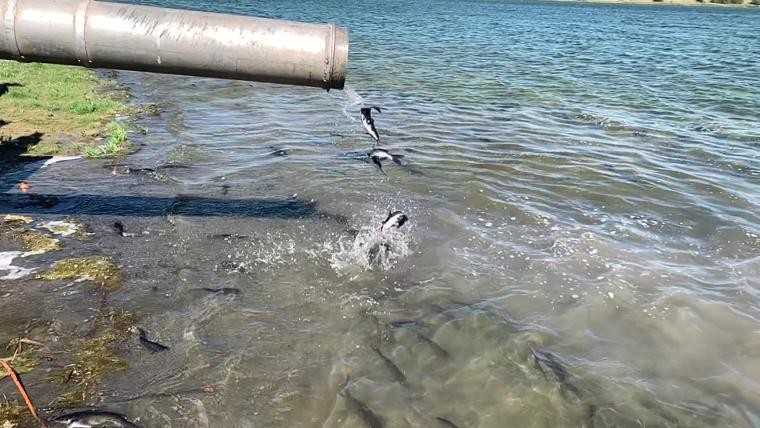
To keep the fishing action going, Idaho Department of Fish and Game has planted hundreds of warm-water-loving catfish in four popular area ponds.

“We put 300 catfish each in Becker Pond and Riverside Pond (in Idaho Falls) and 300 in the Rexburg Nature Park pond and 900 in the Jim Moore Pond (near Roberts),” said James Brower, regional communications manager for Fish and Game.

Brower said the channel catfish are about 12 inches long. “Not huge, but they have the potential to get fairly big.”

He said a good way to fish for catfish is with a sinker and worm on the bottom of the pond. Because heat often drives trout to the bottom, anglers might also catch a trout from the bottom as well.

“One of the reasons we put catfish in ponds when it gets warmer is so there are some fishing opportunities,” Brower said. “They are still actively biting because catfish are way more tolerant of warm weather than trout are.”

Young anglers might enjoy the novelty of catching a different type of fish.

“I know that my kids like catching them just because they are a different looking fish,” Brower said. “They have big long whiskers on them and they enjoy that.”

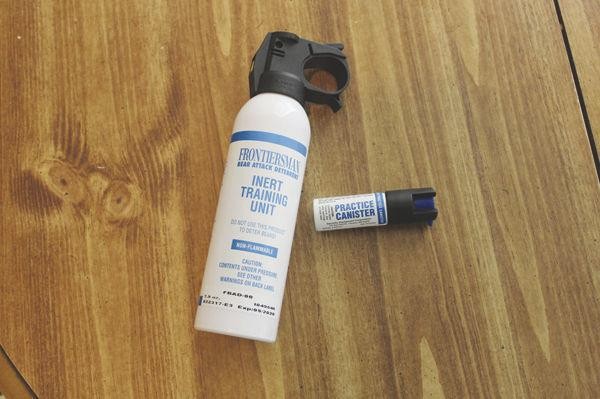
Bear spray giveaway events scheduled for East Idaho

One of the more powerful words in the English language — free — is being used to entice recreationists to learn about safety in bear country.

Starting Saturday, free canisters of bear spray will be given away to people who present a hunting or fishing license at the Island Park Ranger Station from 10 a.m. to 2 p.m. while supplies last. There also will be a giveaway at the Teton Basin Ranger District in Driggs on Aug. 3 and at the Henry’s Fork Foundation office in Ashton on Aug. 10.

“I would expect it to be popular,” said James Brower regional communications manager for Idaho Department of Fish and Game. “I would absolutely be there, it’s a huge benefit. It saves you $35 or more. Free is always fantastic.”

Brower said the bear spray giveaway events are the result of a grant awarded by the Upper Valley Fish and Game Commission to the nonprofit group Western Bear Foundation that operates in Montana, Idaho and Wyoming. The nonprofit is dedicated to protecting bears, habitat and bear hunting. The grant allowed the foundation to purchase “hundreds” of canisters for the giveaway program.

Becky Lewis, who wrote the grant for Western Bear Foundation, has been negotiating prices with bear spray manufacturers to get as many canisters as possible for the giveaway events. Canisters generally retail for about $30 to $45. Lewis is an East Idaho master naturalist who also volunteers for Fish and Game.

In addition to the free bear spray, Fish and Game will have its “Bear Aware” trailer at the event to help educate on living and recreating in bear country. The trailer displays bear artifacts and educates on living and recreating in bear country. A Fish and Game technician or bear biologist will be on hand to answer questions.

“All of Idaho has bears and Island Park has both kinds,” Brower said. “We’re not trying to put fear into people, just promoting getting outdoors and doing so safely. An encounter is extremely unlikely, it’s probably never going to happen, but if you have all the tools you need when it does happen you’ll be prepared for it.”

To obtain a free can of bear spray, people must show a current Idaho hunting or fishing license, photo ID and be 16 years old or older. There is a limit of one can per person and two cans per family.

WILD about Bears workshop to teach teachers about bear biology

Teachers, Scout leaders and other educators can get first-hand wildlife instruction about bears to pass on to the next generation with a three-day workshop planned at Harriman State Park.

The Idaho Department of Fish and Game Project’s “WILD about Bears” workshop is designed for educators and others who want to learn and teach about bear biology and conservation. The Harriman workshop is scheduled for Aug. 5 to 7.

“The whole goal of the program is for us to teach the teachers so that they can bring conservation and wildlife concepts back into the classroom,” said James Brower, regional communications manager with Fish and Game.

Project WILD coordinator Lori Adams said the workshop has room for 25 participants and 10 slots are still open.

“I’d like to fill those remaining slots,” she said Tuesday.

The workshop includes two nights of lodging at the Scoville Conference Center at Harriman State Park, food is included in the fee. College credits are also offered for an additional fee.

“Anyone looking for ways to incorporate nature and wildlife in the lives of young children should take part in these workshops,” Adams said.

Brower said the class will be taught by experts from Yellowstone National Park and Fish and Game biologists. If a black bear is caught during the workshop period, class members will get to see biologists in action.

“We usually go up to the Grizzly and Wolf Discovery Center in West Yellowstone, Montana, to see the bears up there,” Brower said. “We bring in our bear biologist Jeremy Nicholson. He presents the trapping portion of things — how he traps in Island Park, what it takes and what all is involved. If he does have a black bear in a trap that coincides with our time frame of the class then we may have the opportunity to go and watch him release it and perhaps put a collar on it.”

Brower said participants will also get to see videos from camera traps placed in the area.

“He shows some cool videos from the camera traps,” he said. “We go inside the life of a bear and the life of a bear biologist, which is exciting.”

Project WILD held a workshop titled WILD about Salmon at the MK Nature Center in Boise last week. Another workshop titled WILD about Early Learners will be held July 23 and 24 in Boise aimed at teachers of children pre-kindergarten through second grade.

To register for a workshop or learn more about the Project WILD about Bears program, go to idfg.idaho.gov/education/project-wild or email lori.adams@idfg.idaho.gov, or call 208-863-3236.

WILD About Bears

“We give (educators) a lot of tools, educational programs, tips and tricks, educational supplies so that they can go back to their classroom and have conservation-oriented games, puzzles, diagrams and biology that they can incorporate into some of the topics that they will be learning in class,” Brower said. “It goes really well with a lot of the Idaho curriculum on biology, ecology and Idaho history.”

Misadventures in the Wild: New book by local author gets personal with outdoor reporting

As a passionate outdoor reporter for many years, Kris Millgate said there were moments that would cause her to step back out of objective “work mode” and become human.

Like the time she was nose-to-nose with a grizzly bear, and it woke up from its sedation.

“So what’s it like to go nose-to-nose with a grizzly bear? You’re going to pee your pants,” Millgate said. “I could never tell you in my news story that I peed my pants, but inside a book, I can tell you that you are so scared that you pee your pants.”

Millgate was talking about some of her personal experiences she has included in her new book “My Place Among Men — Misadventures in the Wild,” while sitting alongside the Snake River at Freeman Park last week.

Her first book tells the personal side of many of the stories she covered as an outdoors reporter. The book is due on shelves Aug. 6, and her first book signing event will be Aug. 7 at Great Harvest in Idaho Falls. The event is sponsored by Teton Land Trust. Millgate, who lives in Idaho Falls, has planned her first seven book signing events in Idaho before going out of state.

Web

Millgate said the book grew out of answering the question, “What’s it like to be the only woman in the woods?”

“They wanted to know what it was like to be in that moment, and I realized that maybe writing inside of a news story wasn’t giving them that,” she said.

Millgate said because of her journalistic approach, she carefully kept herself out of her stories. In her new book, she puts herself front and center, in an autobiographical way. Sometimes the stories are awkward, sometimes humorous.

One tells how she stepped away from a huddle of men collaring a bighorn sheep to get a video shot of the animal being released. Microphones were still attached to men in the group and linked to her ear.

“In the huddle as I walk away I hear, ‘Where’s she going? Does she even know what she’s doing? Is she any good?’” she said. “It’s that moment when you kind of roll your eyes and think, ‘Honestly, is he really asking if I’m any good? He has no idea of what I’m really doing. He thinks I’m just this silly little girl running around in the woods.’ I heard somebody else in the huddle say, ‘You’ll know the answer to that when you see her story.’ I was kinda proud of that moment. I don’t know who said either statement.”

A goofier story in her book involves a hunting guide in New Mexico taking her to elk habitat that was recovering.

“I’ve never been to New Mexico, I don’t know New Mexico at all,” she said. “I don’t know this guide at all. Before the sun is even up we are hiking in single file, and we have to get into our spot before the sun comes up and he says, ‘I really wish you would fart.’ I said ‘What?’ He said, ‘It would make us feel more comfortable because we have a woman with us, and we would all feel more comfortable if you’d just go ahead and fart.’ I said, ‘I don’t fart on cue, but I will be so upset if you keep talking when the sun comes up and you ruin my shot.’ ”

Kris Millgate

Kris Millgate of Tight Line Media poses for a photo at Russ Freeman Park on Tuesday, July 2, 2019.

Millgate started working as a general assignment TV reporter before she left college at the University of Utah. She bounced around to several cities across the U.S. for about 10 years. She and her husband settled in Idaho Falls, and she started the company Tight Line Media to produce stories for a variety of media and also do production work. Millgate is a lifetime member of Trout Unlimited and former commissioner for Idaho Falls Parks and Recreation. She’s a fly fisher, trail runner and youth hockey coach.

During her time at other cities, she always wanted to get back West. Unlike several other female TV reporters, she didn’t mind getting a little dirty.

“I was the only one that would keep boots in my car,” she said. “So I could go from court to a farmer’s field and get muddy, and I’d have the boots to do it.”

Millgate grew up in Utah surrounded by the Wasatch Mountains.

“A lot of people will say, ‘Do you miss those mountains because mountains don’t surround us here?’” she said. “I do miss the Wasatch Mountains, but I would not trade them for the Snake River.”

She grew up hiking the mountains with her father.

“My mother says I don’t have a danger gene, which is true, but my dad doesn’t have an internal compass,” she said. “We were always lost, and he would never admit it. I learned to follow him wherever he was going. It taught me persistence and endurance and patience. I use all of those skills in my job now.”

The book shows readers a personal side of many of the major outdoor issues facing the West today, such as public lands, grizzly bears, wolves and the loss of salmon in the West. It was stories such as these that pulled her into outdoor reporting.

“Those stories mattered, and you have to get dirty to get those, or you have to get cold,” she said. “There were days when it was 20 below, and my batteries were in my armpits, and the snot freezes in my nose. Some people don’t have any interest in having a workday like that. But I do. I think the stories that come out of the wild are just fascinating.”

Now with her new book, readers will learn her reaction to the experiences. Her human side.

“Inside those stories there’s a moment where I stop what I’m doing, and even though my camera is still rolling I step back as a human and look at the moment and think, I’m on top of a beaver dam and looking at the first Chinook I’ve ever seen in my life,” she said. “I’m human right then, I’m not a reporter. You feel things in a different way when you flip from work mode to personal mode. Those moments go into the book.”

Grand Teton’s refurbished Jenny Lake ready to take on the public

A project, started in 2012 and employing more than 100,000 hours of labor to spruce up, rehabilitate and rebuild the Jenny Lake area in Grand Teton National Park, has finally been completed.

With a snip of the ribbon earlier this month, national park officials and the Grand Teton National Park Foundation celebrated the refurbished Jenny Lake area, the park’s most popular destination.

Leslie A. Mattson, president of the Grand Teton National Park Foundation noted a long list of changes from exhibits, to kiosks, to the walkways under your feet.

“Everything is going to be different,” Mattson said. “The central area where the visitors center is and the store there has all been redone. There are interpretive exhibits outside. There’s a bronze relief map of the mountain range, there’s interpretive elements that talk about the history of climbing the Grand Teton. The visitors center has been updated and redone inside, it’s absolutely beautiful.”

She said there also are some interpretive elements and access to the lake shoreline from the visitors center is also disabled accessible.

roots

A photo of an eroded trail leading to Hidden Falls on the west side of Jenny Lake before the trail was refurbished.

Also, heavy revamping was done to eroded trails around the lake and rerouting and refurbishing trails from the boat dock on the west side of the lake to Hidden Falls and Inspiration Point.

“There was an area on the hike to Hidden Falls where four points of the trail were all intersecting and it was very confusing,” Mattson said. “In fact the rangers called it “confusion junction” because kids would get lost there. They might be ahead of their parents and the parents didn’t know which way they went. That’s been eliminated.”

The park said in a news release that work completed reduces congestion and ambiguity by creating suggested directional trails, larger boat docks, increased restroom facilities, and designated areas to rest and take in the stunning views. Mattson said an old bridge has been replaced with an “absolutely beautiful” new bridge.

“Jenny Lake’s trails, bridges, key destinations, and visitor complex have transformed into a portal for discovery and now allow people with a wider range of abilities to connect with the park in meaningful, memorable ways,” the park said in a news release.

Park trail crews specifically worked to improve drainage of rainwater and snowmelt on Jenny Lake trails to fix erosion. Some trails suffered from rocks and tree roots being exposed by years of use and erosion.

One of the trail sections that benefited from the revamp was the route to Inspiration Point.

“That is a lot of intense rock work by the trail crew here,” Mattson said. “It’s been made safer and easier for people to access that. It’s still a wilderness experience — it is a backcountry — but it’s much easier and safer than it was.”

“The transformation that has taken shape at Jenny Lake … would not have been possible without the incredible public-private partnership between the foundation and the park,” Mattson said. “We cannot wait for visitors to experience the renewed Jenny Lake area.”

The foundation raised $14.5 million and the National Park Service contributed more than $6 million to make the transformation a reality.

Grand Teton’s refurbished Jenny Lake ready to take on the public

A project, started in 2012 and employing more than 100,000 hours of labor to spruce up, rehabilitate and rebuild the Jenny Lake area in Grand Teton National Park, has finally been completed.

With a snip of the ribbon earlier this month, national park officials and the Grand Teton National Park Foundation celebrated the refurbished Jenny Lake area, the park’s most popular destination.

Leslie A. Mattson, president of the Grand Teton National Park Foundation noted a long list of changes from exhibits, to kiosks, to the walkways under your feet.

“Everything is going to be different,” Mattson said. “The central area where the visitors center is and the store there has all been redone. There are interpretive exhibits outside. There’s a bronze relief map of the mountain range, there’s interpretive elements that talk about the history of climbing the Grand Teton. The visitors center has been updated and redone inside, it’s absolutely beautiful.”

She said there also are some interpretive elements and access to the lake shoreline from the visitors center is also disabled accessible.

roots

A photo of an eroded trail leading to Hidden Falls on the west side of Jenny Lake before the trail was refurbished.

Also, heavy revamping was done to eroded trails around the lake and rerouting and refurbishing trails from the boat dock on the west side of the lake to Hidden Falls and Inspiration Point.

“There was an area on the hike to Hidden Falls where four points of the trail were all intersecting and it was very confusing,” Mattson said. “In fact the rangers called it “confusion junction” because kids would get lost there.

“They might be ahead of their parents and the parents didn’t know which way they went. That’s been eliminated.”

The park said in a news release that work completed reduces congestion and ambiguity by creating suggested directional trails, larger boat docks, increased restroom facilities, and designated areas to rest and take in the stunning views. Mattson said an old bridge has been replaced with an “absolutely beautiful” new bridge.

“Jenny Lake’s trails, bridges, key destinations, and visitor complex have transformed into a portal for discovery and now allow people with a wider range of abilities to connect with the park in meaningful, memorable ways,” the park said in a news release.

Park trail crews specifically worked to improve drainage of rainwater and snowmelt on Jenny Lake trails to fix erosion. Some trails suffered from rocks and tree roots being exposed by years of use and erosion.

One of the trail sections that benefited from the revamp was the route to Inspiration Point.

“That is a lot of intense rock work by the trail crew here,” Mattson said. “It’s been made safer and easier for people to access that. It’s still a wilderness experience — it is a backcountry — but it’s much easier and safer than it was.”

“The transformation that has taken shape at Jenny Lake … would not have been possible without the incredible public-private partnership between the foundation and the park,” Mattson said. “We cannot wait for visitors to experience the renewed Jenny Lake area.”

The foundation raised $14.5 million and the National Park Service contributed more than $6 million to make the transformation a reality.

Wildlife alliance group forms in Fremont County

A wildlife advocacy group in Fremont County with the aim of increasing and sustaining wildlife in the upper Henry’s Fork watershed was organized this week.

The Henrys Fork Wildlife Alliance has set as its goal to educate and advocate on issues that impact wildlife in the Island Park area and surrounding region.

The group announced its launch recently at an Island Park Safe Wildlife Passage volunteer appreciation dinner at Harriman State Park. More than 70 people attended.

Jean Bjerke, one of the group’s founding committee members, said that most of the organization’s members rallied around the cause to create wildlife crossing structures on U.S. Highway 20 through the county, but that issue is not its sole purpose.

“That is not our main issue,” Bjerke said. “We really have a much broader goal, which is to conserve the native wildlife throughout the area for enjoyment by the public, including hunters, photographers, people who see wildlife in their backyard. We believe there has been a lot of misinformation and things are not well understood.”

Bjerke said other issues the county faces could be rampant development, loss of habitat, increasing highway traffic and dealing with animal migration. She also mentioned a need to create wildlife fences that don’t hinder migrating deer, pronghorn and elk. Every late fall and spring, elk from the west side of Yellowstone National Park migrate through the area to and from wintering grounds west of St. Anthony, according to Idaho Department of Fish and Game reports.

“(Wildlife) migration seems to be a hot topic even nationwide,” she said. “This spring and summer we have the Trump administration issuing directives about preserving wildlife and migration corridors.”

Bjerke said the group plans to expand its outreach on issues through different forms of media, including printed newsletters delivered to Fremont County residents.

“Wildlife issues may be the last nonpartisan issues left in our country,” says Brian Brooks, executive director of the Idaho Wildlife Federation, who was at the organizing meeting. “There is no such thing as a Republican elk or a Democrat mule deer. All they need is food, habitat and the ability to get from point A to point B. Partisanship and misinformation keep us from having substantive conversations and good policy. Bringing folks together to inform decisions that keep Island Park and the Upper Henry’s Fork a great place to live, visit and hunt is critical now. (Henrys Fork Wildlife Alliance) will be a uniting organization with this in mind.”

Bjerke said besides locals, people from around the country care about Island Park and are welcome to join the organization.

“We want to be here in 30 years, we want to become a sustainable organization that stays around,” she said.

The group is in the process of obtaining nonprofit status. To join, go to henrysforkwildlifealliance.org and click the “join us” button.

Fish and Game acquires more land to increase Tex Creek Wildlife Management Area

The Tex Creek Wildlife Area east of Idaho Falls is set to grow by 1,552 acres after a land acquisition was given the go-ahead.

The Idaho Department of Fish and Game Commission recently approved the land deal during its quarterly meeting held in Grangeville. Also approved for purchase was a 232-acre parcel of grass and shrubland about 10 miles northeast of Boise adjacent to the Boise River Wildlife Management Area.

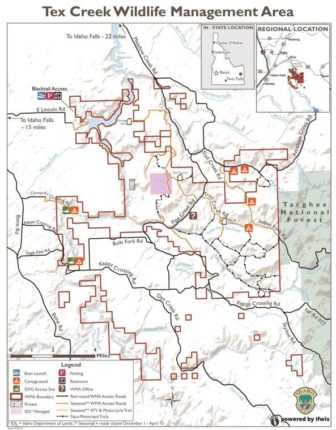
The new acquisition in East Idaho butts up against Tex Creek Wildlife Management Area about 20 miles east of Idaho Falls.

“It’s on the south end of Tex Creek, kind of off the Kepps Crossing Road,” said Gregg Servheen, Fish and Game wildlife program coordinator. “Those additional acres will provide that amount of public access to Tex Creek Wildlife Management Area.”

Servheen said the area was previously grazing land and has kept its natural habitat characteristics.

“It will be providing for normal spring, summer and transition to winter range needs for wildlife,” he said. “For big game, in particular, it will serve as winter range and transition range for deer and elk. This will help improve the ability of Tex Creek to keep and hold those animals during winters and such.”

Tex Creek Wildlife Management Area is a combination of Fish and Game property, Bureau of Reclamation land and state land managed by Fish and Game. Its current size is about 34,000 acres. Much of the area surrounds Ririe Reservoir and land south of it.

The purchase price for the two properties is $1.96 million. It will be paid for using Bonneville Power Administration mitigation funds. The mitigation funds are a result of a settlement deal between the state and Bonneville Power Administration for impacts to fish and wildlife associated with the Columbia River Power System.

“It’s pretty frequent we get folks come to us want us to look at purchasing land,” Servheen said. “Lots of them are interested in protecting habitat and helping wildlife.”

To find a map of the Tex Creek Wildlife Management Area online, go to idfg.idaho.gov/old-web/docs/wma/texCreek.pdf.