Unsafe shooting a major cause of fires

Unsafe shooting is a major cause of wildfires in the Gem State, and with the advent of explosive rifle targets, the problem has gotten worse. At least five recent wildfires in the region have been caused by people setting off explosive targets in dry grass- and sagebrush-filled areas.

Vehicles spark more wildfires than any other human-related cause in Idaho, often when hot exhaust systems come into contact with dry grasses or when dragging chains shower sparks on them. But shooting causes the second-most, more than people throwing lit cigarette butts out of vehicles.

“Since 2015, about 30 percent of wildfires were caused by shooting,” said Melissa Yunas, public information for the Bureau of Land Management’s Fire Prevention and Education Team.

Cause of East Idaho wildfire under investigation

Fire crews battle the Badger Point Fire near Rexburg, one of several recent fires sparked by exploding rifle targets.

So far this year, at least 10 wildfires in Idaho have been caused by unsafe shooting, and another five are suspected to have been caused in a similar way. In addition to exploding targets, steel-core rounds, which can cause sparks, as well as incendiary or tracer ammunition can cause fires.

Shooting appliances also can cause sparks, and sometimes a hot bullet landing in dry grass is enough to spark a blaze.

Such blazes include the 64,000-acre Sharps Fire in Blaine County which has forced many evacuations and is only 57 percent contained. Yunas said an individual has confessed to causing the fire with an explosive target, but a decision hasn’t yet been made whether to prosecute him.

High-explosive targets have been on the market for about two decades. Among the best known is a variety called Tannerite. It’s a so-called “binary explosive” consisting of two mixtures that are combined to make the explosive. Among other ingredients, the Tannerite contain ammonium nitrate, a component of the explosives used in the 1995 Oklahoma City Bombing. A similar compound was used in a series of bombings in New York and New Jersey in 2016 that left 31 people injured.

Since coming on the market, the targets have been involved in numerous cases of unsafe, even deadly, behavior outside of causing wildfires. An Oklahoma man was charged with manslaughter after he filled an outdoor stove with two pounds of the substance, and a flying piece of shrapnel killed an 8-year-old boy. He later pleaded guilty.
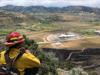
Wildfire caused by exploding targets

A firefighter surveys the scorched earth during the wildfire that burned nearly 500 acres near Century High School in south Pocatello. Authorities said that the blaze was caused by illegal use of exploding targets.

Numerous other charges have resulted from its use, as when a Minnesota man gathered 100 pounds of the substance, loaded it in the back of a dump truck and set it off, obliterating the truck. He was on probation at the time.

Yunas noted that explosive targets as well as incendiary, steel-core and tracer rounds are banned for possession or use on BLM lands between May 10 and Oct. 20. Even when shooting non-banned rounds at regular targets, precautions should be taken to avoid sparking a wildfire, Yunas said.

These include clearing vegetation near to targets, and ensuring that the area behind the target doesn’t present a danger of wildfire.

“Be aware of your location,” she said. “Make sure there are no fire restrictions in effect.”

Avoid shooting on days with low relative humidity, high winds or red flag warnings, she added.

“Just like any activity, whether you’re welding outside or you have a campfire, you should bring water and a fire extinguisher and a shovel. Bring a cellphone, and if a fire starts call 911 immediately,” Yunas said. “We just want people to be careful. We’re not discouraging people from shooting; you just have to use caution.”
Voters could be asked about wildlife overpasses

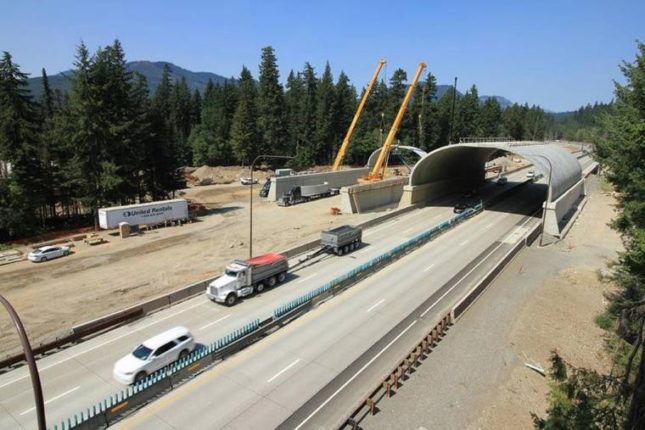
Fremont County commissioners are set to consider whether to add an advisory question to the November ballot on the construction of wildlife overpasses near Island Park.

Those overpasses are being considered by the Idaho Transportation Department as part of a set of safety improvements to U.S. Highway 20 near Targhee Pass. Such overpasses are intended both to reduce the frequency of accidents involving wildlife and to improve the connection between animal populations on both sides of the road, which may be deterred from crossing it by traffic.

A number of proposals are under consideration by ITD, two of which involve some amount of fencing and wildlife overpasses, along with a number of other road improvements. The cost estimates for those projects range from about $20 million to $30 million, though ITD also expects roadway improvements will reduce ongoing maintenance expenses significantly. The state would pay about 7 percent of the cost, with the federal government picking up the rest of the cost.

The commissioners first examined the prospect of an advisory question on June 11, but they didn’t take any action at that point.

According to minutes of the meeting, proponents argued ITD hadn’t taken local concerns into account when planning the overpasses.

Supporters of the overpasses argued against such a question, saying the vote would occur when a large number of Fremont County’s seasonal residents were out of town for the winter, and that it was misleading to ask voters only if they supported or opposed the overpasses without giving them the option of saying they were unsure.

The issue is scheduled to be discussed and possibly acted upon Monday, according to the commission’s agenda.

If the commissioners agree to add the question, it will be the second such advisory question in recent years.

Fremont County voters in 2014 took a vote opposing the creation of a national monument near Mesa Falls, which passed overwhelmingly, despite the fact that there was no evidence to indicate that the federal government had given serious consideration to the possibility since the Bush Administration.

The proposed language for the advisory vote on overpasses was submitted by Leanne Yancey of the Island Park Preservation Coalition, a group that includes many who fought an national monument designation. Reached by Facebook she referred the Post Register to Ken Watts. Watts did not immediately return a call seeking comment.

The language of proposed question is asymmetric, with descriptions of the opinions of both proponents and opponents having been crafted by opponents of the overpasses. The description of the opposing view is approximately twice as long as the description of the supporting view. And while all of the language describing proponents’ views is couched in some version of “they argue,” the advisory question states as fact that: “overpasses, underpasses and fencing will require perpetual maintenance and be a permanent financial burden.”

Dina Sallak-Windes, a civil deputy with the Fremont County Prosecutor’s Office, said all that’s necessary to add an advisory question to the ballot is a vote of the commissioners.

Fly expo draws large crowd

IDAHO FALLS — The 25th annual East Idaho Fly Tying/Fly Fishing Expo got off to a busy start Friday at the Shilo Inn.

The event, which each year draws top tiers from around the state, the nation and the world, this year attracted nearly 130 tiers, along with numerous vendors, outfitters, guides and fishermen. An estimated 200 members of the public attended the event.

The expo continues from 8 a.m. to 4 p.m. today. For information, visit srcexpo.com.

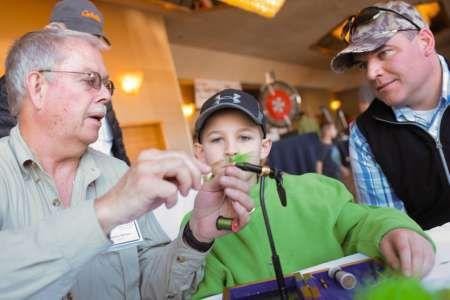
The event is organized by the Snake River Cutthroats, the local chapter of Trout Unlimited. On Friday, a host of tiers held classes and gave one-on-one demonstrations for attendees looking to learn new patterns.

Kelly Glissmeyer, a tier from Rigby, held demonstrations showing how to tie an innovative stonefly imitation which has been featured prominently in the national fly fishing press.

Articulated flies are ones that involve tying a movable back end onto a fly tied on a hook. Some streamers, subsurface flies meant to imitate small fish, have long been tied using an articulated technique.

But Glissmeyer’s “K.G.’s Booty Shaker” fly – so named because the stonefly’s abdomen is allowed to wiggle around as the fly dances across the surface of the water, imitating the natural movements of the insect – is the first major articulated dry fly pattern, he said.

“It simulates a little more life than some of the patterns we use,” Glissmeyer said. “It hits right; it floats right; and it fishes right.”

Glissmeyer said the fly has seen a great deal of success on both the South Fork and Henry’s Fork of the Snake River. He was inspired to create the Booty Shaker when a friend showed him an idea for another articulated dry fly. But perfecting the fly took time. Even with 40 years of tying experience, Glissmeyer said it took him two years of work to get everything right.

Glissmeyer said he spends a great deal of time at similar expos around the country, but the East Idaho expo holds a special place in his heart.

“This is the best show I’ve been to, and I’ve been to numerous shows around the United States,” he said.

Another tier at the show was Paul Shurtleff, who traveled from Springville, Utah, for the expo. While he spends most of his time fishing high-mountain streams in the Beehive State, Shurtleff said his roots in fly tying and fishing reach back to Idaho Falls.

Shurtleff said his brother, a local teacher several years his senior, helped him tie his first fly around age 10. Thirty years later, he’s won state awards in Utah for his dry flies and is sponsored by a number of tying material companies.

“It’s kind of a trip down memory lane to see the Snake River again,” he said.

Shurtleff said he spends as much or more time tying as he does fishing now. He focuses on tying flies to match local hatches, flies that will be good for catching fish, but he said for him tying is an art and a meditative exercise.

“I tie flies to catch fish, but they’re as worthy for a shadow box as they are for a fish’s mouth,” he said.

Shurtleff works a full-time job, and said he won’t consider tying for a living.

“I have no desire to turn my passion into a job,” he said.

This year’s expo also brought in the national leader of Trout Unlimited.

“Idaho Falls has to be in contention for the best place to live in the country in terms of fly-fishing,” said Chris Wood, the organization’s national president and CEO.

Wood said fly fishermen are the largest force for cold water river restoration and conservation in the nation, and that’s what makes events like the expo so important for improving rivers.

“Fishing is the gateway drug to conservation work,” he said.

Wood said that’s been especially true of the Snake River Cutthroats. Not only have they been effective in raising funds for large restoration projects – they’ve donated about $344,000 to such projects in recent years – but local Trout Unlimited staff said they know they can always count on getting large numbers of volunteers for conservation measures such as willow planting and riparian fencing.

A prime example, he said, has been the group’s effort, in partnership with Simplot, Monsanto and Agrium, to improve and restore the headwaters of the Blackfoot River in the eastern Idaho highlands above Blackfoot Reservoir.

Matt Woodard is Trout Unlimited’s manager on the project, and he’s also done extensive work on conservation projects on the South Fork of the Snake River.

“When I need volunteers, I always know I’ll get them,” he said.

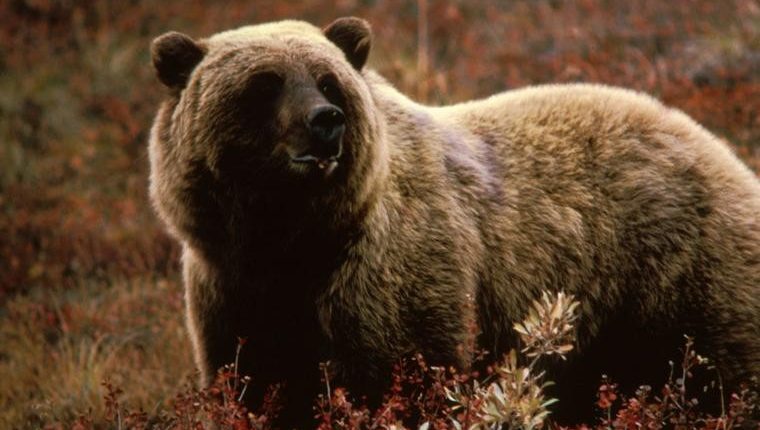
Fish and Game outlines grizzly bear hunt

A few dozen members of the public attended the first public meeting Tuesday night at the College of Eastern Idaho concerning the proposed Idaho grizzly hunt.

Idaho’s proposed hunt — in which a single, hopefully male, grizzly would be taken — follows the official decision to delist the Yellowstone grizzly under the Endangered Species Act. Wyoming also plans to hold its first grizzly hunting season in decades, while Montana has opted not to commence a hunting season this year.

The number of bears which can be taken in each state is determined by what portion of the Yellowstone grizzly’s habitat lies in each state. Since Idaho has only about 8 percent of the habitat within its boundaries, the Gem State has far fewer potential hunting tags allocated to it under the delisting agreement.

Staff from the Idaho Department of Fish and Game laid out their proposal for the hunt, the units in which hunting could take place and the rules that would have to be followed by the hunter who draws the tag. Both the use of dogs and hunting over bait — common means of hunting bears and other large predators in some places — would be banned.

Hunting would take place largely in Fremont County, with small portions of northern Teton County included.

The proposal, which isn’t a final plan and could be altered, is expected to come before the Fish and Game Commission on May 10.

Fish and Game Regional Bear Biologist Jeremy Nicholson went over the timeline of the recovery of the Yellowstone grizzly, from near extinction in the early 1970s, when there were fewer than 200 bears estimated to be living in the ecosystem, to today when there are an estimated 718.

“Range extension and population recovery is a success story,” Nicholson said.

Nicholson said over the last decade, bear numbers in the Greater Yellowstone Ecosystem have been relatively stable, indicating the area was at or near carrying capacity for the grizzly.

“We’ve successfully recovered another endangered species,” said Wildlife Assistant Bureau Chief Toby Boudreau.

But the grizzly still inhabits only a tiny fraction of its historical range, which once included virtually all of North America west of the Mississippi from far northern Canada to southern Mexico. Today, only a handful of grizzly populations remain in the contiguous United States, and the Yellowstone segment is the second largest. The largest population is in northwestern Montana on the Canadian border.

Regional Wildlife Manager Curtis Hendricks said the proposal is for the single bear to be taken in a controlled hunt that is organized along the same lines as other controlled hunts in Idaho. The tag will be issued through a lottery system rather than through an auction system, as is done for exclusive hunts in some states. The major difference, Hendricks said, is that in 2018 an application for the grizzly hunt won’t prevent applying for another controlled hunt.

There are two main reasons, he said. First, grizzly delisting plans are the subject of federal litigation, so it’s possible that the hunt could be blocked by the courts.

Second, because of the late date at which the drawing will take place, many who have already applied for other controlled hunts could be excluded.

A major concern for groups such as the Center for Biological Diversity, one of a host of groups suing the federal government to block delisting, is if the hunter who draws the tag accidentally takes a female rather than a male grizzly. While wildlife managers argued the interstate agreement regulating grizzly hunting allows flexibility in the case a female is killed — either by working with neighboring states to make sure the overall number of females taken is proper, or by counting excess female mortality against future years — Center Senior Attorney Andrea Santarsiere said the plan doesn’t go far enough to protect females.

“Saying they can figure it out later if they kill too many female grizzly bears is completely irresponsible,” said Santarsiere, who is based in Victor.

Hendricks said concerns that hunting will endanger the recovery of the grizzly are misplaced.

“We haven’t put this much energy into getting grizzlies delisted to do anything that would endanger that,” he said.

Trophy hunting of the grizzly has also been strongly opposed by Native American tribes around the nation, including the Shoshone-Bannock Tribes, which issued a news release reiterating its opposition late Thursday.

“No grizzly bears will ever be hunted on Shoshone-Bannock lands, and my tribe will oppose any attempts to hunt grizzlies in our recognized ancestral homelands,” tribal Chairman Nathan Small said in the release.

The release argued the decision by the U.S. Fish and Wildlife Services and wildlife management agencies in Wyoming, Idaho and Montana to allow trophy hunting violates principles of tribal sovereignty and the American Indian Religious Freedom Act.

“The tribes consider the grizzly bear to be a brother/uncle to our people, and there are ceremonies and songs for this animal,” said councilman Lee Juan Tyler in the release. “We hold the grizzly bear in high regard, and harvesting of this animal will affect our tribe and all other tribes as well.”

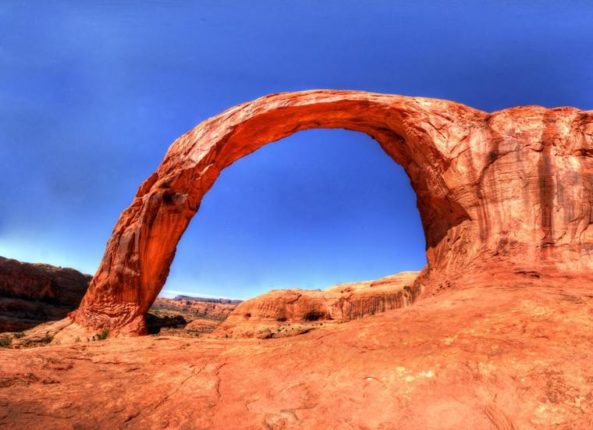
Idaho Falls man apologizes for Corona Arch vandalism

Ryan Andersen, a local man who came under criticism earlier this week for carving his and his wife’s initials into Corona Arch near Moab, Utah, took responsibility for his actions and issued a public apology Thursday.

“At that moment, I foolishly thought I was conveying my love for my wife when, in fact, I was tarnishing the experience for others who also want to enjoy magnificent scenery,” Andersen wrote in a public letter.

Andersen stated plainly that his actions were wrong and that he was sorry for them.

Andersen pledged to pay for restoration work on the arch, which is located on Bureau of Land Management land, and to speak out to ensure that others don’t repeat his mistake. In the future he said he would practice “leave no trace” ethics on public lands.

Andersen is the owner of Andersen Hitches, a local manufacturer and retailer of custom truck hitches, RV equipment and other items. Large numbers of individuals upset with Andersen’s actions have given the company negative reviews online and called for boycotts. Andersen emphasized that none of the company’s employees had anything to do with the incident.

“Neither Andersen Hitches nor its hard-working employees, who are committed to supporting our loyal customers and their own families, had any involvement in my wrongdoing,” Andersen said. “To those dedicated employees, I offer my sincere apology.”

Andersen has set up a website where members of the public can suggest efforts he can do to “make this right.”

BLM spokeswoman Lisa Bryant said Thursday that the case has been transferred to the U.S. Department of Justice.

East Idaho family facing backlash for reportedly defacing Corona Arch

An iconic natural arch near Moab, Utah, was vandalized last week, and photographs widely shared on social media have brought an Idaho Falls family and its business under scrutiny for the incident.

The incident sparked nationwide outrage on social media platforms, where many identified the family based on photographs of the couple posing in front of graffiti etched into Corona Arch.

Pictures of Ryan Andersen, owner of Andersen Hitches, and his wife Jennifer, along with three children whose faces were obscured, posing in front of graffiti scratched into the arch have been shared widely on a host of social media platforms. Sites reviewing Andersen’s company have been slammed with comments accusing the owners of vandalizing the arch and calling for boycotts.

On Thursday, a message from Ryan Andersen appeared on the website https://ryan-andersen.org/. The website features a letter in which Andersen apologized for his actions and expressed embarrassment. 

“While hiking in the Moab area with my family, I drew with a sandstone shard, a heart with my and my wife’s initials and the year above it,” the statement read. “At that moment, I foolishly thought I was conveying my love for my wife when, in fact, I was tarnishing the experience for others who also want to enjoy magnificent scenery. My actions were wrong. I am extremely sorry for my conduct. I acted in the spur of the moment and did not stop to think about what I was doing.”

To read the letter in its entirety, click here. 

Brad Kendrick, a former Ammon real estate developer who said he had purchased trailer hitches from Ryan Andersen in the past, contacted the Post Register about the incident after he saw pictures on social media of the couple posing in front of the vandalism.

“I recognized him the minute I saw his picture,” Kendrick said. “I thought, ‘He can’t just do that to a national monument.’”

(While the Corona Arch has widely been described either as within a national monument or a national park on social media, it is in fact on Bureau of Land Management land.)

The graffiti in question include the lines “18” — likely a reference to the current year — and the initials “R” and “J” with a heart drawn between them. They were scratched into the base of the arch, in an area that features prominently in most nature photographs of the area.

Lisa Bryant, spokeswoman of the Canyon Country District of the Bureau of Land Management confirmed by phone that an incident of vandalism had occurred at Corona Arch, and that the agency is investigating the incident.

“The BLM appreciates people stepping forward to report illegal or unauthorized activities on public lands; because this is an active investigation, no more details about the incident at Corona Arch are available at this time,” Bryant said in a statement.

Federal law makes it a federal Class A misdemeanor to “willfully deface, disturb, remove or destroy any personal property, or structures, or any scientific, cultural, archaeological or historic resource, natural object or area” on public lands. The maximum penalty for such a violation is a $100,000 fine and one year in prison.

“As always, the BLM asks visitors to be good land stewards, to help keep America’s public lands beautiful and strong by practicing responsible recreation and ‘leave no trace’ ethics,” said BLM Moab Field Manager Christina Price.

The Idaho State Journal contributed to this article. 

BLM unveils new rules for the South Fork of the Snake River

The Bureau of Land Management has released a new set of rules meant to deal with crowding issues on the South Fork of the Snake River, one of the nation’s best trout fisheries.

The goal of the new rules to help with overcrowding on the river, particularly during the annual stonefly hatch that draws fisherman from throughout the West. But it avoids limiting the number of individuals who can hit the river on any given day.

“We’re not going to require individuals to get a permit,” BLM Outdoor Recreation Planner Monica Zimmerman said. Instead, the rules focus on limiting money-making ventures and large-group outings on the river, particularly during prime fishing season.

Zimmerman said the new rules have been under consideration for a decade, the last time BLM issued a management plan for the river. From a set of public comment sessions, and later surveys and other efforts to take public input, emerged two common themes.

First, there was increasing concern about the amount of traffic on the river. Second, the public didn’t want access to be limited by a permitting system.

There are four main changes in the rules that attempt to achieve both goals, Zimmerman explained.

First, the state and federal rules and regulations for outfitter licensing and permitting have been tweaked to eliminate inconsistencies.

Second, a decision has been made to limit “special recreation permits” on the river, especially during the stonefly hatch. Special recreation permits are needed by outfitters who engage in profit-making ventures on the river.

None of the eight fishing outfitters licensed to work on the South Fork stand to lose them, Zimmerman said, but BLM won’t expand the number. There will be only six permits for non-fishing outfitters, and the number of trips they can make will be limited by the stonefly hatch.

Third, large groups who want to organize river outings — groups of more than 15 people — will need a permit if they want to launch between July 1 and Labor Day. Such large group permits will be limited to three per day between Monday and Thursday, and to two per day between Friday and Sunday.

Zimmerman said implementation of this rule will occur in 2019 because BLM needs time to work out administrative details.

A fourth rule will implement a reservation system for camping at designated sites along the South Fork, Zimmerman said. With increasing pressure, campsites have sometimes been overcrowded and some campers have begun illegally making camp outside of designated areas, endangering bald eagle habitat and areas home to rare plant populations.

“We’re starting to see a lot more camping, so we’re getting a lot more pressure on resources,” Zimmerman said.

Like the large group rule, the camping reservation rule won’t be implemented until next year as many details have yet to be worked out.

Jimmy Gabettas, owner of Jimmy’s All-Season Angler, said he’s watched traffic on the South Fork explode in the last several decades.

“During the stonefly hatch, people from all over the West come to fish it,” Gabettas said. “There’s been a tremendous increase from the early ’80s.”

Gabettas said he doesn’t think the new rules will have much adverse impact on local fishermen.

“I don’t think it’s going to have much impact on someone going to fish for the day or the afternoon,” he said.

Harriman State Park’s future hangs on upcoming vote

BOISE — The future of Harriman State Park could be determined by upcoming votes in the Idaho House.

The issue arose in relation to House Bill 496, a bill that at first glance has nothing to do with Harriman. But the legislation interacts with the original agreement granting the park’s land to the state in a way that endangers its public status.

Rep. Joe Palmer, R-Meridian, sponsored the bill. It changes the way the directors of three state agencies — the Idaho Department of Corrections, the Idaho Transportation Department and the Idaho Department of Parks and Recreation — are hired and fired. Most state department directors are hired and fired by the governor, but in those departments the directors are hired by boards, whose members are in turn appointed by the governor.

While the changes would make the appointment of state department heads more uniform, in the case of Parks and Recreation it could endanger the land that led to the creation of the department in the first place: Harriman State Park, one of the state’s most popular parks, particularly for its world-renowned fly-fishing waters. The reason the park could be endangered is that the deed granting the citizens of Idaho the land on which it sits requires a professional, apolitical department rather than one run by a political appointee.

Harriman State Park sits on land originally owned by E.H. Harriman, a 19th-Century railroad tycoon. It was deeded to the state in 1961 by Roland Harriman during the governorship of Gov. Robert Smylie.

Smylie’s son, former Rep. Steve Smylie, related the story to the committee.

The family was on vacation when Roland Harriman called the governor, saying the family was seriously considering deeding the land, then a playground for the wealthy, to the “people of the state of Idaho.” But both Smylie and Harriman wanted a professional, apolitical park service in the state.

Rick Just, president of Friends of Idaho State Parks, said Smylie had been unsuccessful in establishing such a park service, but Harriman’s land provided a big “carrot” to motivate them to create one. The Idaho Department of Parks and Recreation was founded, and Harriman wrote a deed transferring the land to the state.

That deed also contained a stick to complement the carrot Harriman had offered the Legislature. If Harriman or his descendants determine that the state of Idaho has breached its agreement to run a professional park service “whose personnel shall be on the basis of merit alone,” the ownership of the land would return to the Harriman family. The deed specifically bars the state from appealing that determination in any court anywhere.

Jodi Stiehl, president of Friends of Harriman State Park, a nonprofit group that advocates for and does volunteer work in the park, said the Harriman family is quite large, and different groups within it have different preferences. Many want the park to remain with the state. But some would prefer it be returned to the family so it can be developed or turned back into a private ranch. She said changing the status of the Parks and Recreation director could allow the faction that wants the land to return to the family to seek its return from the state.

“It’s a pretty scary thing to toy with,” Stiehl said in an interview. “… We are really trying to avoid a catastrophe.”

But there’s good reason to hope the bill will be amended to remove the threat to Harriman State Park. Several members of the committee, as well as the bill’s sponsor, said in committee they would support amending the bill to remove the Parks and Recreation director from the bill to ensure that Harriman won’t be taken from the people of the state.

The bill took a rather circuitous route through the legislative process. It was introduced by the Health and Welfare Committee earlier this month. It was then referred to the State Affairs Committee for a hearing. There, representatives debated several issues, but many noted they had received lots of calls and emails from constituents expressing concern about Harriman.

Palmer said he had no desire to endanger the park.

“I’ve been to Harriman Park,” he said. “… I would not want to risk any asset of the state of Idaho.”

But with concerns that the bill might endanger the park, a series of votes to send the bill for amendment or kill it outright deadlocked 6-6. The bill appeared to have failed.

The next day, a motion was made to revive the bill and send it for amendment on the House floor. That vote passed narrowly.

The bill currently sits in “general orders,” a position on the docket which makes it ready to be amended once the House takes up that part of the agenda. Such action could take place any day.

The bill would still need to pass a House floor vote, go through the Senate, and be signed by the governor in order to become law.